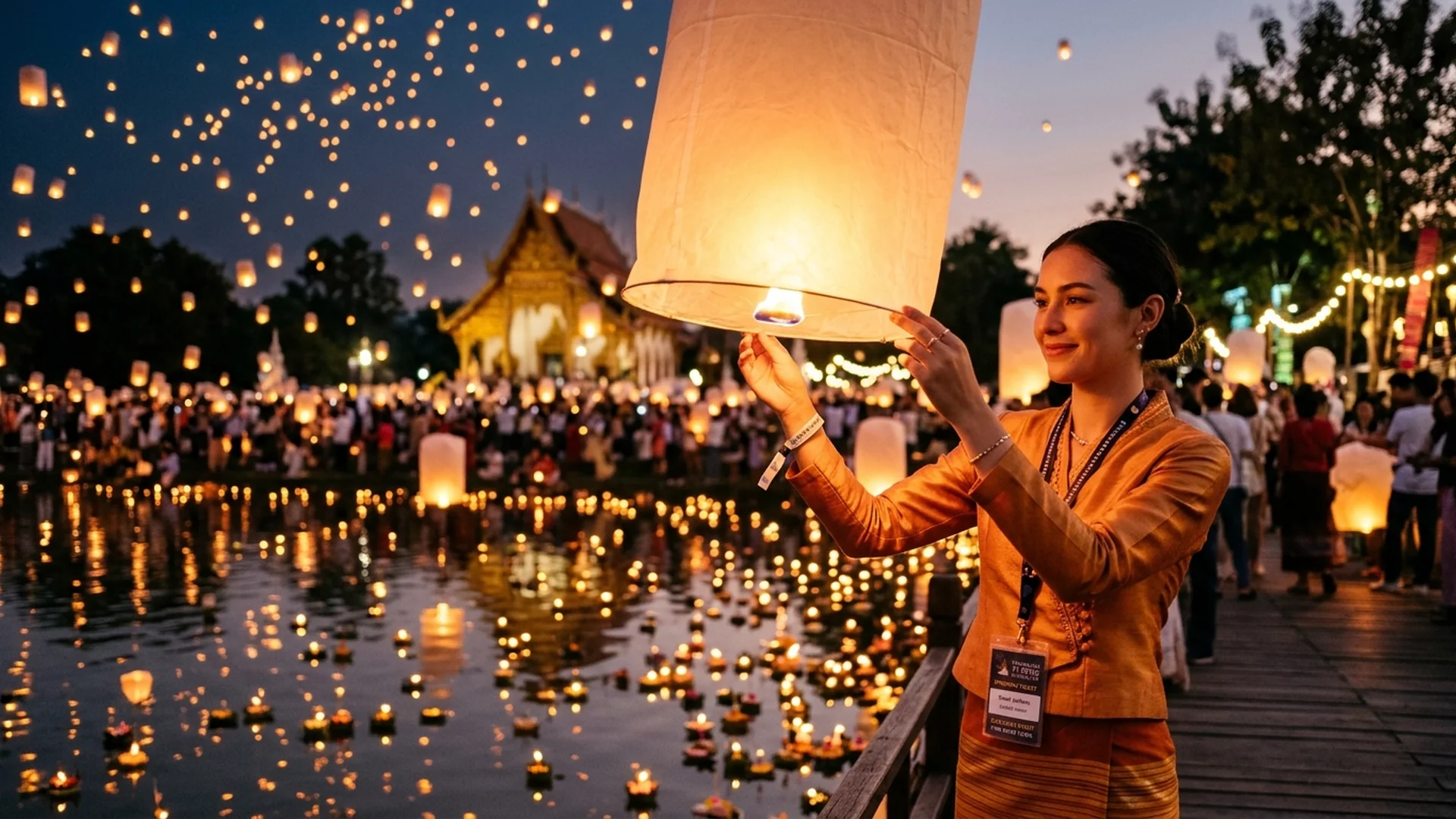
When the first crisp winds of the winter season sweep across the mountain-rimmed valley of Wiang Phing, the full moon of the second month in the Lanna lunar calendar—known as Yi Peng—transforms Chiang Mai into a living canvas illuminated by thousands of soft, glowing embers. Yet, behind this breathtaking spectacle of paper lanterns ascending toward the heavens beside the moon lies not merely a dazzling celebration, but a profound spiritual ritual unbroken since the 14th-century Hariphunchai Kingdom.
For the discerning traveler seeking a poetic and unhurried encounter, experiencing Yi Peng transcends simply navigating crowded bridges over the Mae Ping River. Instead, it is about absorbing the very essence of devotion through an exclusive, tranquil, and intellectually enriching perspective. From lighting earthenware oil lamps to honor the Buddha, to releasing lanterns in homage to the celestial Ketu Kaew Chuha Manee Stupa in the Tavatimsa heaven, to setting afloat traditional sapao vessels to honor the life-giving waters of the valley, every moment is imbued with ancient reverence.
This journal invites you to look beyond the surface pageantry, guiding you into a premier exploration of Yi Peng. We delve into its layered history, the illuminating architecture of the festival, the curation of private cultural grounds, and the latest aerial safety protocols to ensure your sojourn in Chiang Mai remains both timeless and sustainable.
1. The Spirit of Yi Peng: From Earthenware Lamps to Ascending Lanterns
In the Lanna vernacular, ‘Yi’ translates to the second month of the lunar calendar, while ‘Peng’ signifies the night of the full moon. Consequently, the Yi Peng tradition serves as the quintessential embodiment of light triumphing over darkness during the final full moon of the year.
According to ancient lore, illumination during Yi Peng manifests in three distinct forms: Phang Prathip, diminutive earthenware cups filled with animal fat or vegetable oil to kindle devotion; Khoam Khaeo, intricate Sa paper hanging lanterns adorning temple gates and homes to guide the path of life; and Khoam Loi, the quintessential floating lanterns crafted from bamboo frames and mulberry paper. The Lanna people believe that the smoke and warmth carrying these lanterns aloft release earthly sorrows while bearing humble offerings up to the Ketu Kaew Chuha Manee—the celestial stupa enshrining the sacred relics of the Buddha in the Tavatimsa heaven.
2. The Art of the VIP Yi Peng: Grace in Private Sanctuaries
As the Yi Peng festival draws global luminaries and cultural seekers alike, experiencing its tranquil majesty without the jostle of crowds requires sophisticated planning. Discerning travelers increasingly turn to private cultural grounds nestled outside active flight corridors, such as the verdant expanses of Mae Rim or Doi Saket.
These exclusive venues orchestrate a seamless immersion, beginning with an exquisite Khantoke fine dining banquet featuring elevated northern gastronomy crafted from hyper-local ingredients. Melodies of traditional salor, sor, and seung instruments drift through the cool evening air, accompanied by the graceful hand gestures of ancient Lanna fingernail dances. When the auspicious hour arrives, guests gather to release thousands of lanterns simultaneously, painting a serene, unbroken constellation against the crisp winter sky.
3. Waterways and Architecture: The Allure of the Ping River and Forest Gates
Beyond the luminous skies, the terrestrial charm of Chiang Mai’s Yi Peng possesses a distinct intimacy. Luxury boutique hotels lining the Mae Ping River serve as idyllic vantage points for quiet reflection and the floating of traditional vessels, locally known as loy sapao. The gentle murmur of the river, reflecting the flickering candlelight of antique wooden crafts, evokes a profound spiritual quietude.
Stepping into the historic walled city reveals magnificent ‘forest gate’ installations (Suam Pratu Pa) at revered sanctuaries such as Wat Phra Singh and Wat Chedi Luang. Locals weave banana trunks, palm fronds, and hanging lanterns around temple portals, recreating the mythical Himmapan forest to welcome the legendary return of Prince Vessantara. The soft, diffuse glow cast against weathered teak architecture celebrates the enduring legacy of Lanna master craftsmen.
4. Safety Protocols and the Path of Sustainability
To safeguard this heritage alongside public safety and regional aviation, the municipal authorities of Chiang Mai enforce rigorous zoning regulations. Specific designations—including designated no-fly and restricted corridors—prohibit unsanctioned lantern releases across urban Chiang Mai and surrounding airport approaches.
Modern conscious travelers navigate this landscape with mindful accountability, releasing lanterns strictly within officially sanctioned, legally permitted venues. Furthermore, connoisseurs insist on lanterns fashioned entirely from natural bamboo and mulberry paper, utilizing heat-resistant cotton ties rather than metallic wire to ensure complete, eco-friendly degradation without harming local ecosystems or wildlife.