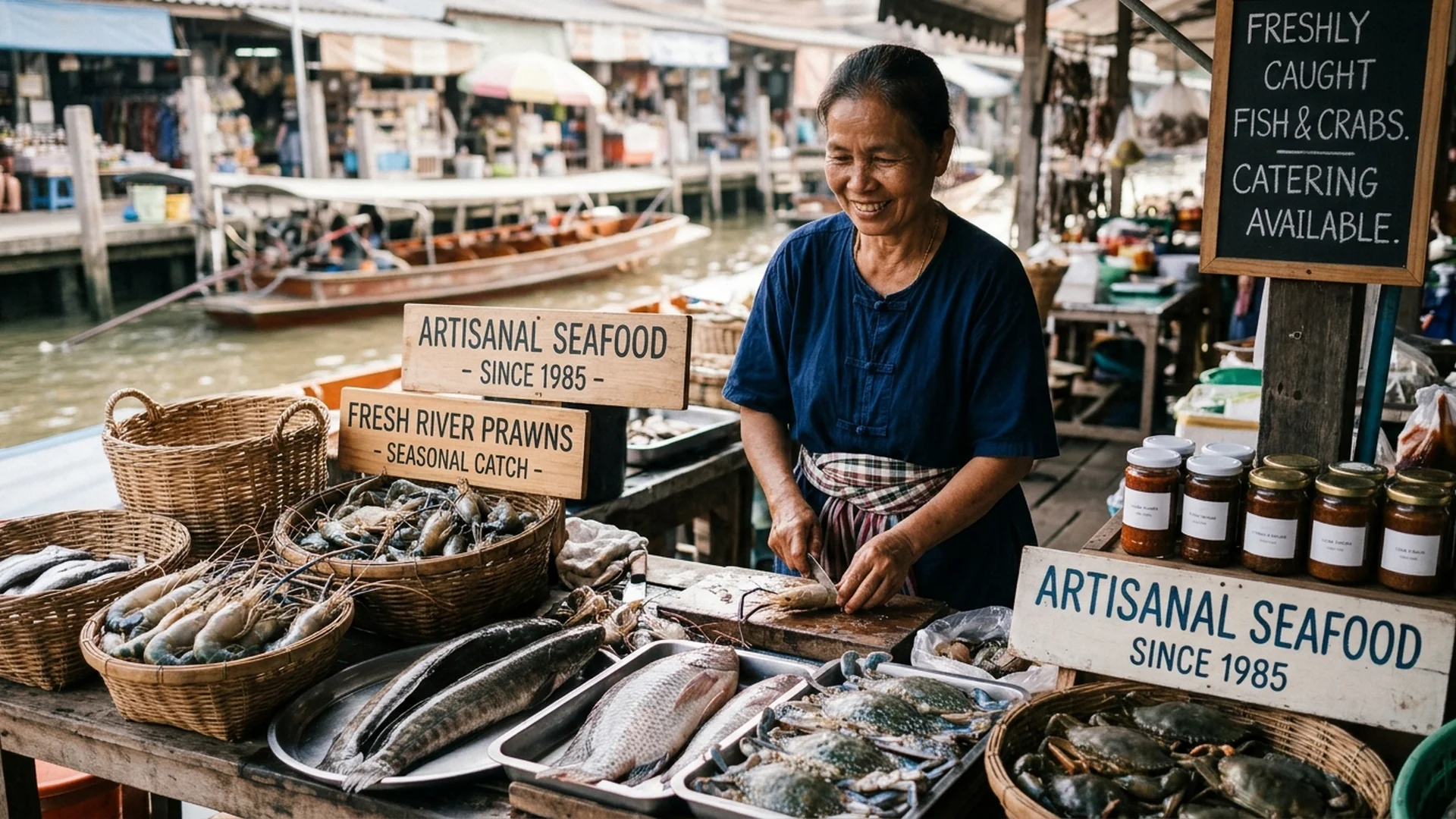
As the eternal currents carry nourishment from pristine mountain forests down to sprawling river deltas and the open sea, Thailand’s unique geography shapes an ecosystem brimming with vibrant life. Thai seafood and freshwater catches are far more than mere culinary components; they are living records of natural history, whispering tales of shifting currents, water temperatures, and seasonal cycles with profound eloquence.
Within the realm of high-end gastronomy tourism, discerning travelers look beyond superficial flavors to seek a visceral connection between ingredients and their origins. Understanding the natural calendar of Thailand’s aquatic life—from wild-caught river prawns in the Chao Phraya to dense, roe-rich crabs from the inner Gulf of Thailand—is the master key to unlocking complex flavor dimensions unattainable through industrial aquaculture. This editorial journey navigates across river basins and coastal shores to experience traditional fishing wisdom and the masterpiece ingredients crafted entirely by nature.
1. Jewels of the Freshwater: The Timeless Allure of Wild Ayutthaya River Prawns
When discussing the kings of freshwater dining in Thailand, wild river prawns from Ayutthaya stand prominently at the forefront, backed by a storied legacy. The true distinction of wild prawns harvested where the Chao Phraya, Pa Sak, and Noi rivers converge lies in the swirling, mineral-rich currents. These turbulent waters demand constant swimming, resulting in muscle tissue that is exceptionally firm, bouncy, and possessed of a character entirely distinct from farmed giant freshwater prawns.
During the high water or transitional seasons, the natural sweetness of the prawn meat reaches its absolute zenith. When halved and grilled over glowing coconut-shell charcoal that delivers steady, gentle heat and subtle smoke, the golden-orange fat in the head slowly liquefies and coats the pristine white flesh. This creates an intense, creamy richness that global connoisseurs celebrate as one of Asia’s finest luxury dining experiences.
2. Gold of the Coast: The Heritage of Surat Thani Roe Crabs and Oysters
Journeying south to the shores of the Gulf of Thailand, Surat Thani stands as an acknowledged treasure trove of inner-gulf seafood. The fragrant embrace of flourishing mangrove forests meeting freshwater runoff creates an ideal habitat for the proliferation of roe crabs and giant basket oysters.
Natural roe crabs caught during tranquil monsoon lulls feature shells packed tight with vibrant orange coral. When gently steamed to precise perfection, they release an enticing aroma while retaining a naturally succulent sweetness that requires no additional seasoning. Simultaneously, fresh oysters harvested from natural estuarine farms along the Tapi River, shucked and served alongside young neem leaves, local chili paste, and zesty lime seafood sauce, flawlessly convey the delicate salinity and profound sweetness of the sea.
3. The Philosophy of Artisanal Fishing and Connoisseur Sourcing
Beneath the elegance served upon the plate lies the daily life and profound wisdom of artisanal fishers who navigate small boats by night, utilizing eco-friendly gear passed down through generations. Selecting ingredients with the discernment of a seasoned chef or seafood connoisseur demands careful observation across every dimension.
Evaluating the freshness of wild aquatic catches involves far more than merely checking clear eyes or vibrant gills; it requires testing the firmness of the texture and verifying an aroma redminiscent of clean sea breezes or pristine freshwater, entirely free of chemical or stagnant notes. Adopting seasonal eating is therefore not merely about chasing optimal flavors, but an expression of profound respect for natural cycles and the enduring preservation of aquatic resources.