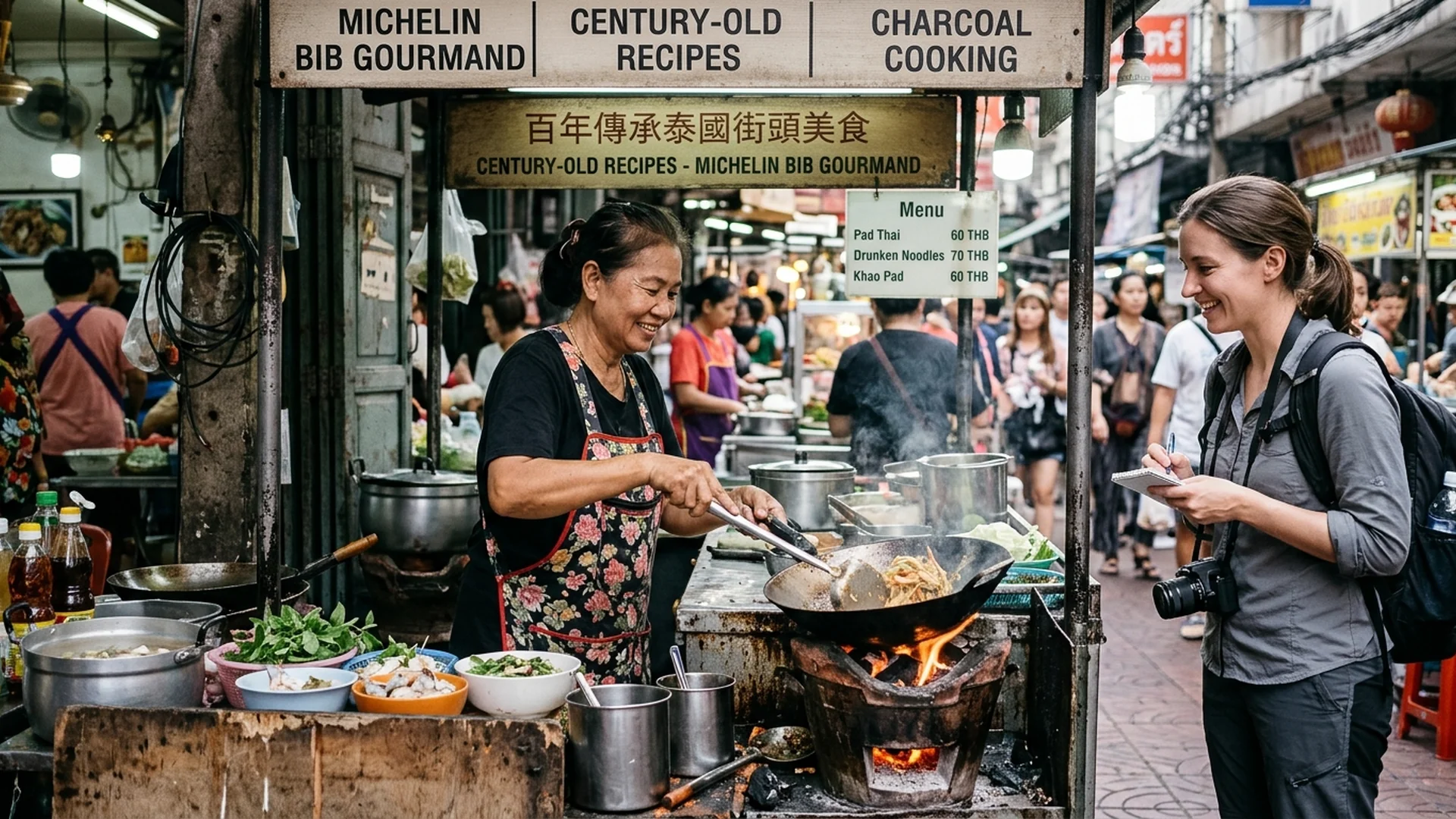
When steel strikes a red-hot iron wok amidst the velvet shadows of night, sending a cascade of amber sparks into the cool evening air, it is far more than mere culinary preparation. It is the living rhythm and breathing heartbeat of a metropolis driven by legendary street food culture. Amidst the relentless currents of modern globalization, Thailand’s street gastronomy stands resilient, anchored in deep-rooted heritage transmitted across generations through the gentle wisps of charcoal smoke and the aromatic complexity of time-honored spices.
Today, the pursuit of legendary flavor transcends mere appetite; it has evolved into a discerning quest for cultural preservation. Whether traversing the century-old shophouses of Yaowarat, Talad Phlu, or quiet historical alleyways, every dish serves as a living historical chronicle recognized by global gourmands through the Michelin Guide’s prestigious Bib Gourmand distinction. This editorial invites you to decode the alchemy hidden beneath the soot of ancient clay stoves and master the inimitable artistry of traditional Thai street cooking.
Smoke and Embers: The Science of Wok Hei and Ancient Clay Braziers
If Western fast-casual dining prioritizes streamlined convenience, traditional Thai street food is an uncompromising discipline of temperature and moisture control. Master chefs of older lineages steadfastly rely on the clay brazier paired with dense, high-grade hardwood charcoal, which yields a steady thermal radiance vastly superior to industrial gas rings. When pure oil kisses an iron wok heated to its absolute thermal threshold, instantaneous Maillard reactions and caramelization take place at a molecular level. This yields Wok Hei—the elusive, ephemeral breath of smoky essence that delicately coats every strand of rice noodle and morsel of protein. The precise flick of a wrist executed within a fraction of a second is an irreplaceable intangible heritage that automated industrial kitchen equipment can never truly replicate.
Generational Legacies: From Yaowarat Shophouses to Century-Old Dynasties
Beneath the unassuming facade of plastic stools and aluminum folding tables lies an epic narrative of migration and culinary assimilation. Century-old recipes nestled within historic districts such as Yaowarat, Song Wat, and Talad Phlu remain wonderfully uncompromised, refined instead through the quiet passage of time. The overnight simmering of marrow-rich pork bone broths, the meticulous infusion of Chinese medicinal herbs blended with indigenous Thai aromatics, and the careful selection of specialized cuts of meat are all preserved within the collective memory of family dynasties. Maintaining unwavering flavor standards amid increasingly scarce ingredients is a profound testament to the second and third-generation heirs who willingly forgo modern corporate comforts to uphold the honor of their ancestors’ hearths.
Global Benchmarks: When Pavement Dining Ascends to Bib Gourmand Stature
The inclusion of Thai street food institutions within the esteemed pages of the Michelin Guide—particularly within the Bib Gourmand category—has fundamentally transformed global perceptions of open-air dining. Selection criteria eschew luxurious physical decor in favor of absolute fidelity to flavor, immaculate ingredient sourcing, exceptional value, and the courageous artistry required to sustain hyper-local identity. Achieving this distinction serves as far more than a mere culinary accolade; it acts as a vital bridge elevating the economic and cultural standing of micro-entrepreneurs. It reminds international travelers and rising generations alike that these humble roadside plates constitute intellectual property of global significance.