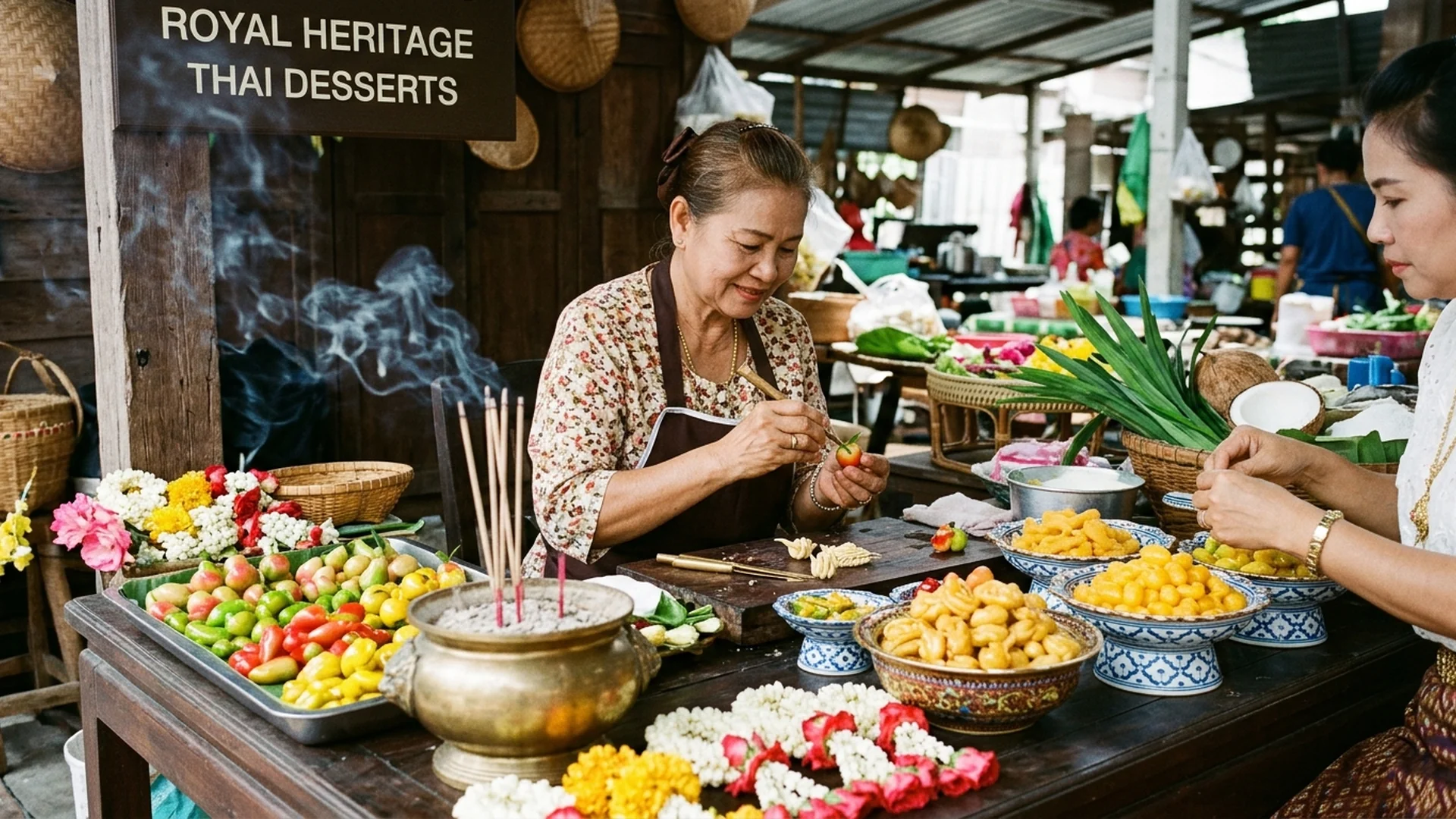
When the summer breeze whispers through the courtyards of traditional Thai riverside estates, a delicate fragrance of scented candle smoke intertwined with night-blooming jasmine and ylang-ylang drifts softly through the air. This is not merely the prelude to a feast; it is a living archive of culinary wisdom, carefully preserved across generations through the intricate arts of scent, color, and texture found within heritage Thai confectionery.
In our modern era of relentless acceleration, traditional Thai sweets serve as a mindful anchor, compelling us to slow our pace and appreciate beauty at a microscopic level. From stone-milled rice flours and slow-caramelized coconut palm sugar to vegetable carvings as delicate as watercolor paintings, these confections transcend simple after-dinner treats. They are architectural masterpieces of taste that whisper tales of aristocracy, history, and an intimate communion with the natural world.
A Symphony of Aromas: The Art of Smoke Infusion and Floral Waters in Royal Palaces
If French pastry is a sonnet written in butter and cream, traditional Thai confectionery is a grand symphony scored entirely in fragrance. The hallmark that elevated palace sweets and noble household treats far above everyday fare was the meticulous reliance on natural, botanical perfumery. The ritual lighting of specialized artisanal candles—crafted from pure beeswax infused with camphor, civet, and benzoin—before sealing them inside airtight ceramic vessels alongside delicate morsels such as Kleeb Lamduan requires uncompromising patience. The faint, sweet haze of the smoke mingling with the rich creaminess of fresh coconut milk evokes a sensory dimension that is simultaneously deeply comforting and ethereal.
Furthermore, purifying spring water with fresh jasmine blossoms, Damask roses, and gently warmed ylang-ylang flowers to release their essential oils forms the foundational nectar for sweet syrups and chilled seasonal rice dishes. This delicate practice reveals a profound cultural literacy in coaxing the subtle botanical spirits of the earth to elevate daily human experience.
Vanishing Elegance: Decoding Rare Confections and the Lore Behind Wooden Molds
Amidst the overwhelming tide of Western bakeries and modern patisseries, many heritage Thai sweets have evolved into rare cultural artifacts. Consider ‘Bulan Dan Mek’, a royal creation dating to the reign of King Rama II inspired by a royal musical composition. Its appearance mimics a luminous full moon floating serenely amidst blue-tinted clouds rendered from butterfly pea flower extract, crowned at its center with a velvety, custard-like yolk filling. The melt-on-the-tongue texture is a testament to rigorous mastery over time and precise temperature control.
Equally captivating is ‘Saneh Chan’, a propitious sweet modeled after the golden fruit of the nutmeg tree. Tinted with fresh egg yolks and scented subtly with nutmeg powder and candle smoke, its flawless spherical form carries an auspicious blessing wishing the recipient universally beloved charm. The intricate orchestration required for each individual piece elevates the craft of Thai dessert making into miniature sculptural art.
The Rhythm of the Seasons: Khao Chae and the Royal Science of Cooling
When the relentless tropical heat blankets the plains of Siam, the legendary Khao Chae pavilion makes its anticipated appearance as a masterclass in culinary thermal equilibrium. Polished grains of cooked rice, meticulously washed free of excess starch, are submerged in ice-cold, floral-infused spring water redolent of night jasmine. This is accompanied by an array of savory accompaniments crafted with exquisite dexterity: fried shrimp-paste balls coated in beaten egg, shallots stuffed with dried fish, sweet bell peppers cradled in delicate egg nets, and lacquered sweet fish.
The true wonder of Khao Chae lies beyond its instant alleviation of stifling afternoon heat; it resides in the elaborate garnishes. Fingerroot rhizomes are meticulously carved into miniature magnolia blossoms, unripe mangoes are pared into fluttering green leaves, and cucumbers are hollowed into intricate flutes. Every single component harmonizes the rich, savory depth of the side dishes with the cool, floral serenity of the scented broth.