When the morning mist lifts above the sacred slopes of Doi Suthep, the sharp, aromatic fragrance of makwaen and wild mountain spices drifts through the crisp winter air. Northern Thai cuisine is far more than a fleeting sensory experience on the palate; it is a living anthropological archive steeped in time-honored preservation techniques, seasonal harvesting rhythms, and a profound, abiding reverence for nature. To dine in the northern tradition is to commune with the spirit of the ancient forests.
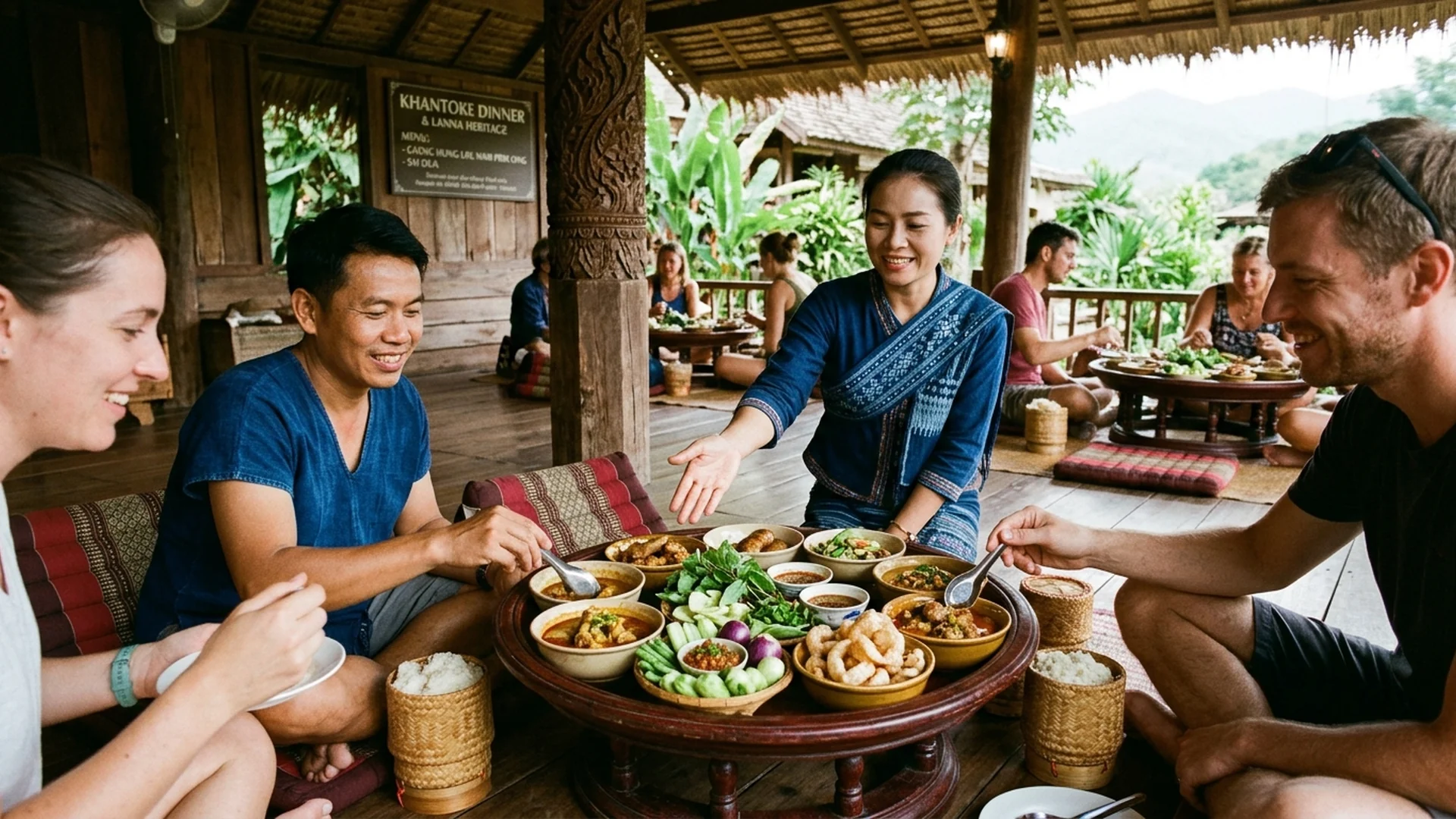
In eras past, the traditional khantoke was never merely a vessel for serving food, but rather the beating heart of community connection, sacred rituals, and gracious hospitality. Today, the culinary heritage of ancient Lanna is being thoughtfully reinterpreted and elevated into the realm of refined fine dining, preserving its soulful roots while offering global connoisseurs an intricate, deeply evocative journey through the flavors of the misty northern highlands.
The Philosophy of the Wild: Where Bitterness, Heat, and Zest Converge
If the central plains of Thailand are defined by harmonious notes of sweetness and salinity, the north is the undisputed realm of deep, contemplative flavors that dance across the sensory nerve endings. Here, the palate embraces the subtle bitterness of wild canopy shoots, the warming heat of indigenous gingers and galangal, and most notably, makwaen—a wild mountain spice related to Sichuan pepper that delivers a signature numbing tingle and an intoxicating fragrance. This botanical is the beating heart of nearly every northern masterpiece, from robust minced meat larb to fragrant hung le curry.
Beyond cultivated plots, foraged wild greens such as phak hueat, phak khaep, and wild earth mushrooms reflect an intimate, unbroken bond between humanity and the primeval forest. Ancient Lanna ancestors understood the deep cycles of nature; dining was a mindful act of balancing internal elemental humors according to the changing seasons, completely untainted by modern processing or refined sugars. True flavor emerged entirely from the unmasked freshness of the harvest and slow charcoal simmering requiring immense patience and mastery.
From Temple Courtyards to Exclusive Tables: The Evolution of the Khantoke
In collective memory, the traditional khantoke conjures images of communal circles seated upon woven mats during grand temple festivities, nuptial celebrations, or high-level diplomatic receptions. The arrangements upon the crimson-lacquered wooden pedestal tables were meticulously ordered, featuring rich pork belly hung le curry simmered to melting tenderness, fiery green chili relish paired with crisp crackling and blanched greens, salted fish paste dip, and gaeng hoh—an artful stir-fry celebrating the abundance of celebratory leftovers.
Today, the khantoke concept has been boldly reimagined through the lens of sophisticated fine dining and curated tasting menus. A new generation of chefs deeply devoted to their cultural ancestry presents these feasts on a refined scale, sourcing organic produce from smallholder highland farmers. They weave compelling narratives into every course, pairing heritage recipes with artisanal techniques—such as premium Kurobuta pork simmered in ancient spice blends or serving courses sequentially on polished golden teak platters that still honor time-honored etiquette.
Hung Le and the Northern Table: A Cultural Legacy Etched in Time
No exploration of ancestral Lanna gastronomy is complete without the legendary hung le curry, a dish bearing historic influences from Myanmar and India, yet thoroughly adapted to northern sensibilities through the inclusion of pickled ginger, tart tamarind, and a proprietary blend of spices. Its hallmark lies in the patient simmering of marbled pork cuts within a rich broth until yielding a silken texture, achieved entirely without added cooking oils.
Alongside hung le, a premier Lanna spread invariably features gaeng phak kat, a comforting broth balancing the gentle acidity of sour greens, alongside house-cured northern sausages fragrant with lemongrass and toasted over glowing embers. Together, these elements orchestrate a symphony of textures, temperatures, and profiles, representing the pinnacle of ancestral culinary wisdom passed down through generations with immense pride.