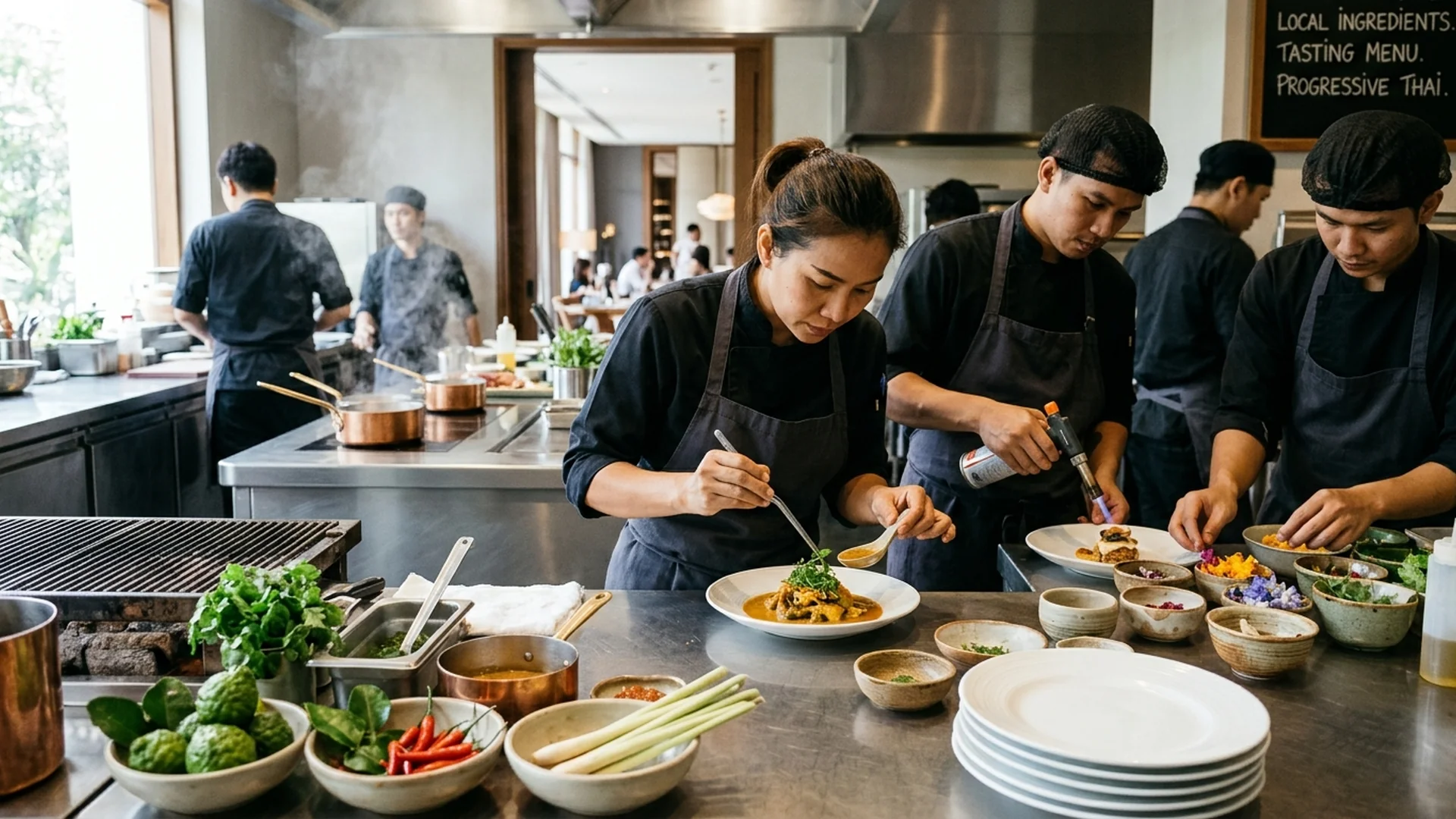
When the resonant chime of recognition echoes across the Michelin stage, Thai cuisine transcends the familiar flavors of memory. It is being recomposed through a profound contemporary artistic language that challenges every sensory perception. The current phenomenon of ‘Progressive & Modern Thai Fine Dining’ has transformed household crafts and ancestral folk wisdom into edible masterpieces served upon pristine white porcelain. Here, rare indigenous greens, traditional herbal infusions, and long-fermented fish sauces are seamlessly elevated to the pinnacle of high aesthetics.
This new journey of flavor does not arise from an attempt to distort ancestral roots, but rather from the act of decoding and reinterpreting them through modern gastronomy. Thailand’s foremost chefs journey deep into primeval forests, highlands, and fishing villages to uncover ephemeral seasonal organic ingredients, partnering directly with smallholder farmers to forge sustainable micro-sourcing supply chains. The result is a dining experience that genuinely mirrors the soul of the Thai landscape.
From Ancestral Roots to Gastronomic Science: Decoding Thai Flavor Structures
The ultimate challenge of modern Thai fine dining lies in maintaining the profound complexity of flavors—where heat, salt, acidity, sweetness, and bitterness must achieve perfect harmony within a single bite. Contemporary chefs harness the power of modern food science, employing techniques such as cryo-extraction to isolate the crystalline sweetness of delicate herbs, long-term fermentation to build natural umami, or the creation of crystal-clear consommés that conceal deeply spiced green curry or tom yum profiles beneath a translucent surface. These achievements are impossible without a profound understanding of traditional structures. This revolution is not an erasure of the past, but an elevation that allows Thai wisdom to stride onto the global stage with grace.
Micro-Sourcing and the Voice of the Earth: The Origins of Fine Dining Ingredients
The beating heart that propels leading Thai dining establishments to global prominence is their meticulous curation of ingredients through micro-sourcing. Forward-thinking chefs bypass mainstream supply chains to champion seasonal indigenous flora from the northern and southern frontiers, such as wild watercress, freshwater crabs harvested from organic paddies, premium-selected Thai Pon Yang Kham beef, or ancient rock salt from the northeastern plateau. These components impart irreplaceable regional profiles while directly distributing income and reviving sustainable agricultural ecosystems within rural communities. Every single bite tells the story of the sweat, skill, and heritage of the countless individuals standing quietly behind the kitchen doors.
The Art of the Pairing: When Fine Wines and Herbal Cocktails Meet Thai Spices
Presenting fiery, complex Thai dishes within a multi-course tasting menu was once considered a formidable pairing challenge. Today’s fine dining sphere has established a breathtaking new standard through craft beverage pairings. Visionary sommeliers and mixologists work shoulder-to-shoulder with culinary teams to craft bespoke cocktails utilizing traditional herbal infusions and organic monk fruit extracts, alongside natural wines and high-acidity boutique white selections sourced from global vineyards. These pours cut through richness and accentuate the fervent heat of intricate curry pastes, unfurling an effortless, joyful voyage across all five senses.