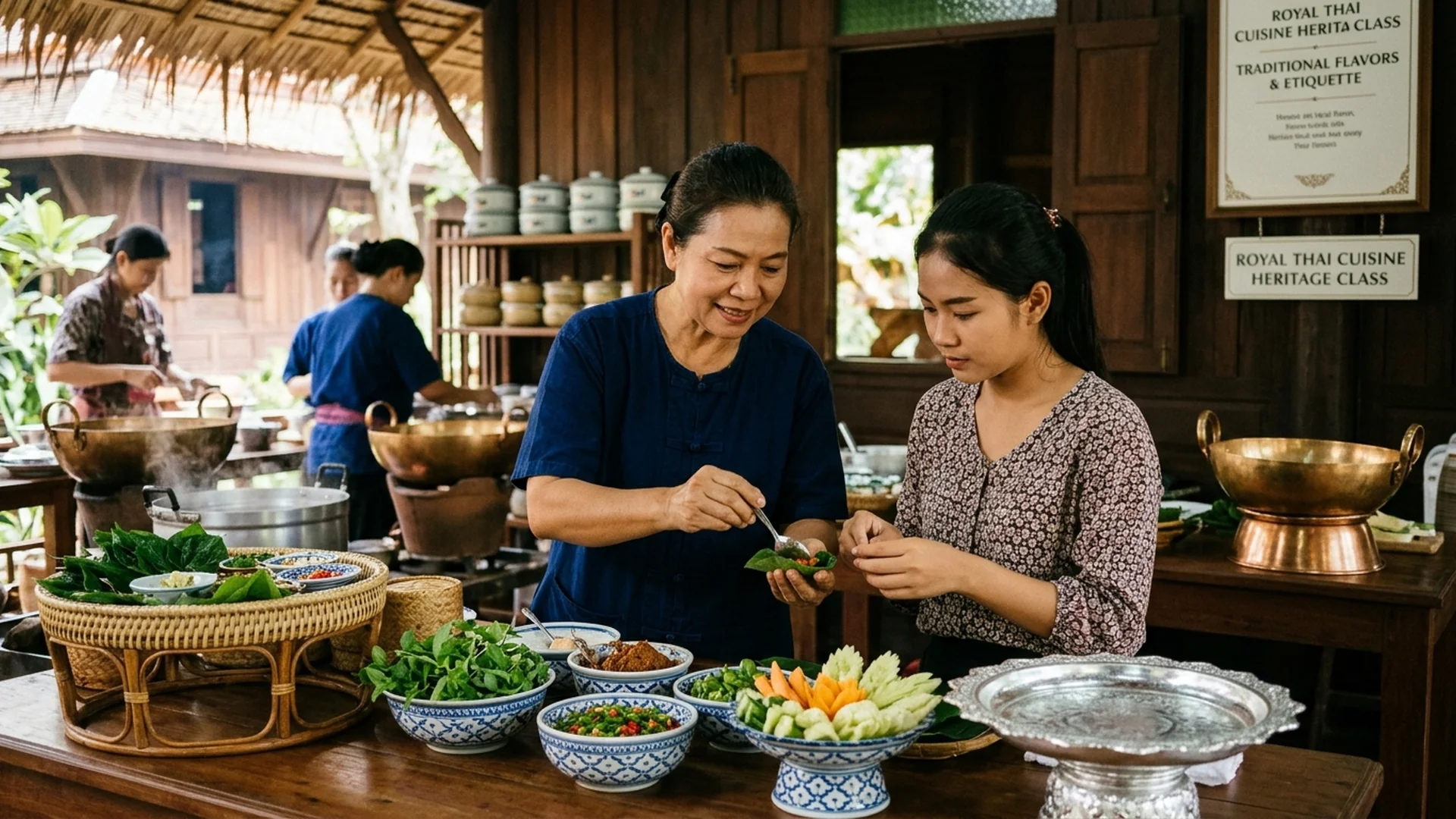
When the lid of the painted benjarong porcelain bowl is lifted, a delicate, fragrant plume of scented candle smoke and tropical blossoms drifts upward, carrying centuries of whispered palace history. Royal Thai cuisine has never been merely about sustenance; it is a profound cultural ritual reflecting the highest degree of refinement in every single detail of preparation. From the meticulous seasonal selection of ingredients to an unwavering mindfulness regarding the diner’s grace, this gave rise to an immaculate culinary philosophy where fish are entirely deboned, meats are stripped of every sinew, and any trace of harsh gaminess is banished completely.
Amidst the relentless acceleration of the modern world, traditional Thai samrap (the set meal) endures as a living museum, chronicling the profound wisdom of royal ancestors. Once spaces of fierce creative competition among master palace cooks, these historic royal kitchens now offer today’s discerning travelers an invaluable opportunity to taste, understand, and immerse themselves in the true meaning of culinary elegance.
The Philosophy of the Royal Kitchen: Flawless Aesthetics
Historically, the inner royal kitchen functioned as an elite academy of domestic arts. Royal cooks and attendants underwent rigorous, uncompromising training. The paramount philosophy governing royal cuisine was absolute attention to detail. Every single fish was meticulously fileted to remove every trace of bone, while meats were meticulously trimmed of gristle and connective tissue so that royalty and nobles could dine with absolute grace, entirely free from the worry of bones interrupting conversation. Furthermore, fishiness was strictly forbidden; aromatic native herbs such as galangal, lemongrass, kaffir lime zest, and kaffir lime leaves were employed with surgical precision to neutralize odors. These elements were then layered with delicate scents infused from beeswax candles and indigenous blossoms like jasmine and dok chommanad, creating a multi-dimensional, whisper-soft fragrance in every single bite.
Decoding Ancient Recipes: La Tiang, Saeng Wa, and Sensory Depth
Royal Thai spreads are celebrated for rarified dishes requiring extraordinary dexterity. Consider la tiang, an exquisite royal appetizer consisting of beaten duck eggs gently drizzled into a hot pan to form a gossamer golden lace, enveloping a savory filling of minced meat sautéed with coriander root, garlic, and white pepper—a culinary translation of intricate needlework. Then there is saeng wa, a traditional grilled-prawn relish salad featuring charred herbs, galangal, lemongrass, shallots, and kaffir lime leaves, brought to life with tamarind and fish sauce for a brilliantly balanced interplay of sour, salty, spicy, and sweet notes. Served alongside crispy sun-dried catfish and intricately carved fresh vegetables, these creations transcend mere food to become edible art preserving Thailand’s aristocratic past.
The Art of Arranging the Samrap and Reading Flavor Codes
Setting a traditional royal table was never a random affair, but rather governed by the precise laws of nutritional and flavor equilibrium. A complete samrap invariably featured a robust, spiced curry offset by milder stir-fries or clear, soothing broths, accompanied by curated relishes, side dishes, and meticulously garnished dipping vegetables presented on gleaming brass or benjarong vessels. The composition carefully factored in the juxtaposition of sour, sweet, salty, spicy, and savory notes, alongside a dynamic interplay of textures—crisp, tender, and meltingly soft—to achieve absolute perfection in every spoonful according to ancient canons.