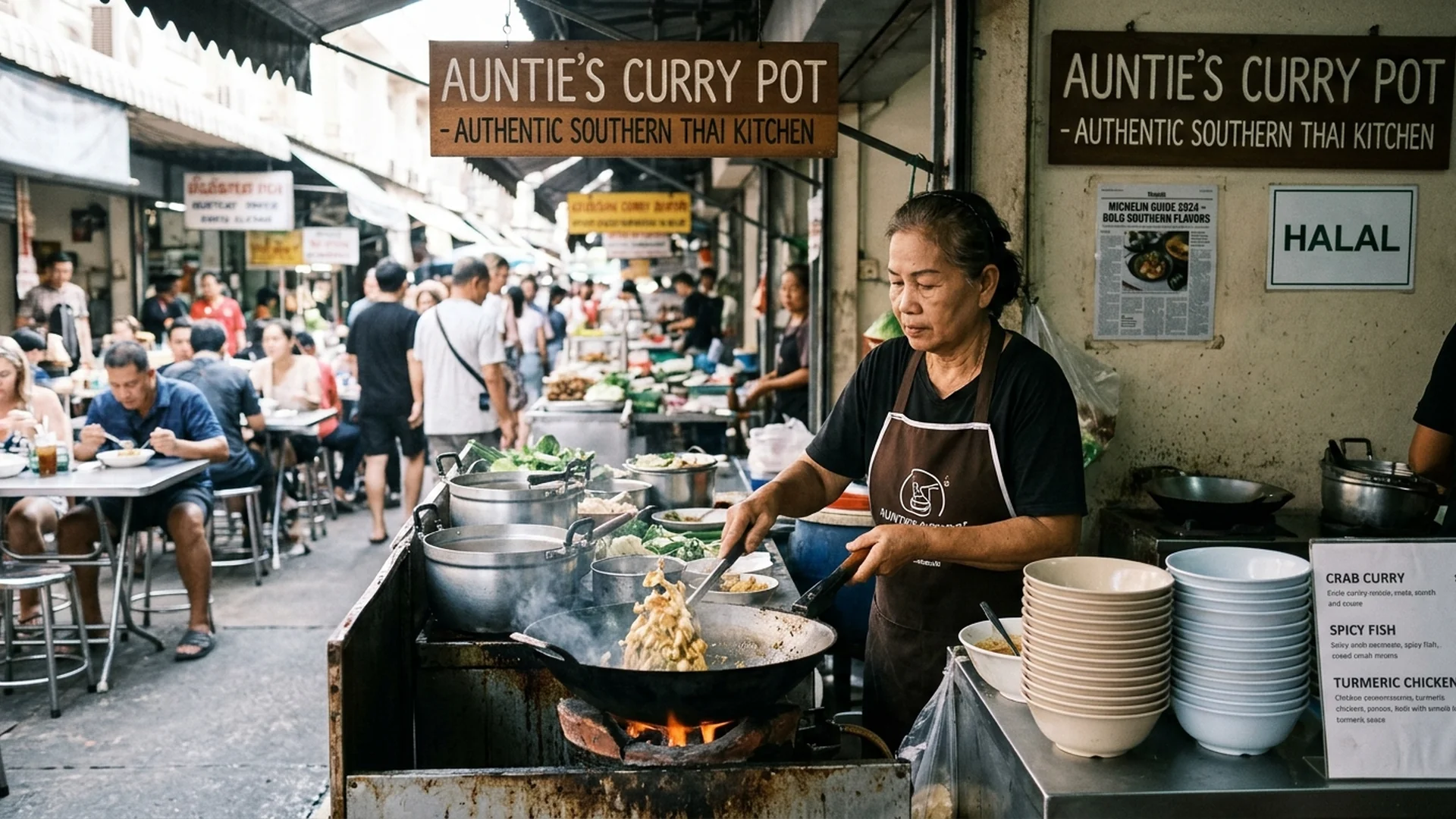
When the monsoon winds sweep across the golden axe-handle shaped peninsula of Thailand’s south, the true spirit of this coastal realm reveals itself not merely in white sands and turquoise swells, but in the fragrant, earthen drift of turmeric and black pepper rising from old timber kitchens. Southern Thai cooking is frequently mischaracterized in global culinary circles as a monolithic exercise in brute heat. In reality, every curated spread is an intricate tapestry of ancient maritime trade routes, Peranakan influences, and tropical biodiversity woven into an enduring gastronomic legacy.
To understand Southern Thai cuisine is to decode a genetic blueprint of flavor, where the profound salinity of artisanal shrimp paste, the sharp tang of garcinia fruit, and the searing, subterranean heat of garden bird’s eye chilies operate in absolute harmony. This is a culinary lineage refined across generations, migrating seamlessly from humble fishing shacks tucked along secluded shores to contemporary dining rooms decorated with coveted Michelin stars.
The Philosophy of Curry Pastes and the Flavor Triangle: Turmeric, Shrimp Paste, and Garcinia
While the central plains of Thailand favor mellow curry pastes softened by rich coconut milk, the south embraces the raw, uncompromising honesty of its ingredients. The heartbeat of this tradition begins with fresh turmeric, a golden rhizome providing not only vibrant coloration but volatile essential oils that neutralize gamey proteins while imparting an unmistakable earthy aroma. When pounded in stone mortars alongside dried chilies, garlic, and black pepper, it creates a formidable curry paste defined by an upright, piercing heat.
On the salinity front, southern shrimp paste—known locally as Kapi, crafted from fermented tiny krill using coastal preservation traditions—serves as an organic umami bedrock. This profound depth is elegantly tempered by the citrus brightness of regional sour fruits like garcinia (som khaek) or tamarind, which introduce a gentle acidity to the finish without compromising the immaculate freshness of seafood harvested from the Gulf of Thailand and the Andaman Sea.
The Rhythm of Phak Nho: The Science of Balance in Southern Spreads
One of the most remarkable sensory aspects of dining in the south is the vast platter of fresh greenery and foraged herbs known as Phak Nho, presented alongside virtually every meal. These are far more than decorative garnishes; they function as an intuitive, culinary-scientific instrument devised by generations of southern cooks.
When confronting the soaring heat and assertive salinity of a fermented fish kidney curry or dry-fried beef, crunching into cool cucumber rounds, bitter bean shoots, crisp yard-long beans, or pungent wild leaves acts as a palate cleanser. These bitter and astringent elements momentarily calm the nervous receptors on the tongue, resetting the palate for the next nuanced bite. Many of these side vegetables also possess traditional carminative properties, naturally aiding digestion amidst a tropical climate.
Culinary Landmarks: From Ancestral Kitchens to Michelin Recognition
Today, discovering southern gastronomy bridges the gap between atmospheric heritage shophouses in Phuket’s Old Town—steeped in Peranakan Sino-Portuguese trade history—and rustic beachside kitchens tucked away in provinces like Nakhon Si Thammarat and Phang Nga. Esteemed local institutions champion rare seasonal delicacies and humble heirloom preparations, while contemporary establishments earn global acclaim from the Michelin Guide by steadfastly refusing to compromise on hand-pounded pastes and wild-caught ocean species.