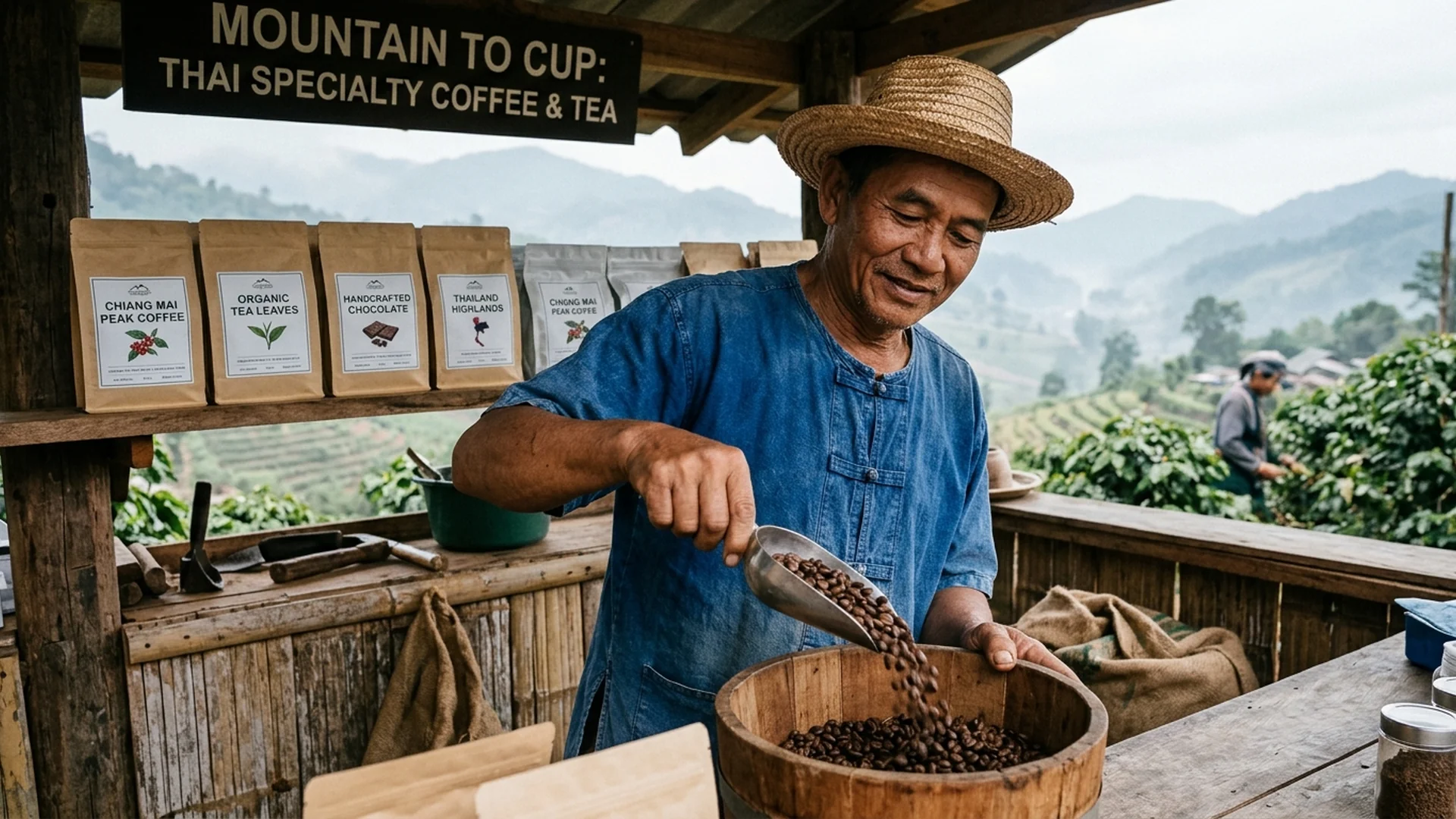
As the morning mist gradually retreats from the pine-fringed ridges of the northern highlands, it leaves behind an ineffable stillness and the subtle, inviting aroma of roasting beans carried on the crisp mountain air. From the quiet historical transition of remote upland agriculture, Thailand has ascended to a revered position on the global beverage map, writing its story through the bright acidity of highland specialty coffee and the delicate traditions of ancestral tea routes.
To trace the origin of these artisanal elixirs is not merely to seek out exceptional flavors in a porcelain cup, but to embark on an inward pilgrimage—an exploration of the profound, symbiotic relationship between humanity, ancient forest canopies, and generational agrarian wisdom. From Arabica trees nurtured beneath towering shade to indigenous Assamica and heritage Oolong varieties rooted in volcanic earth, every sip encapsulates the very soul of the mountains across unhurried time.
1. The Art of Forest and Terroir: The Evolution of Northern Specialty Coffee
At altitudes exceeding 1,200 to 1,500 meters above sea level, prized Arabica coffee varietals mature with deliberate slowness beneath the canopies of pristine rainforests in Chiang Mai, Chiang Rai, and Mae Hong Son. Nature has bestowed a microclimate of rare perfection here—sustained year-round coolness coupled with mineral-rich volcanic soil. These elements forge a distinct terroir unique to Thai beans, characterized by complex floral notes, bright citrus acidity, and a remarkably delicate, tea-like body.
This uncompromising devotion begins with selective hand-picking, wherein farmers harvest only the perfectly ripened cherries before entrusting them to innovative processing techniques. Washed, honey, and meticulous anaerobic fermentations elevate the flavor profiles onto international stages. Independent roasteries and design-forward cafés across the northern provinces serve as vital conduits between high-altitude cultivators and mindful drinkers, cementing a farm-to-cup culture of rare authenticity.
2. Mist-Veiled Slopes and Ancient Leaves: The Tea Trails of Doi Mae Salong and Ban Rak Thai
If coffee represents the vibrant pulse of awakening, the high-altitude teas of the north are emblems of tranquility and unhurried grace. Amidst the sweeping geometry of terraced plantations cascading down steep hillsides at Doi Mae Salong and Ban Rak Thai, cultural legacies left by Yunnan Chinese settlers have transformed the landscape into sanctuaries of fine Oolong, green tea, and morning-frost harvests.
Traversing these heritage tea routes invites travelers to witness traditional gongfu tea ceremonies, learn the delicate art of plucking tender leaves at dawn amidst rolling valley fogs, and observe hand-roasting techniques preserved across decades. Sitting quietly with a porcelain cup of steaming tea beside a glassy reservoir, flanked by earthen village dwellings, offers an aesthetic meditation capable of dissolving the noise of the contemporary world entirely.
3. The New Dimension of Thai Craft Elixirs: Where Heritage Meets Contemporary Vision
Beyond the realms of coffee and tea, Thailand’s beverage landscape has undergone a sophisticated evolution toward artisanal craft brewing and indigenous infusions. Creators are reinterpreting local organic sugarcane, wild forest botanicals, seasonal orchard fruits, and heirloom grains through refined fermentation arts.
Emerging beverage artisans and regional makers blend ancestral fermentation wisdom with modern culinary science, yielding expressive creations that honor the country’s rich biodiversity and regional narratives. It is an evolving dimension of gastronomy tourism that rewards the curious traveler while fortifying rural sustainability.