Beneath the familiar cultural tapestry of the Chao Phraya river basin lies a vibrant, multi-hued canvas woven from the ancient traditions, unique dialects, and sacred worldviews of Thailand’s numerous ethnic minority communities. From the mist-shrouded ridges of the northern mountains to the wave-swept horizons of the Andaman Sea, an exploration of these indigenous groups transcends mere sightseeing. It is an invitation to engage with a profound anthropological legacy that lends remarkable depth to the country’s social fabric.
As the currents of modernity continue to shift, entering the ancestral domains of groups such as the Pwo and Sgaw Karen (Paganyaw), Hmong, Lahu, Akha, or maritime communities like the Moken and Moklen, requires travelers to shed superficial perspectives. In their place must come a deep reverence for centuries-old cultural roots. This editorial transcreation unveils the demographic landscape, social structures, and the ethical core of meaningful cultural heritage tourism.
Demographic Cartography: From Misty Mountain Ridges to Coastal Horizons
A cartographic survey of Thailand’s demographics reveals that the rugged elevations along the Thanon Thong Chai, Daen Lao, and Tenasserim mountain ranges have served as ancestral homelands for diverse ethnic communities for centuries. Historically grouped under generalized labels, modern anthropology classifies these populations according to distinct linguistic lineages: Sino-Tibetan speakers (such as the Akha, Lahu, and Lisu), Austroasiatic or Mon-Khmer speakers (the Paganyaw or Karen), and Hmong-Mien speakers (Hmong and Mien).
Cross the geographical divide to the southern peninsula and the Andaman archipelago, however, and the landscape transforms into white-sand shores and emerald waters. Here, the Moken, Moklen, and Urak Lawoi—collectively known as the Chao Le or sea nomads—live in harmonious synchronicity with the tides and monsoons. Their intuitive mastery of ocean currents, marine ecosystems, and natural environmental indicators represents an unwritten archive of indigenous wisdom passed down through generations.
Spirituality and Dialects: The Anchoorage Between Humanity and Nature
The beating heart of indigenous cultural resilience lies in a spiritual framework that binds humanity directly to the sacred forces of the natural world. The Karen harbor an intricate philosophy of forest stewardship, believing that every woodland and ancient tree possesses a spirit; felling timber requires ceremonial propitiation, and ritual forest ordination is practiced to protect vital watershed headwaters. Concurrently, the Hmong and Akha maintain profound observances of New Year rites and ancestral veneration, which serve as foundational pillars for communal cohesion.
Indigenous dialects function as intellectual treasuries, not only facilitating communication but archiving botanical wisdom, medicinal plant lore, and oral mythologies. In an increasingly globalized era, these languages and identities face profound pressures from cultural assimilation. Recognizing, valuing, and celebrating indigenous tongues represents the essential first step toward living cultural preservation.
Etiquette and Anthropological Ethics: Immersive Travel Without Footprints
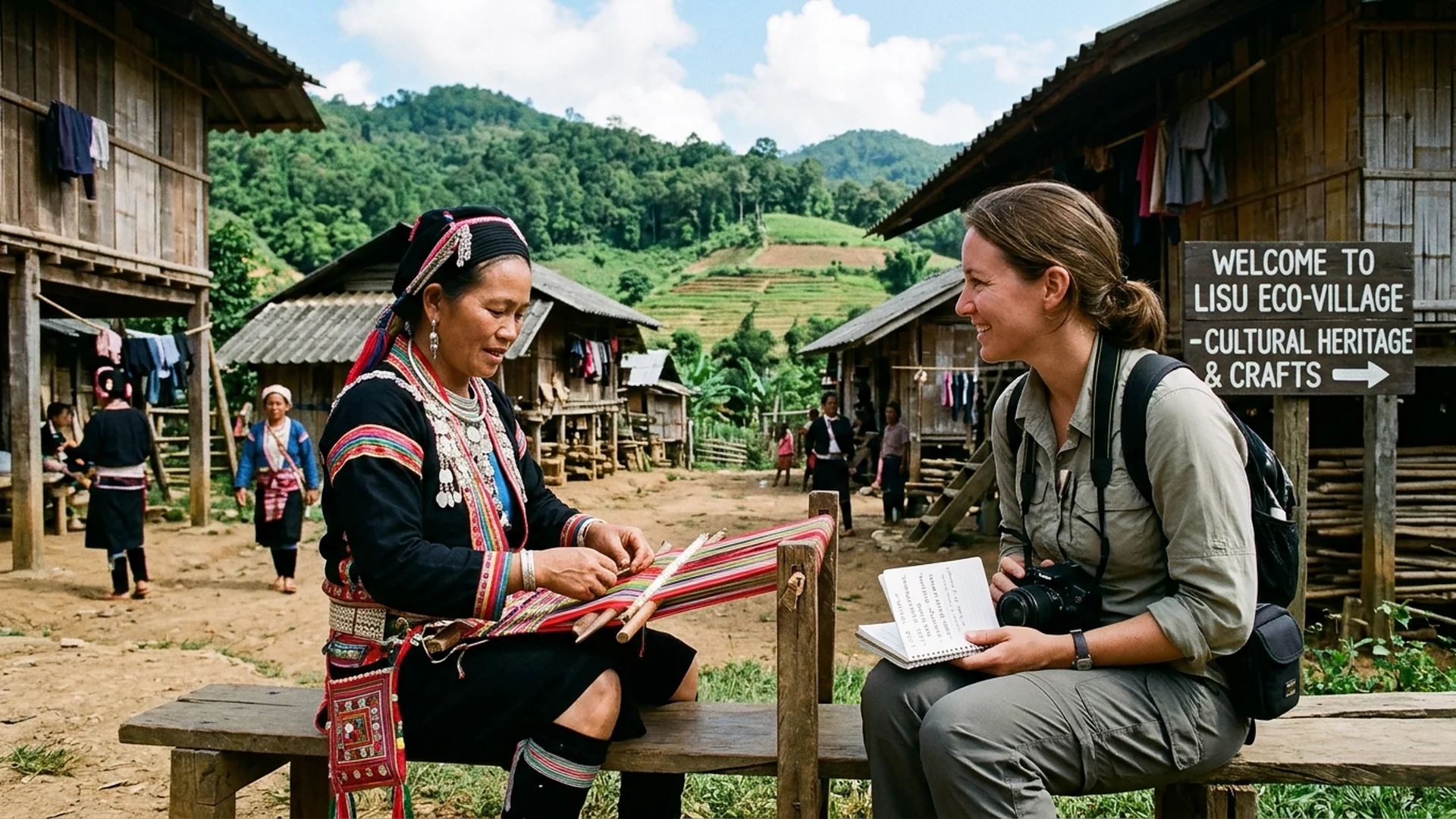
Entering an ethnic village should never be approached as a quest for exotic spectacle, but rather as an exchange rooted in human dignity and mutual respect. Discerning travelers must observe fundamental protocols, such as securing explicit permission before photographing individuals, particularly children and elders. One must strictly avoid trespassing into sacred zones, such as ritual boundaries or the sacred ancestral spirit gates of Akha villages, which remain strictly off-limits to outsiders.
Furthermore, attire should be modest, culturally harmonious, and respectful of the setting. Communities should never be treated as living museums staged purely for transient entertainment. Economic support of local artisans is best channeled through the purchase of authentic, finely crafted goods, such as naturally dyed handwoven textiles, which reward traditional craftspeople fairly and help sustain vital artisanal heritage.