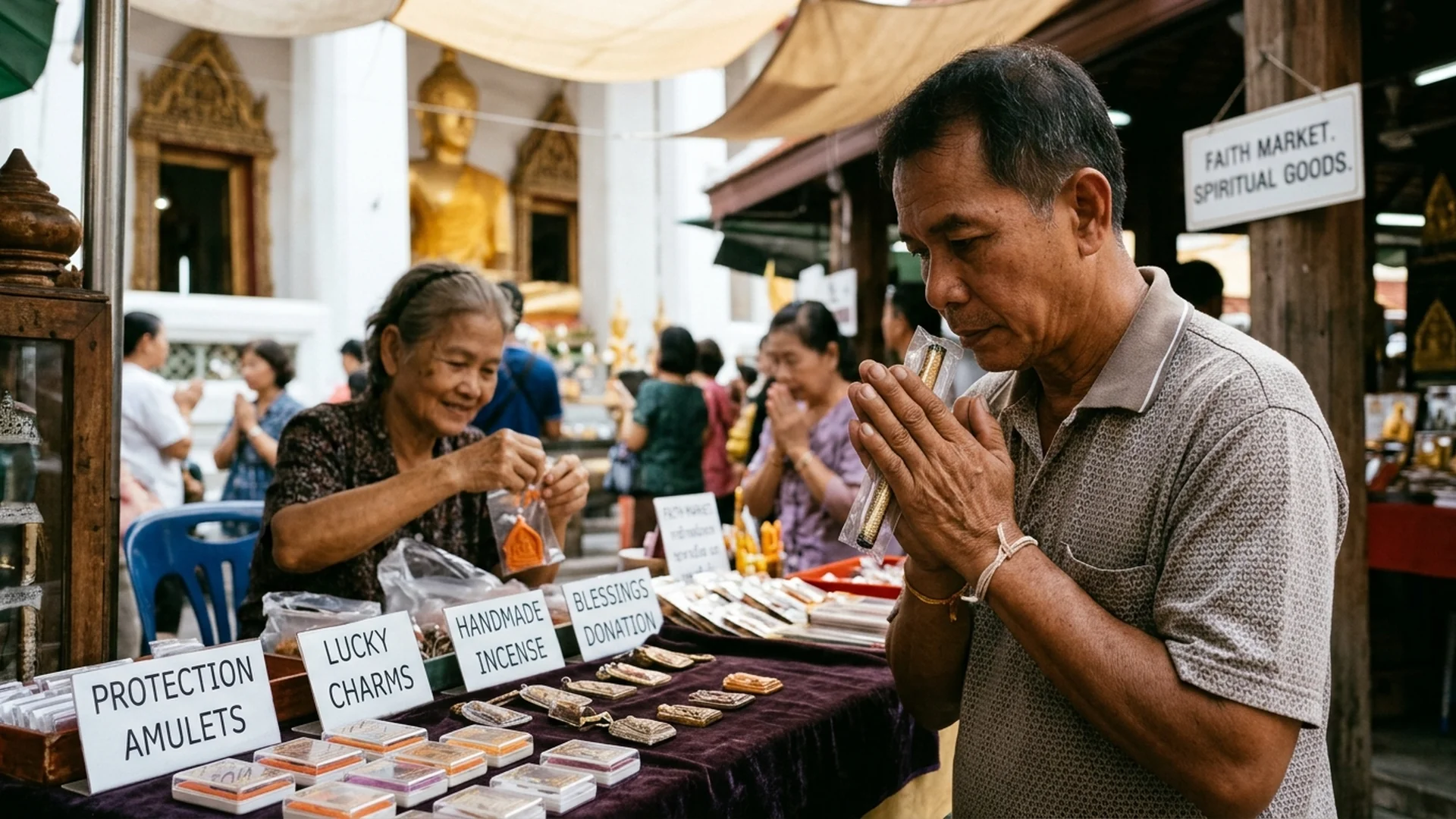
When the neon glow of Bangkok’s skyline reflects upon the polished glass of central business district skyscrapers, a fascinating juxtaposition unfolds. Impeccably suited corporate executives bow in reverence before sidewalk spirit shrines, while high-end smartphones display bespoke deity wallpapers designed to attract fortune and career advancement. This is the living pulse of contemporary Thai society, where the telluric currents of the digital world seamlessly harmonize with ancient animist and spiritual roots. The phenomenon known as Mutelu is far from a fleeting modern trend; rather, it forms a profound cultural taproot deeply embedded within the cognitive structures and daily lives of people across every social stratum.
The Tripartite Taproot: The Spiritual Crucible of Thai Society
Viewed through an anthropological lens, Thai society is not anchored to a single doctrinal framework alone. Instead, it rests upon a unique harmony known as religious syncretism—an inseparable amalgamation of Theravada Buddhism, Brahmin-Hinduism, and indigenous animism. Buddhism provides the moral compass and philosophical worldview; Brahmin-Hinduism dictates rituals, sacred geometries, and the veneration of deities for worldly success; and ancestral animism binds humanity to the surrounding land and natural world. This sophisticated synthesis grants the Thai mindset remarkable emotional resilience, allowing individuals to navigate the uncertainties of the modern world through diverse spiritual refuges.
From Sidewalk Shrines to Digital Screens: The Evolution of Modern Mutelu
In bygone eras, sacred spaces were strictly confined to temples, shrines, or building corners. Today, however, Mutelu has transcended traditional boundaries to fully inhabit private spaces and the digital realm. This modern iteration reframes ancient beliefs into accessible, elegant lifestyle formats: premium gemstone bracelets, meticulously calculated auspicious telephone number numerology, and bespoke deity smartphone wallpapers. Far from mere superstition, these objects function as vital psychological anchors that cultivate confidence and alleviate anxiety amidst rapid economic and social fluctuations.
The Faith Economy: When Inner Conviction Drives Macroeconomics
It is undeniable that spiritual devotion has emerged as a crucial engine for a novel dimension in the Thai economy: the Faith Economy. Substantial capital circulates within related industries, ranging from spiritual tourism that draws global travelers to sacred sanctums, to Feng Shui-compliant real estate development and esoteric consultation services. The faith economy is thus a vibrant commercial ecosystem that generates employment, distributes regional income, and mirrors the sophisticated consumer tastes of modern individuals seeking spiritual resonance alongside elevated quality of life.