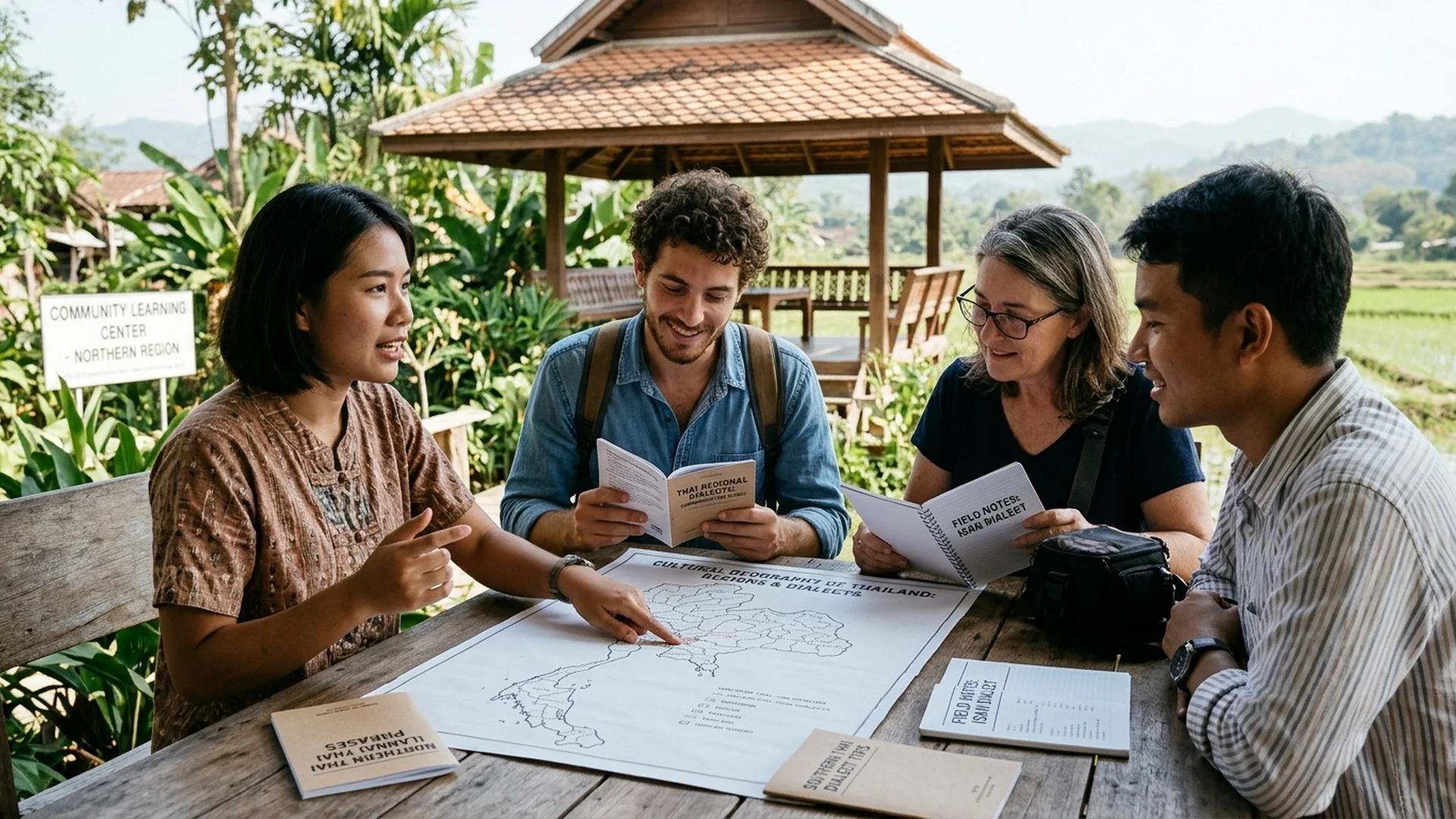
When the contours of the Thai landscape are viewed not merely as cartographic boundaries, but as a vast canvas woven by winding rivers, ancient mountains, and the quiet breath of local communities, a profound cultural tapestry emerges. Geography acts as an invisible architect across the kingdom, shaping distinct regional dialects, temperaments, and unhurried ways of life with captivating charm. From the mist-draped peaks of the northern highlands to the azure coastal waves of the south, the Thai realm conceals subtle cultural codes waiting to be deciphered by the discerning traveler.
To understand the intricate connection between topography, vernacular speech, and social etiquette is to transform a routine journey into a profound dialogue with the local spirit. For the sophisticated global traveler seeking depth over superficial sightseeing, attuning oneself to these regional nuances opens doors to authentic encounters, revealing the beating heart of Thailand’s diverse heritage.
Mountains, Rivers, and Cadence: When Geography Shapes Identity
Beneath the resonant, melodic tones and unhurried cadence of northern Lanna society lies the profound influence of enveloping valleys and slow-moving morning mists. This basin topography and labyrinth of mountain ranges cultivate a contemplative temperament among northern folk, beautifully reflected in poetic regional speech and a life inextricably bound to nature. Conversely, the vast, arid plateau of the northeast—known as Isan—presents climatic challenges that have forged a resilient, dynamic, and spirited vernacular. Rich oral traditions and rhythmic folk poetry serve as emotional tethers, binding communities together through changing seasons.
Further south, where the peninsula is embraced by two distinct seas and the rugged Tenasserim Hills, the brisk sea breezes and ancient maritime trade routes have sculpted a Southern dialect that is crisp, rapid, and delightfully direct. It speaks volumes of a steadfast, resolute character matched by boundless hospitality.
The Art of Greeting: Deciphering Vernacular Phrases for Cross-Cultural Bridges
Language transcends simple information exchange; it serves as the primary gateway to the human heart. Offering a sincere greeting in the local vernacular, even in its simplest form, miraculously dissolves the invisible wall of unfamiliarity. In the north, uttering a polite greeting accompanied by the gentle local phrase ‘Sabaidi gani’ or expressing quiet admiration of the surrounding nature with ‘ngam tae tae’ instantly fosters an atmosphere of warm camaraderie.
In the northeast, inquiring ‘Sabaidi bo?’ or remarking on joyful moments with ‘muan lai’ demonstrates an affectionate attunement to local spirit. Down south, an energetic, friendly salutation paired with sincere conversational warmth acts as an immediate bridge, elevating the visitor from a transient tourist to a welcome guest.
Etiquette and Observances: Decoding Social Grace and Personal Space
Thai social etiquette is inherently nuanced, shifting fluidly across regional and social contexts. In the central plains, maintaining composure, emotional grace, and appropriate vocal modulation in public spaces remains paramount. In contrast, across the northern and northeastern provinces, deep-rooted reverence for elders and sacred household sanctuaries—such as removing footwear before entering traditional timber dwellings or maintaining quiet contemplation near sacred monastic zones—is strictly observed.
Furthermore, the foundational concept of kreng jai—an acute consideration for the feelings and personal space of others—permeates every corner of Thai society. Appreciating the unhurried ethos of slow living in rural enclaves empowers travelers to slow their own footsteps and harmonize gracefully with the ambient rhythm of their surroundings.