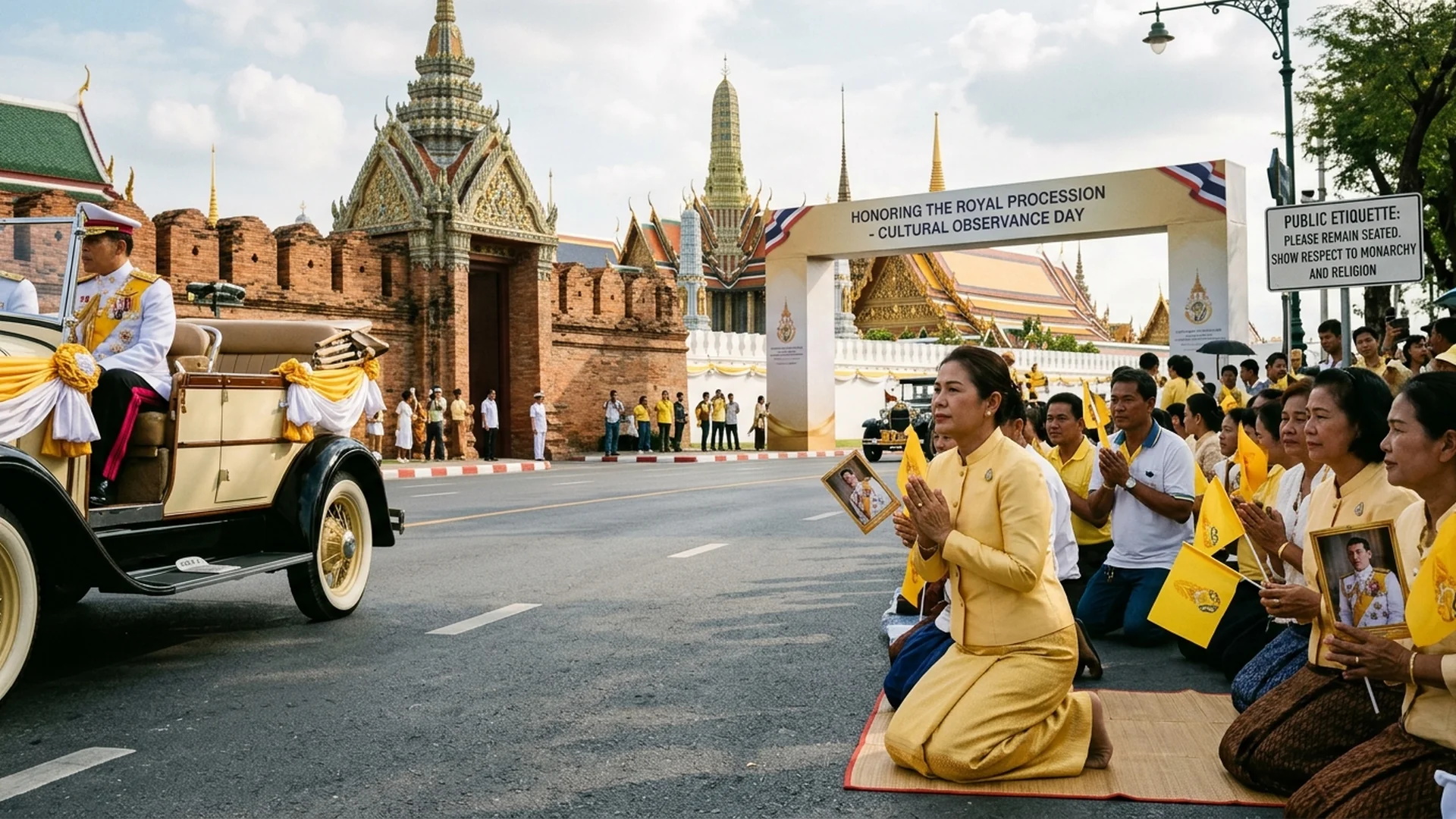
When the strains of the royal anthem echo through a velvet-draped cinema hall, or when hundreds of commuters pause in absolute stillness amid the morning rush at a central railway station, these moments transcend mere habit. They serve as a powerful, living reflection of the heart of Thai society—a tapestry where religion, the monarchy, and the state have interwoven across centuries into a singular, enduring national pulse.
For the discerning traveler seeking to look beyond the glittering facades of commercial tourism, understanding the subtle rhythms and social covenants of Thailand is the ultimate key to a meaningful journey. Public holidays within the Thai calendar are rarely designated merely for idle leisure; each major observance narrates a deep chapter of history, spiritual devotion, and the profound bond shared between the populace and the nation’s spiritual anchors. True cultural immersion begins the moment one learns to move in harmony with these rhythms, guided by reverence and quiet understanding.
The Foundation of the Three Pillars: Religion, Monarchy, and State
The architecture of Thai society rests upon an inseparable triad: Nation, Religion, and King. Mainstream Theravada Buddhism serves as the moral and spiritual forge for the populace, while the institution of the monarchy acts as the unifying spiritual center and traditional patron of the faith, tracing its lineage back through the golden eras of Sukhothai and Ayutthaya. In the modern era, the Thai state honors this profound synergy by establishing religious milestones as national holidays, allowing citizens to engage in merit-making and preserve ancestral customs. This intrinsic link transforms sacred calendar dates into moments of collective reflection. Travelers observing these days in metropolitan centers like Bangkok or ancient capitals such as Sukhothai and Ayutthaya will encounter an atmosphere of profound tranquility and heightened spiritual resonance.
The Rhythm of Life and State Observances: From Buddhist Holy Days to Royal Jubilees
The Thai official calendar is richly layered with historical memory and living faith. Major Buddhist holy days—such as Visakha Bucha, Makha Bucha, and Asalha Bucha—function far beyond mere administrative closures of government offices and banks. Instead, they transform temples nationwide into sanctuaries of glowing candlelight during evening circumambulation ceremonies known as Wian Tian. Additionally, royal birthdays and coronation anniversaries are observed as monumental state holidays, during which streets, civic buildings, and residences are adorned with national flags and royal emblems while citizens gather for formal expressions of allegiance. These traditions illustrate a devotion woven directly into the fabric of daily existence.
Essential Etiquette and Social Protocols for the Mindful Traveler
Navigating Thailand with grace and intellectual depth requires sensitivity to public space protocols. The tradition of standing at attention during the national anthem at 8:00 AM and 6:00 PM in public plazas, alongside rising for the royal anthem prior to film screenings, constitutes a vital gesture of respect for enduring local customs. Furthermore, Thailand enforces strict legal protections regarding the monarchy under Section 112 of the Criminal Code, making circumspection in speech, demeanor, and expression paramount. During significant religious observances, national policies mandate restrictions on the retail sale of alcohol, requiring travelers to align their itineraries thoughtfully with these regulatory periods.