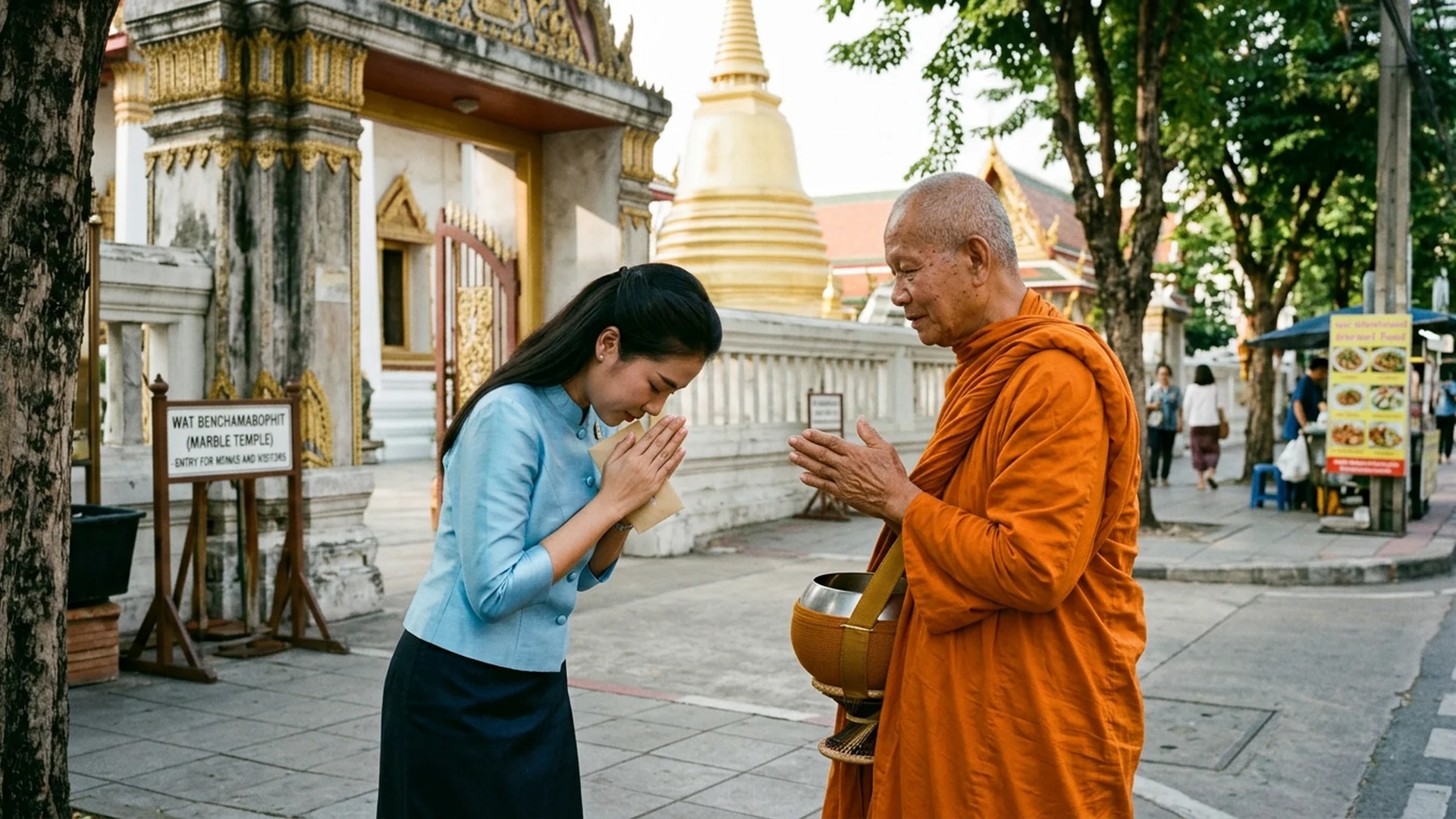
Amidst the swift current of our modern world, Thai society steadfastly preserves a delicate and profound cultural architecture propelled by the subtle currents of respect and seniority. Stepping onto this golden soil is far more than an appreciation of ancient architecture or vibrant gastronomy; it is an immersion into a sophisticated theater of human interaction where intricate cultural codes are quietly embedded in every gesture.
True comprehension of the Thai social fabric begins with the realization that every utterance, every smile, and every physical movement tells a story of status, relationship, and mutual honor. Body language and the systems of deference in Thailand serve as the master keys that unlock profound trust and the warm, embracing hospitality of gracious hosts.
The Architecture of Humility: Decoding the Levels of the Wai
The wai is far more than a simple greeting; it is an elevated physical lexicon of profound respect. In Thai culture, this joined-hand gesture involves intricate positioning divided into three primary tiers based on the seniority and social standing of the recipient. The highest tier is reserved for monks and sacred deities, where the fingertips touch between the eyebrows and the thumbs rest upon the forehead, symbolizing absolute spiritual reverence. The second tier honors benefactors or respected elders, with fingertips resting at the tip of the nose and thumbs at the bridge of the brow, denoting humility toward those to whom one owes gratitude. The third tier, utilized for peers or younger individuals deserving of courtesy, places the fingertips at the center of the chest and the thumbs at the tip of the nose.
In international contexts, travelers should understand that when a child or someone younger initiates a wai, an adult is not strictly required to return the gesture in kind. Instead, acknowledging the greeting with a gentle smile, a nod, or kind words serves as a completely appropriate and graceful response within traditional etiquette.
Territories of the Body: The Kinesics of Head and Feet
Within the dimension of Thai body language, the human body is not merely physical flesh but is governed by a spiritual hierarchy. The ‘head’ is revered as the most elevated and sacred anatomical feature, serving as the dwelling place of the spirit and personal dignity. Reaching out to touch someone’s head—even out of affection or playful fondness—constitutes a severe personal violation in Thai society.
Conversely, the ‘feet’ occupy the lowest rung of physical and spiritual purity. Utilizing the feet to point at objects, stepping over sacred imagery or currency, or sitting cross-legged with the soles facing elders or monks represents a profound breach of decorum. Understanding these somatic boundaries protects visitors from inadvertent offenses and demonstrates a refined sensitivity to local traditions.
The Art of Emotional Grace: The Culture of Saving Face
The structural integrity of Thai society is propelled by an enduring desire to maintain social harmony and avert public confrontation. The concept of preserving emotional grace and avoiding public embarrassment—commonly known as saving face—plays an indispensable role in daily communication. Direct criticism or overt displays of anger in public spaces are widely discouraged and can instantly fracture long-term relationships.
When challenges or mistakes arise, communication characterized by gentle tones, understanding smiles, and collaborative problem-solving without pointing fingers forms the cornerstone of trust-building. This emotional flexibility endows Thai society with a profound gentleness, ensuring that every interpersonal interaction remains emotionally secure.