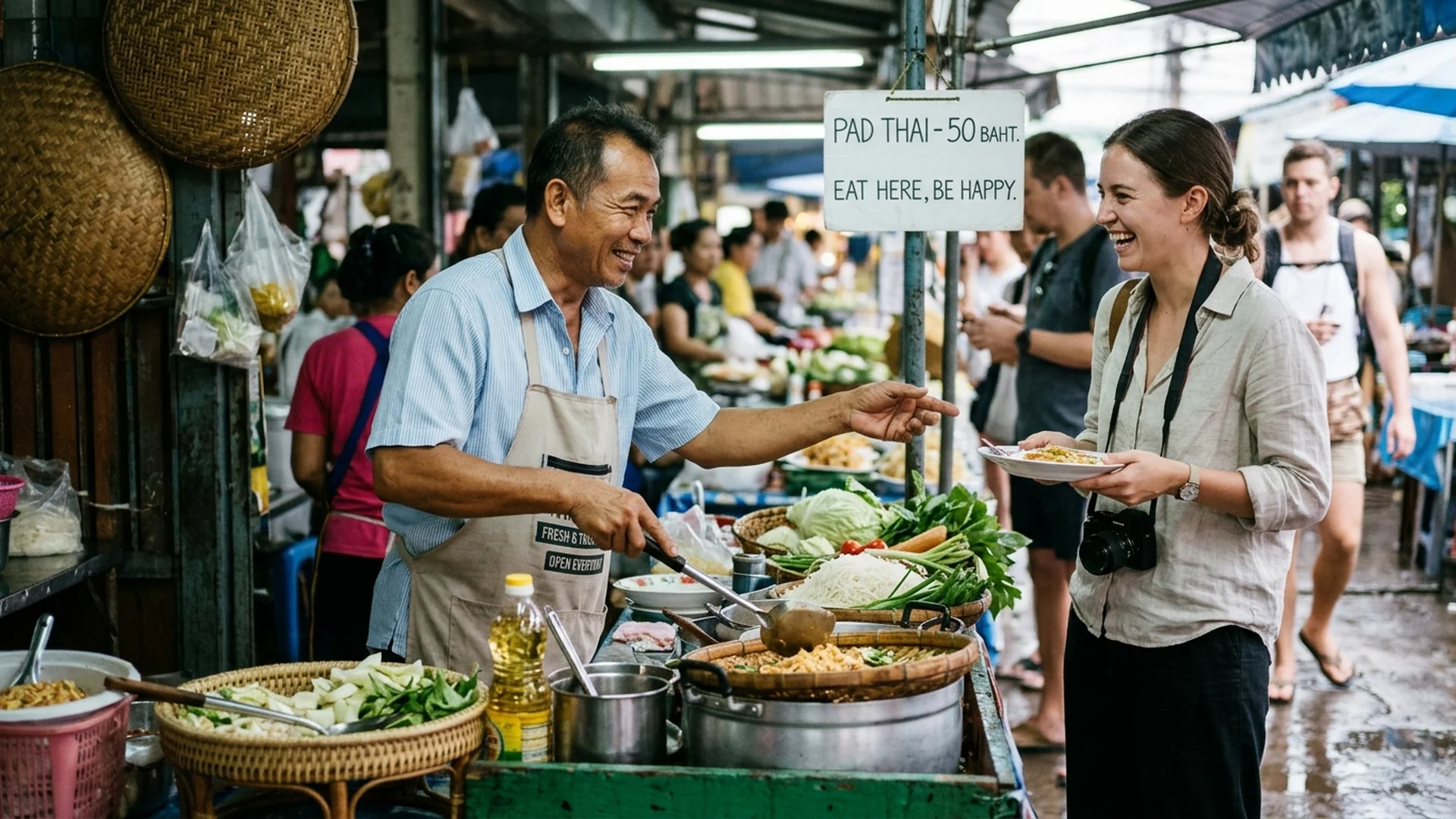
When a smile is far more than a physical reaction and instead becomes a spiritual language weaving together long-standing narratives, Thailand reveals its true essence as the Land of Smiles. Yet beneath the global acclaim for this effortless warmth lies a deeply intricate cultural and psychological architecture. Behind this seamless attentiveness hides a harmonious interplay of thought mechanisms that quietly govern everyday life and interpersonal connection.
To truly comprehend Thai hospitality is to journey far beyond physical comforts, stepping deep into the core of the human heart through three elegantly simple yet immensely powerful concepts: Sanuk, Sabai, and Kreng Jai. These three foundational pillars not only drive daily social interactions in Thailand but serve as the golden keys unlocking travel experiences characterized by profound meaning and deep empathy for fellow human beings.
The Dimension of Sanuk: When Joy Becomes a Philosophy of Being
In Western lexicon, the word fun is frequently sequestered within moments of amusement or recreational diversion. Within Thai culture, however, Sanuk is an all-pervading philosophy of existence that infiltrates every pore of life, from cultivating rice paddies to attending to guests in luxury sanctums. Thai people possess an extraordinary innate capacity to unearth vibrant facets in every circumstance. Sanuk dissolves tension, softens rigid behavioral constructs, and fosters an immediate atmosphere of easy familiarity. When Thai hosts care for travelers with the spirit of Sanuk, service ceases to be mere mechanical compliance; it transforms into an organic sharing of positive energy and delight, an authentic joy visibly reflected in their eyes and genuine smiles.
The Way of Sabai: The Art of Flexibility and Equilibrium
The word Sabai—frequently familiarized by international travelers through the comforting idioms of mai pen rai and chai yen—embodies a psychological elasticity rarely found in fast-paced modern societies. This state of Sabai denotes neither idleness nor indolence, but rather a profound wisdom in managing expectations and alleviating daily pressures. Within the dimension of Thai hospitality, Sabai equates to forging a secure sanctuary where visiting guests feel completely untethered from control, embraced with the tender care typically reserved for family. The gentle grace with which unexpected challenges are met with a smile and a tranquil disposition stands as ultimate proof that Sabai gracefully conquers every form of tension.
The Internal Architecture of Kreng Jai: The Beauty of Mutual Consideration
If Sanuk and Sabai provide positive propulsion, Kreng Jai acts as Thailand’s most precious social regulatory mechanism. Born from an acute, deeply felt awareness of others’ feelings, Kreng Jai is the conscious avoidance of imposing burdens or causing unnecessary disturbance. In the realm of hospitality, this manifests as meticulous attention to subtle details, anticipating a guest’s unvoiced desires, and tending to needs with profound humility. Kreng Jai is never born of fear; rather, it is the highest expression of mutual respect, acting as an invisible bridge ensuring that interactions between hosts and travelers flow smoothly and with the utmost dignity.