When the morning mist parts to reveal the razor-ridged limestone crest of Doi Luang Chiang Dao or the labyrinthine emerald valleys of Khao Sok, such untouched magnificence is far more than a fleeting wanderlust fantasy. It is an exquisitely fragile living ecosystem demanding uncompromising reverence and protection. Crossing the threshold into Thailand’s protected sanctuaries today requires far more than physical conditioning for punishing ascents; it demands an intimate fluency with the administrative machinery and digital protocols governing these national treasures, meticulously designed to balance modern visitation with enduring ecological survival.
Journeys into the country’s most iconic wilderness realms—whether conquering remote skyline ridges or traversing long-distance forest trails bound by strict daily visitor caps—hinge entirely upon thoughtful anticipation and adherence to regulatory stewardship. This editorial survey compiles every essential facet required by discerning naturalists and mindful travelers, spanning digital reservation systems, documentation prerequisites, and the timeless code of ethics that every custodian of the wild must uphold.
Deciphering the Digital Threshold: The Que-D Framework and Carrying Capacities
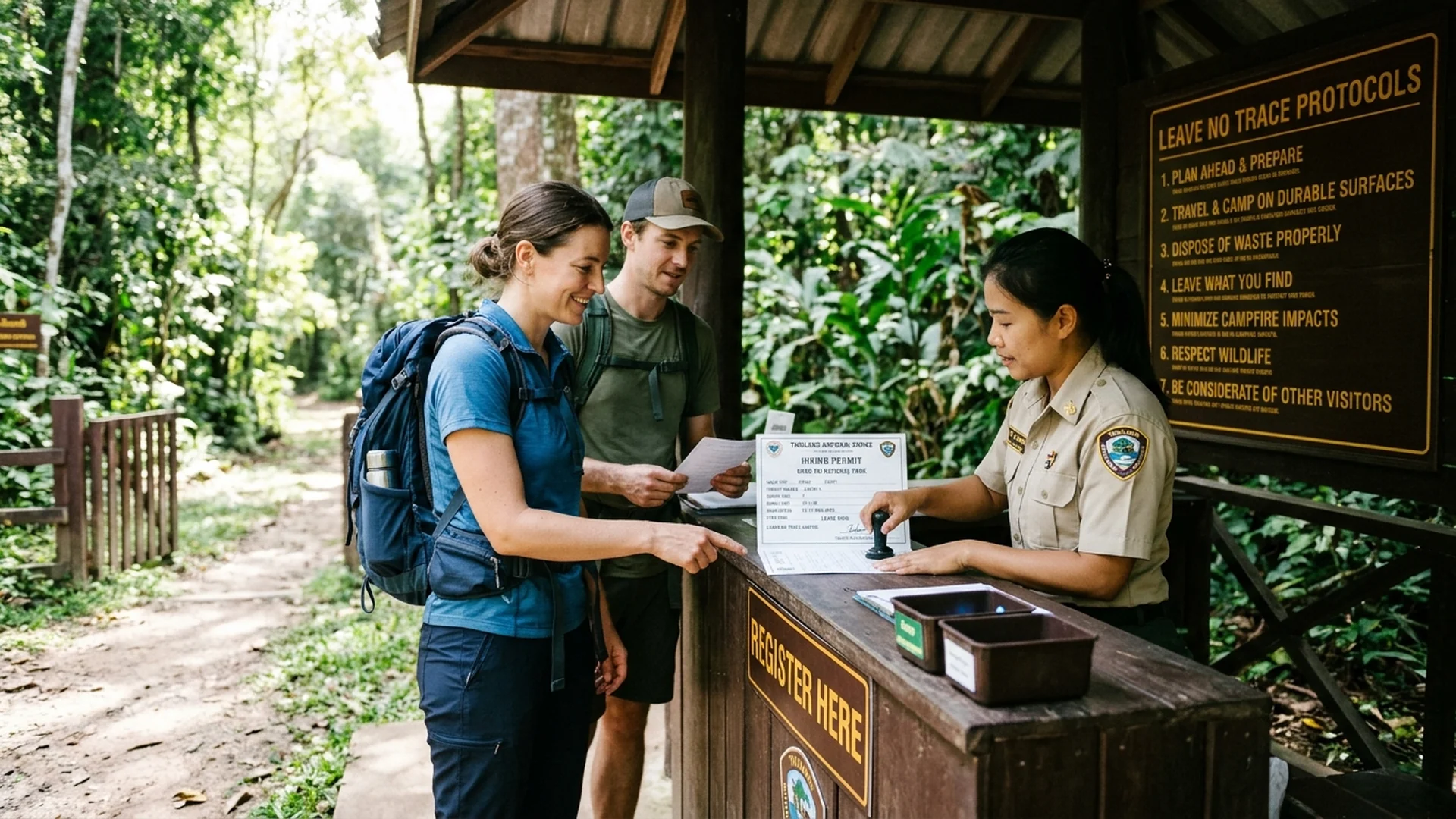
In earlier eras, ascending Thailand’s formidable cloud forests often involved spontaneous arrangements at park gates or direct negotiations with on-site wardens. Today, the Department of National Parks, Wildlife and Plant Conservation has elevated conservation management into the digital age through the Que-D application. By strictly regulating carrying capacities to prevent ecological degradation, the platform ensures that human footprints remain within sustainable thresholds. Discerning travelers must secure their allocations well in advance, particularly during the pristine winter high season when quotas vanish moments after release. Registration is far more than a bureaucratic formality; it is a vital safety tether ensuring swift emergency response along remote trails. Furthermore, visitors must remain attuned to seasonal closures—temporary pauses enforced annually to grant flora and fauna uninterrupted cycles of regeneration.
Bridges of Forest Wisdom: The Indispensable Role of Local Guides and Porters
Trekking across Thailand is never merely about following one’s own boot prints; it is an intimate immersion guided by those who know the forest’s heartbeat. Regulations across numerous protected enclaves mandate the presence of accredited local guides and porters. Far beyond mere pathfinders or load-bearers, these individuals are custodians of ancestral wisdom, holding profound knowledge of medicinal botany, wildlife patterns, and indigenous oral histories. Engaging local guides according to official protocols directly channels economic vitality back into forest-edge communities, transforming local villagers into the most impassioned guardians of the canopy. Treating these partners with deep cultural respect, shared camaraderie, and genuine appreciation remains one of the supreme privileges of the high-country journey.
The Seven Pillars of Leave No Trace: Fading Footprints and Lasting Meaning
The Leave No Trace (LNT) philosophy has evolved from a global conservation ideal into an uncompromising standard across Thailand’s wilderness. Comprising seven core tenets—planning ahead and preparing, traveling and camping on durable surfaces, disposing of waste properly, packing out all refuse including recalcitrant organic scraps, leaving natural objects and cultural artifacts undisturbed, minimizing campfire impacts, and respecting wildlife and fellow travelers—the framework addresses the silent threat of modern debris. Plastic waste and discarded food scraps can slowly suffocate sensitive understories; thus, embracing LNT is not a discretionary choice, but an ethical obligation for anyone who claims a love for the wild.