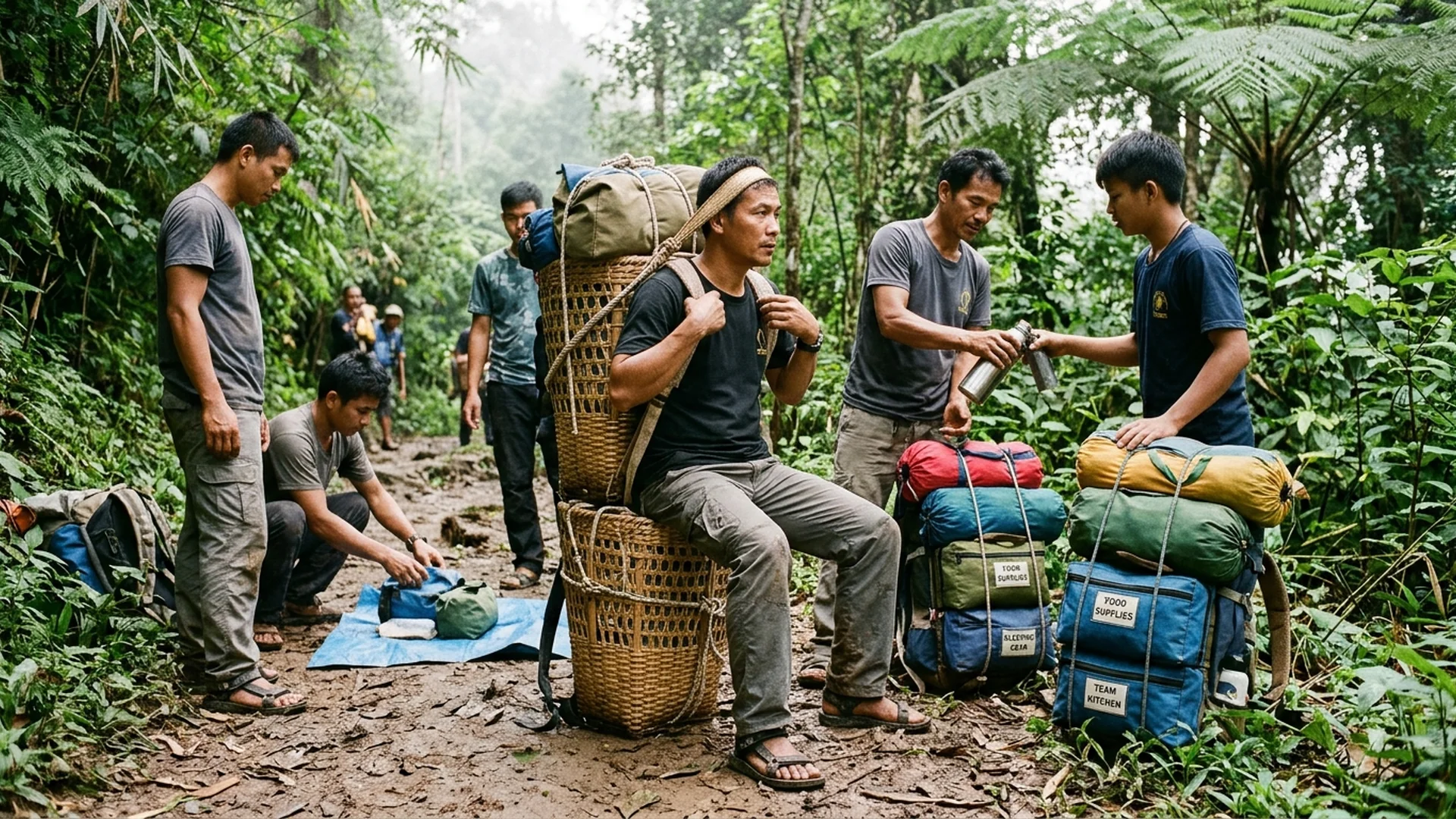
The heavy, rhythmic crunch of footsteps upon rain-slicked earth, the sharp bite of alpine wind sweeping through ancient pines, and the substantial weight of provisions securely lashed to the backs of silent companions—these form the indelible sensory signature of wilderness trekking. When ascending lofty peaks and mist-shrouded ridges, the local porter emerges not merely as logistical support, but as the very heartbeat that renders such journeys possible. Beneath their remarkable physical resilience lies a rich tapestry of ancestral mountain wisdom, quiet trust, and a refined geometry of load-bearing passed down through generations. To understand their world is to honor the living breath of landscapes they know more intimately than any map.
The Heart of the Highlands: Understanding Porter Culture and Mountain Guardians
Across high-altitude sanctuaries, local porters are far more than mere contract laborers; they are specialized local experts who have matured alongside the wilderness. Operating primarily through community-managed networks or park authorities, their protocols and standard tariffs are designed to safeguard their long-term well-being and health—typically capping individual loads at thirty kilograms to prevent physical strain. Engaging these seasoned mountain guardians directly supports regional livelihoods and forges a profound bond of mutual respect between traveler and terrain. Embracing their unhurried rhythm, honoring sacred rest intervals, and communicating with quiet humility transforms an ordinary trek into an enduring fellowship.
The Science of Trail Packing: Safeguarding Gear and Balancing Weight Distribution
Preparing gear for porter transport differs fundamentally from packing a standard travel suitcase. Luggage must endure rope lashings, unpredictable downpours, and muddy ascents. The foundational rule begins with durable, highly water-resistant Duffel Bags or internal Dry Bags that serve as impenetrable shields against the elements. Weight distribution requires meticulous symmetry: dense items should rest squarely in the center, hugging the back panel to prevent structural sagging during transit. Furthermore, external attachments should be strictly avoided to prevent equipment from snagging on low-hanging branches or disappearing entirely along dense forest tracks.
Ethics and Team Care: Beyond Employment to Shared Mindfulness
Traveling alongside a porter crew is a true testament to a traveler’s maturity and mindfulness. Basic etiquette begins with scrupulously weighing packs to ensure fairness, rejecting any temptation to exceed agreed-upon limits. Upon reaching camp, acts of simple hospitality—sharing warm beverages, fostering warmth around communal fires, or assisting with tent organization—cultivate an atmosphere of genuine camaraderie. Concluding the journey with an appropriate gratuity serves as a tangible expression of gratitude for their tireless dedication in ensuring our precious equipment and safe passage through challenging terrain.