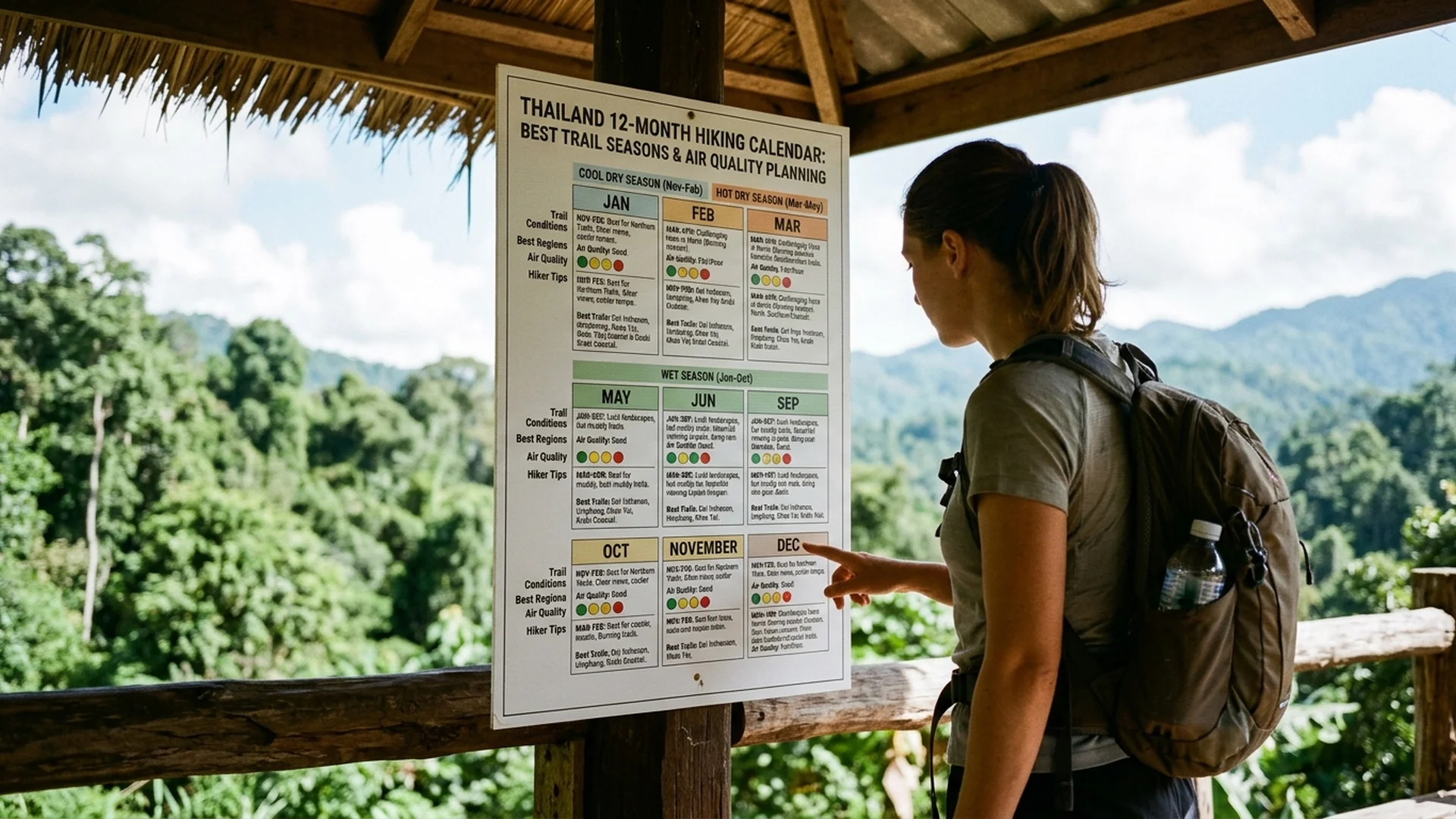
The wilderness of Southeast Asia is never truly static. Every footstep along Thailand’s ancient forest trails whispers of shifting monsoons, altitude, and botanical rhythms. From high northern ridges wrapped in heavy morning blankets of mist to deep, emerald-hued rainforests swelling with the tropical rains, nature orchestrates a distinct pulse month by month. To journey here is to attune oneself to the environment, moving in harmony with the wild rather than against it.
Yet, the contemporary explorer must navigate complex modern variables: seasonal agricultural haze, air quality fluctuations, and vital annual park closures designed for ecological rehabilitation. Mastering the Thai highlands demands both broad vision and precise timing. In this transcreated editorial calendar, we open the 12-month ledger of Thailand’s wilderness, illuminating the golden windows of the peaks while approaching the natural world with profound respect and understanding.
The Cool Season (November – January): The Allure of Mist and Sky-High Ridges
When the initial whispers of cool air sweep down across the mainland, the northern and northeastern highlands embrace a refreshing chill and atmospheric low-lying mists. This signals the inauguration of the premier trekking season. November retains the verdant warmth of the receding monsoon while introducing late-season wildflowers. By December and January, high-altitude temperatures drop noticeably, inviting crisp alpine mornings. Trails along the sandstone ridges of Phu Kradueng or the deep nature corridors of Chiang Mai and Mae Hong Son reveal expansive oceans of mist at dawn. Golden sunlight piercing through pine stands and wide meadows creates indelible memories. For those captivated by grand topographical scale and pristine air, this is the definitive epoch of the mountain year.
The Heat and Haze Transition (February – April): A Test of Ecological Awareness
February ushers in a drier clime, transforming much of the lowland landscape into palettes of burnished gold and rust. While certain early wildflowers—such as wild Himalayan cherry blossoms—briefly paint the forest canopy in early February, the upper regions soon face significant environmental challenges. Agricultural burning and regional atmospheric conditions frequently concentrate fine particulate matter (PM2.5) within the mountain basins. Compounding this, the Department of National Parks enacts annual forest closures to mitigate wildfire risks and grant flora and fauna a period of quiet recovery. Discerning travelers naturally pivot away from the northern canopy during these months, turning instead toward southern coastal rainforests or eastern evergreen sanctuaries where air currents remain clearer.
The Green Season (May – October): Emerald Pulses and Cliffside Wildflowers
When the monsoon rains awaken the earth, the wilderness bursts into life. The Green Season commences in May, turning parched woodlands into saturated tapestries of green. Waterfalls thunder with renewed vigor. From August through October, the highland sandstone plateaus host a breathtaking botanical spectacle: carpets of delicate earth orchids, gingers, and bladderworts bloom in unison. Navigating these mist-veiled forests offers an intimate, meditative solitude, bringing travelers close to the thriving heart of the ecosystem. This quiet communion requires embracing high humidity and the occasional damp trail as part of the authentic jungle experience.
Park Closures and Ecological Rehabilitation: Listening to the Earth’s Repose
Long-term journey planning in the kingdom requires more than meteorological awareness; it demands respect for cyclical conservation closures. During peak monsoon months—particularly between July and October—numerous national parks along the Andaman coast, the Gulf, and ecologically fragile highland peaks temporarily close their gates. These strategic pauses prevent trail erosion from flash floods and allow native habitats to heal undisturbed. Aligning one’s itinerary with official state declarations is the ultimate hallmark of a responsible, conscious global traveler.