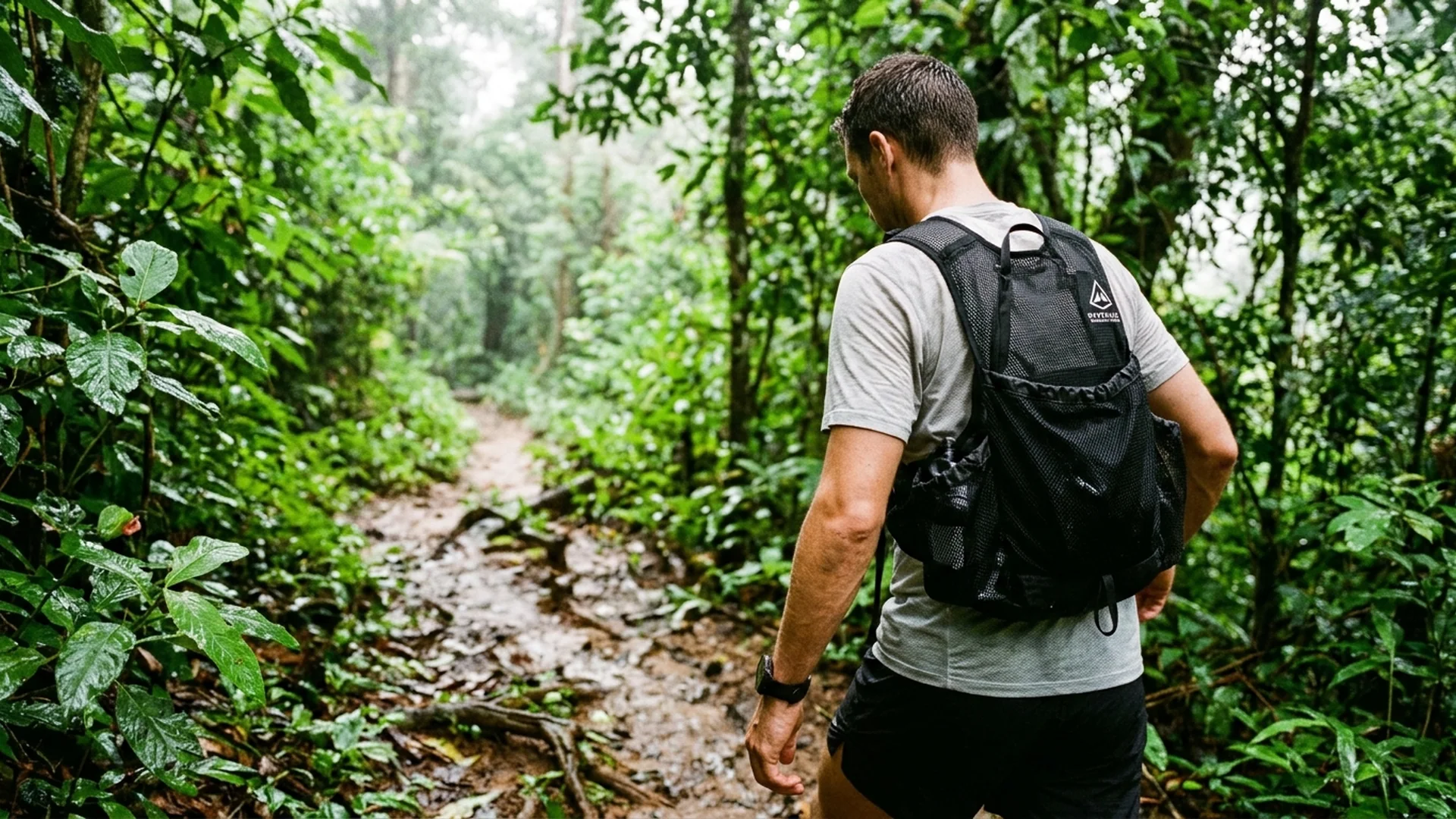
When the morning mist weaves through the ancient canopies of Thailand’s rainforests, the call of the peaks demands more than just a resolute spirit. The heavy burden once carried like a world upon one’s shoulders has transformed into a vital puzzle for the discerning artisan hiker. The conventional wisdom that packing for every conceivable contingency equals absolute safety no longer holds sway in the crucible of a tropical wilderness, where sudden torrential downpours, soaring relative humidity, and intricate, steep topography dictate the terms.
Thus, ultralight hiking and fastpacking have emerged in a refreshed paradigm—not as a slavish imitation of Western alpine manuals, but as a sophisticated reinterpretation of lightness tailored to the raw, pulsating vitality of Thailand’s natural world, where every single gram on the shoulder alters the rhythm of stride and breath.
Deconstructing Western Manuals: Why Tropical Ultralight Differs
Novice hikers frequently fall into the trap of acquiring high-end ultralight gear from North America or Europe, overlooking the reality that dry, cold temperate climates differ fundamentally from Thailand’s tropical rainforests and monsoonal jungles. The forests of Thailand do not demand high-angle alpine tents designed to withstand sub-zero gales; rather, they require supreme ventilation systems to combat the vapor that condenses relentlessly every single night. Humidity is the quiet adversary that saturates garments and sleeping bags alike. Achieving an optimal base weight is therefore not merely a matter of discarding superfluous items, but of selecting multi-functional gear that performs brilliantly and dries with absolute swiftness.
Decoding the Big Three in the Rainforest: Packs, Shelters, and Rainflies
The core of minimalism lies in the mastery of the big three: the pack, the sleep system, and the shelter. Within the Thai wilderness, a hammock system consistently surpasses traditional tents by elevating the traveler clear of damp soil, ground-dwelling fauna, and tropical insects, all while offering a vastly reduced combined weight when paired with an ultralight Silnylon or Dyneema rainfly.
For fastpacking endeavors, selecting a 25-to-35-liter technical pack devoid of cumbersome internal metal frames is paramount. Ergonomic shoulder and hip harnesses secure the load against torso sway during steep ascents. Strategic packing demands that dense items remain close to the spine, while moisture-sensitive items such as sleepwear and down quilts are invariably sealed within robust dry bags.
Tactics for Managing Humidity and Trail Nutrition
The primary challenge of the Thai jungle is moisture that permeates every microscopic space. Effective ultralight gear must never retain moisture. Garments must be composed of technical synthetics that dry rapidly, strictly avoiding cotton. Regarding hydration, traversing landscapes laced with natural streams renders the carriage of heavy reserve water obsolete. Carrying a microfilter or purification tablets immediately shaves pounds off a base weight.
On the culinary front, fastpacking and ultralight journeys rely upon lightweight, energy-dense provisions that require nothing more than boiling water, minimizing the reliance on bulky gas canisters and complex cooksets in favor of a titanium micro-stove and a single efficient pot.