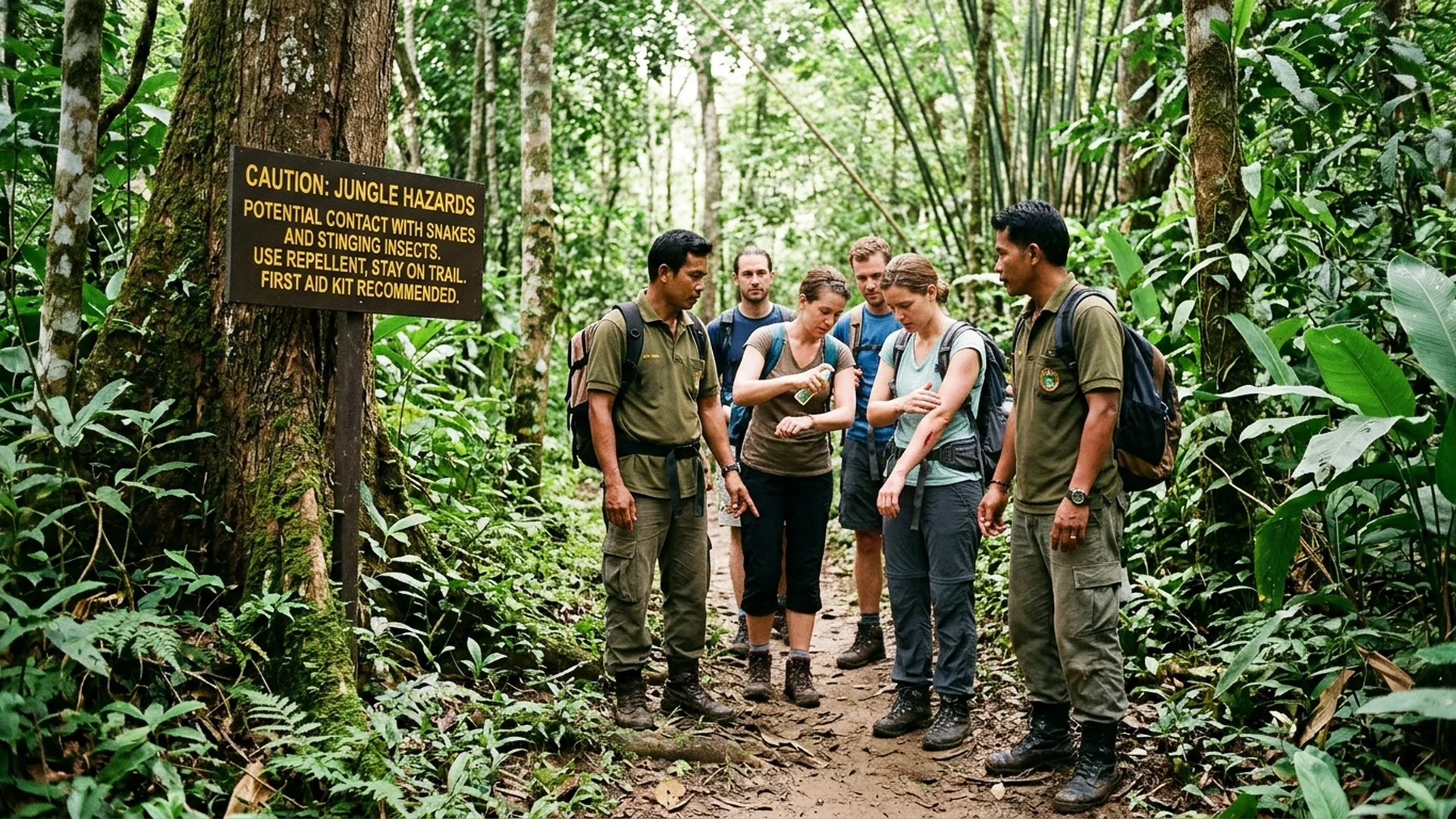
The sudden rustle of foliage ahead is rarely just a passing breeze; it is often a silent advisory from the true masters of the humid tropical forest. Thailand’s ecosystems are wonderfully diverse and world-renowned for their pristine hiking trails, yet this splendor demands deep respect and an acute awareness from the discerning traveler. Stepping into protected natural sanctuaries is not merely a test of physical endurance, but an exercise in learning to coexist with and honor the immutable laws of the wild.
When the forest remains unpredictable, knowledge and mindfulness serve as the ultimate armor. Understanding the behavioral patterns of indigenous fauna, observing the subtle warning signs of hazardous flora, and preparing thoroughly for unforeseen contingencies form the cornerstone of turning every step along the trail into an experience defined by quiet confidence and absolute security.
The Art of Encounter: Navigating Cross-Paths with Wild Elephants and Large Fauna
Wild elephants stand among the most majestic yet environmentally sensitive creatures in the forests of Thailand. Encounters along trekking routes need not spell disaster if international wildlife protocols are strictly observed. The absolute golden rule is never to approach, maintaining a minimum buffer of fifty meters at all times. Should you find yourself in an unexpectedly close encounter, fleeing is strictly prohibited as it triggers predatory instincts and pursuit behavior. Observe their body language: if an elephant spreads its ears, tosses its trunk, or emits a low rumbling vocalization, it serves as a critical warning. Slowly retreat backward into obstructed terrain, seeking refuge behind a mature tree with a trunk wider than the animal itself, while maintaining heightened, silent vigilance. Furthermore, in territories frequented by warm-blooded mammals, wearing earth-toned apparel that harmonizes with the landscape and abstaining from heavily scented perfumes will significantly minimize unwanted wildlife attraction.
Silent Dangers in the Underbrush: Venomous Insects, Reptiles, and Field Protocols
Beyond large mammals, hikers frequently contend with smaller yet perilous members of the rainforest fauna. Nests of hornets, wasps, or forest ants concealed within branches and earthen cavities inflict severe pain if disturbed inadvertently. Noticing a dense concentration of airborne insects serves as an immediate cue to halt and reroute. If stung, utilize a rigid card to scrape away the stinger rather than squeezing, which accelerates venom dispersal, followed by a cold compress to minimize swelling.
Venomous snakes often coil silently among rock crevices or dense thickets. Wearing high-ankle hiking boots and employing trekking poles to gently tap the brush ahead, generating vibrations, serves as the most effective preventative measure. In the rare event of a snakebite, never slash the wound or apply tourniquets. Instead, keep the patient completely immobile to slow venom circulation, memorize the snake’s head shape and patterning to inform medical personnel, and evacuate promptly without allowing the patient to walk unassisted.
Botanical Irritants: When Nature Conceals Thorns and Hidden Toxins
The tropical flora of Thailand exhibits astonishing biodiversity, yet certain species employ formidable defense mechanisms. A primary plant of concern is cowhage, whose pods and fine trichomes contain toxins causing intense pruritus and burning sensations. Should contact occur, scratching must be avoided entirely, as it embeds microscopic barbs deeper and broadens the affected area. Initial treatment involves applying adhesive tape over the affected skin and gently pulling it away to extract the fine hairs, followed by rinsing with clean water and applying a cold compress. Thorny vines and caustic sap-bearing plants can similarly provoke dermatitis and blistering upon direct skin contact. Wearing tightly woven long sleeves and durable trousers serves as the initial line of defense against inadvertent botanical contact.
The Aesthetics of Preparation: Curating the Ideal Deep-Forest Pack
Curating an effective Trail First Aid Kit reflects a traveler’s commitment to self-reliance and environmental responsibility. A well-prepared backpack houses carefully selected emergency items, including oral antihistamines for insect or plant-induced allergic reactions, soothing anti-itch and antiseptic topical creams, instant cold packs, and elastic bandages for joint sprains or snakebite immobilization protocols. Additionally, packing basic venom extraction tools, a distress whistle, and a headlamp with spare batteries ensures readiness. Storing these essentials within waterproof pouches in easily accessible compartments enables rapid, efficient crisis management when every second counts.