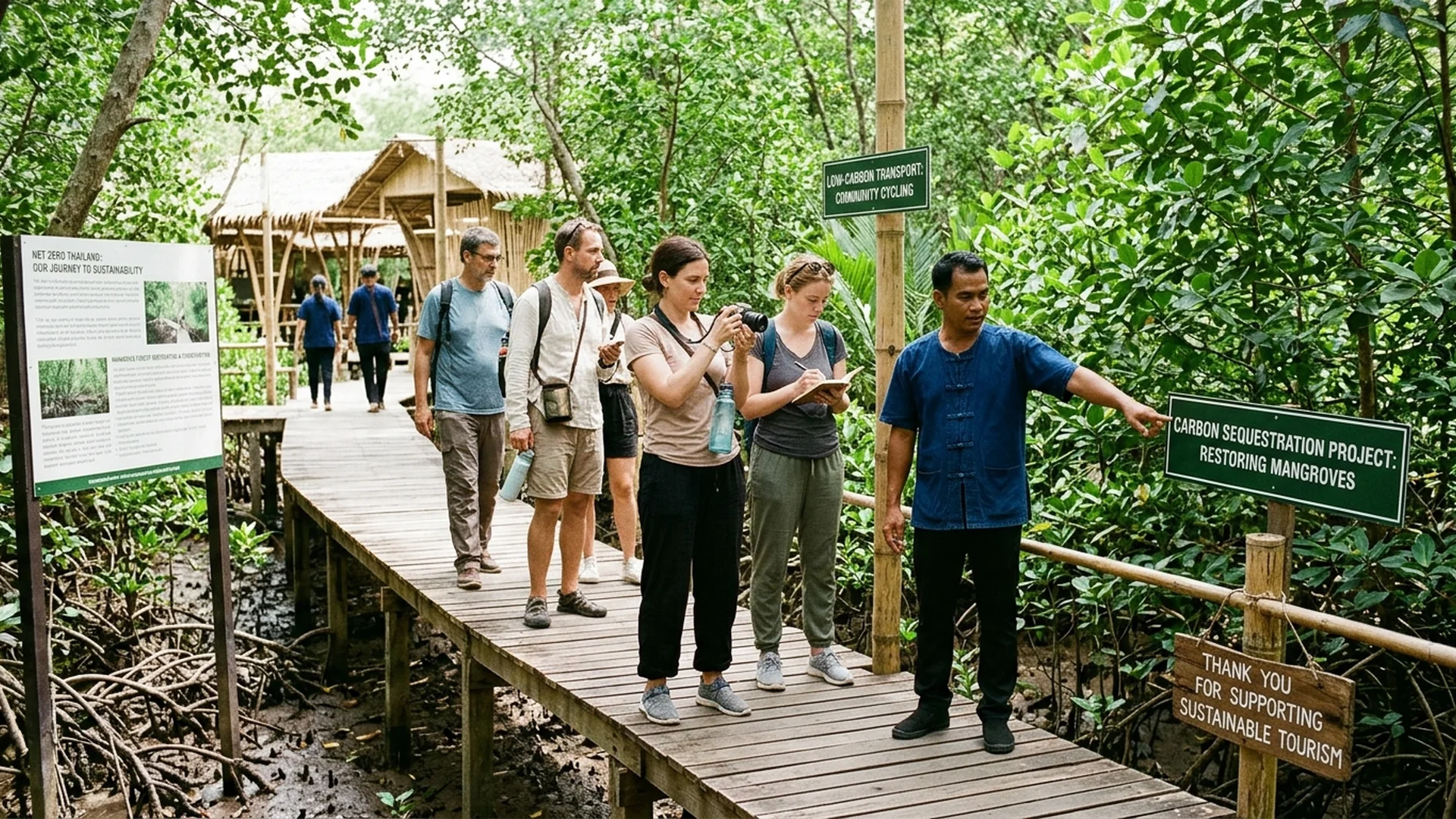
When our footsteps upon earth and shore leave behind more than mere memories—imposing an ecological burden that nature must silently shoulder—modern global exploration reaches a profound crossroads. We are moving inexorably from transient pleasure to shared stewardship. Thailand, as a cherished global destination, looks far beyond mere visual splendor, driving a decisive strategic pivot toward low-carbon tourism and net-zero ambitions to safeguard the breathing forests, azure seas, and ancient cultures that sustain us.
Contemporary travel under the banner of carbon-neutral exploration is neither burdensome nor an exercise in ascetic restriction; rather, it is the refined art of living harmoniously with the natural world. It stems from the quiet realization that every kilometer traversed, every dish savored, and every night spent within a sanctuary carries a distinct ecological cost. Calculating and offsetting those footprints becomes a silent love letter returned to the planet, elevating our journeys far beyond the simple act of checking in.
Deciphering the Paradigm: From Carbon Neutrality to Net Zero in Thai Travel
The philosophy of carbon-neutral tourism does not demand that we cease exploring the world; rather, it invites meticulous stewardship over the greenhouse gases generated across the entire tourism supply chain. In Thailand, the Thailand Greenhouse Gas Management Organization (Public Organization), or TGO, plays a pivotal role in assessing and certifying the emissions profiles of hospitality venues and travel experiences. A carbon-neutral itinerary begins with calculating one’s carbon footprint—accounting for transit vehicles, hotel energy consumption, and waste management—before proactively mitigating and offsetting remaining emissions through voluntary greenhouse gas reduction initiatives. These include community reforestation, mangrove conservation, and the support of localized clean energy projects.
Koh Mak and Community Networks: Living Laboratories of Low-Carbon Living
To witness low-carbon tourism fully realized in Thailand, one need look no further than Koh Mak in Trat Province, an internationally acclaimed beacon of sustainable island management. This serene haven has made an unwavering commitment to low-impact living through strict plastic reduction, bicycle and electric vehicle (EV) rentals, systematic waste management, and the championing of organic, locally sourced seafood that eliminates the heavy emissions associated with trans-regional food transport. Beyond Koh Mak, a sprawling network of community-based tourism initiatives—such as the upland forested communities of northern Thailand—have transitioned from chemical agriculture toward regenerative agroecology, guarding pristine watershed forests as vital national carbon banks. Travelers who engage with these communities are never mere consumers; they become active participants in nourishing localized, ecologically harmonious economies.
The Art of Calculation: Assessing the Carbon Footprint of Every Footstep
Becoming a mindful traveler in the modern era begins with simple awareness achieved through trip carbon accounting. A comprehensive evaluation rests upon three foundational pillars: transport, accommodation, and activities. Aviation remains the heaviest carbon emitter, followed by private automobiles and public transit; accommodations featuring smart energy management, wastewater recycling, and local materials exhibit significantly lower carbon intensity; and experiential activities that prioritize low food miles and minimal resource consumption complete the loop. Advanced digital tools and carbon calculators now empower discerning travelers to evaluate these figures in advance, enabling precise, intentional offsetting before departure.