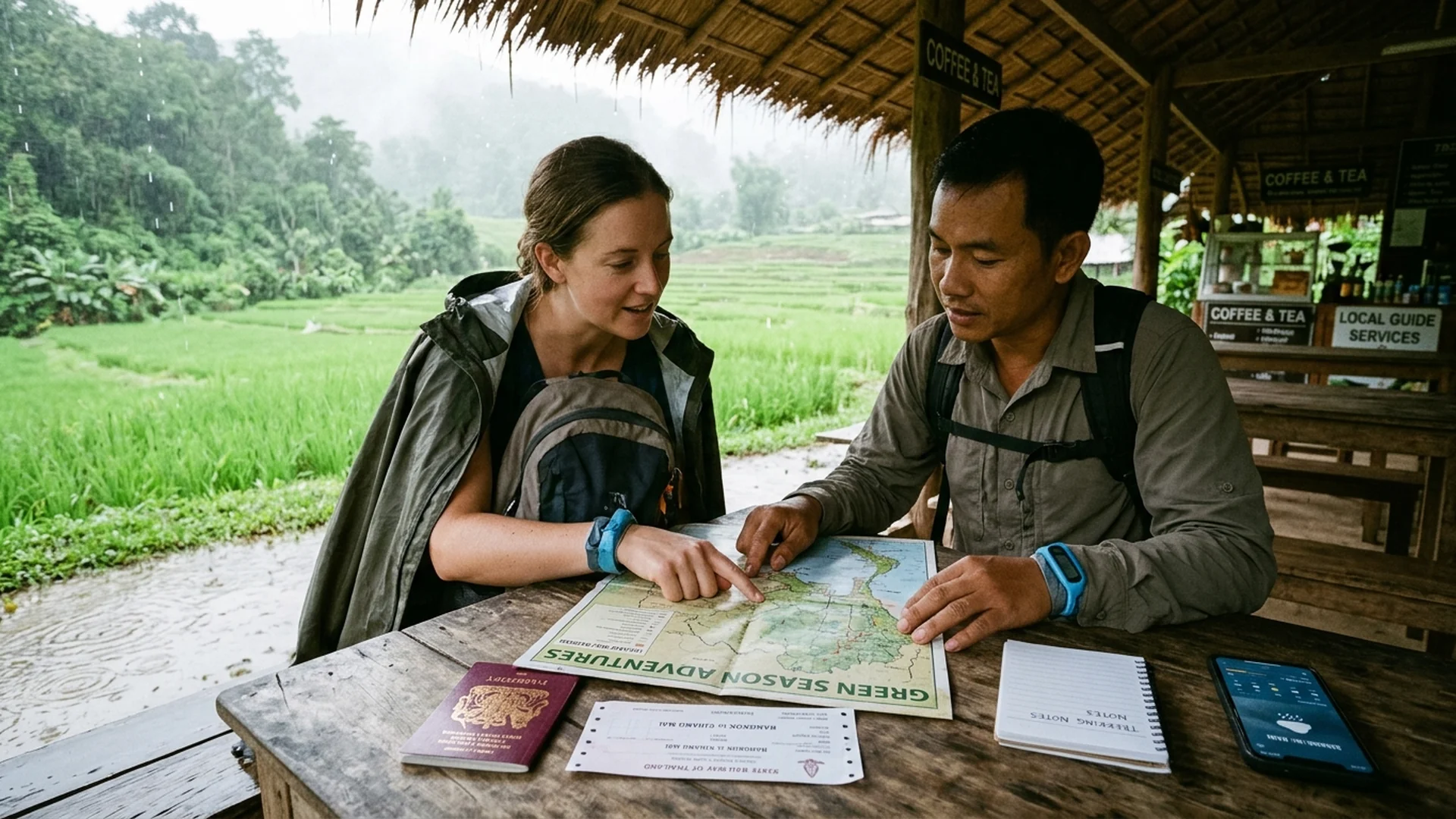
When the year’s inaugural rains sweep across the landscapes of Thailand, the parched exhaustion of the dry months dissolves instantly. In its place rises a luminous, breathing tapestry of emerald—deep moss-veiled forests and cascading rice terraces saturated in green. While casual observers might dismiss the monsoon as a deterrent, discerning global travelers recognize the ‘Green Season’ as the most evocative, unhurried, and transcendent time of year.
Journeying through this period is not merely a holiday; it is an aesthetic immersion. Heavy mists drifting low through mountain folds, the sharp, grounding scent of petrichor rising from warmed soil, and the rhythmic percussion of raindrops on broad tropical leaves compose a restorative symphony unattainable in any other season. Most importantly, it presents a golden window to experience world-class luxury resorts and boutique hideaways with absolute privacy and extraordinary value.
This editorial explores the most sublime natural coordinates, intelligent sanctuary selection, and strategic planning protocols designed to transform seasonal rains into an unforgettable, deeply cherished voyage.
1. Deciphering Green Season Coordinates: From Northern Mountain Mists to Andaman Rainforests
The true allure of travel during the Green Season lies in the sudden, dramatic metamorphosis of the topography. Northern Thailand serves as an immediate, captivating prologue. The province of Nan undergoes a profound transformation into an emerald sanctuary, where the tiered rice paddies of Pua and the remote village of Sapan shift from pale gold to vibrant malachite. Navigating the legendary sky roads amidst drifting rain-mists yields cinematic vistas that rival classical landscape paintings.
Simultaneously, Mae Hong Son—the legendary ‘City of Three Mists’—offers profound valley seclusion. Whether watching the morning rain clear over the tea plantations of Ban Rak Thai or finding quiet equilibrium in Pai, the region breathes with a restorative stillness. Further south, Khao Kho in Phetchabun emerges as a premier destination for witnessing the renowned post-rain sea of mist, where heavy atmospheric moisture collides with cool evening air to form dense, unbroken blankets of cloud resting softly in the valleys below.
For those drawn to coastal majesty, the Andaman shores of Phang Nga present a compelling counterpoint. While maritime excursions may pause, the limestone karst forests and secluded coastal sanctuaries are draped in pristine freshness, inviting travelers to surrender to the sound of breaking waves and the pristine vitality of the tropical ecosystem.
2. The Art of Sanctuary Selection: Experiencing the Sea of Mist in Serene Isolation
The defining catalyst that elevates a rainy-season excursion into a transcendent luxury experience is the choice of residence. During the Green Season, distinguished five-star sanctuaries and mountain pool villas offer their most inviting rates of the calendar year, presenting an exceptional opportunity to experience premier hospitality within a balanced framework.
The sophisticated approach to selecting accommodations during this period centers on properties featuring expansive private balconies or terraces cantilevered toward the valley’s focal points. Here, one can sit in quiet contemplation with artisanal local teas or drip coffees as low-lying mists drift effortlessly past the glass. Furthermore, architectural design defined by floor-to-ceiling glass allows travelers to remain intimately connected to the rain-softened wilderness from the warm, secure comfort of their private suites.
3. Adaptive Itineraries and Strategic Navigation of the Rains
Traversing the landscape during the monsoon demands a higher degree of tactical flexibility and refined planning than peak dry months. The principal challenge in high-altitude terrain involves managing wet road conditions and shifting visibility, making a well-structured contingency plan essential for the seasoned traveler.
First, maintain a continuous dialogue with regional transit authorities and meteorological updates. Should mountain arteries experience prolonged weather accumulation, alternative, lower-altitude routes should be readily available. Second, synchronize your daily schedule intentionally: reserve the early morning hours—when the skies are frequently pristine—for open-air exploration, botanical walks, or panoramic terrace photography.
As the afternoon brings heavier tropical showers, gracefully transition into sophisticated indoor pursuits. Explore historical temples housing masterwork mural paintings, such as Wat Phumin in Nan, indulge in restorative botanical spa therapies within your sanctuary, or linger over local gastronomy in intimate, timber-built mountain cafés.