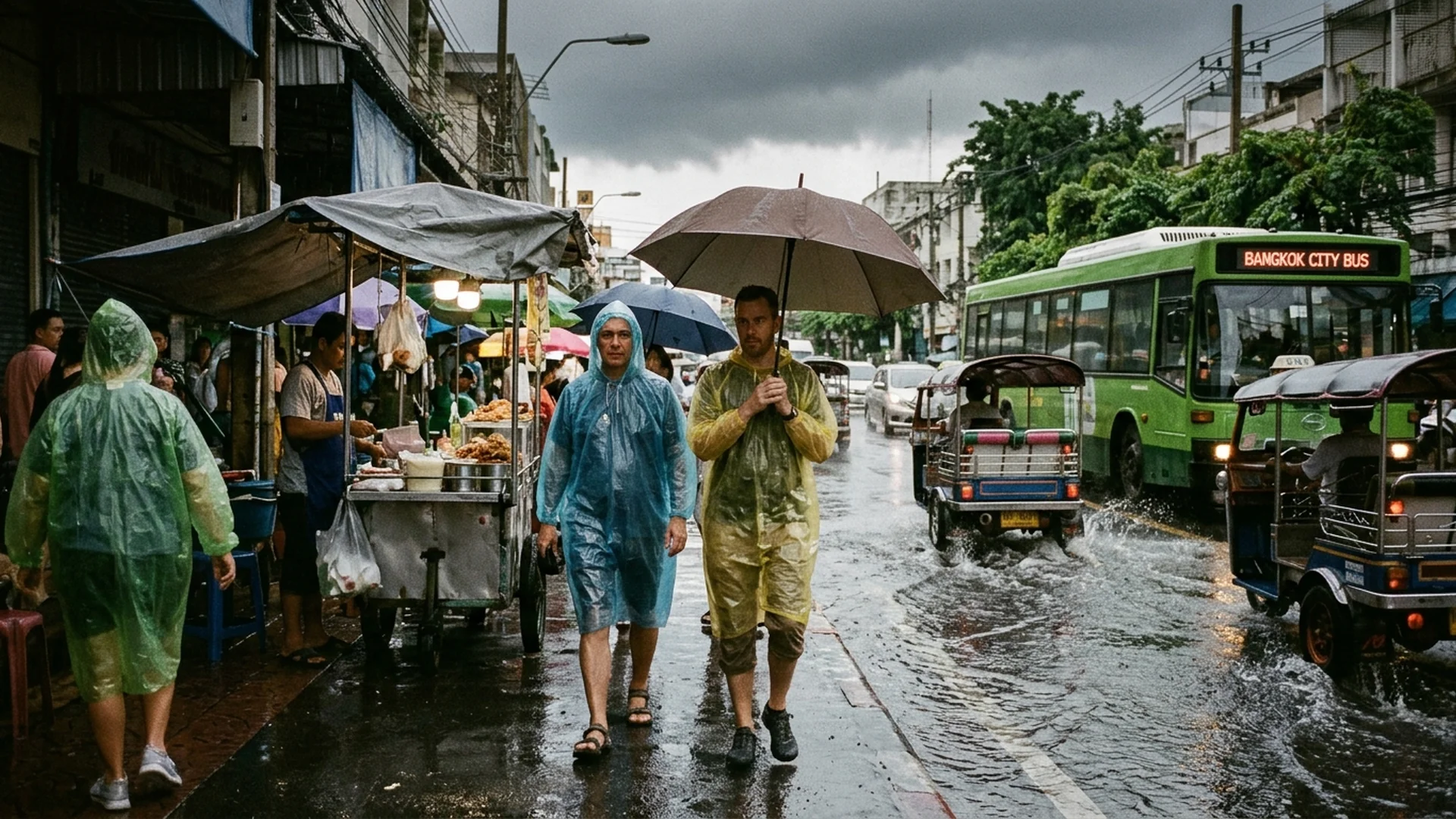
When examining the geographic contours of Southeast Asia’s golden axe, boundaries delineate far more than cultural diversity alone; they forge one of the world’s most astonishing meteorological dichotomies. Many assume Thailand’s rainy season blankets the entire kingdom in simultaneous downpours, yet the nation is shaped by two distinct monsoon currents that alternate to create entirely different ecosystems and travel rhythms between the Andaman Sea and the Gulf of Thailand.
Understanding these microclimates remains the master key for discerning travelers seeking to orchestrate an immaculate itinerary. Whether retreating into the sublime serenity of the green season or selecting the golden window when crystalline seas sparkle without a single cloud, curating a journey through Thailand’s changing seasons is less about coincidence and more about a profound fluency in nature’s cadence.
Deciphering Dual Monsoons: When the Andaman and the Gulf Beat to Different Drums
Thailand is shaped by two principal monsoon systems: the Southwest Monsoon (May through October) and the Northeast Monsoon (November through February). The geographic wonder lies in the Tenasserim and Phuket mountain ranges, which serve as towering natural ramparts dividing wind currents and moisture. This geological barrier ensures that the western Andaman coast and the eastern Gulf islands experience inverted travel seasons.
While the Andaman faces energetic waves and frequent rains during the middle of the year, the southern Gulf islands—including Koh Samui, Koh Phangan, and Koh Tao—enjoy sun-drenched skies and calm waters. Conversely, as the Gulf enters its monsoon cycle toward the end of the year from October to December, the Andaman revives into a high season of cloudless skies and glass-clear waters. Anticipating this rhythmic shift ensures your travel planning remains utterly seamless.
Curating the Golden Calendar: Comparing the Andaman and Gulf Destinations Month by Month
Aligning destinations with the correct month in the calendar is paramount for high-end navigation. For yacht expeditions through the Phi Phi or Similan archipelagos, or for savoring the powdered sands of Krabi and Phuket, the pristine window spans from November to April, characterized by gentle breezes and brilliant horizons.
Conversely, travelers journeying during mid-year months like June through August find sanctuary in the southern Gulf, where precipitation is significantly lower than on the western seaboard. Meanwhile, late autumn brings seasonal rains to the Gulf islands while northern and central Thailand usher in crisp, low-humidity air ideal for inland exploration.
The Allure of the Green Season: A Quiet Luxury Paradigm Shift
For connoisseurs seeking tranquility and authentic restorative luxury, the Green Season spanning May through October is no limitation; rather, it reveals nature fully washed and vibrantly alive. Rainforests within sanctuaries like Khao Sok and northern mountain ranges pulse with misty mornings and revitalized waterfalls.
Ultra-luxury resorts frequently utilize this period to curate deeply personalized wellness retreats amid profound solitude. Embracing a brief afternoon shower with a timeless book, botanical spa therapies, and open-air architectural designs transforms rainy afternoons into moments of rare, unscripted value unavailable during busier months.