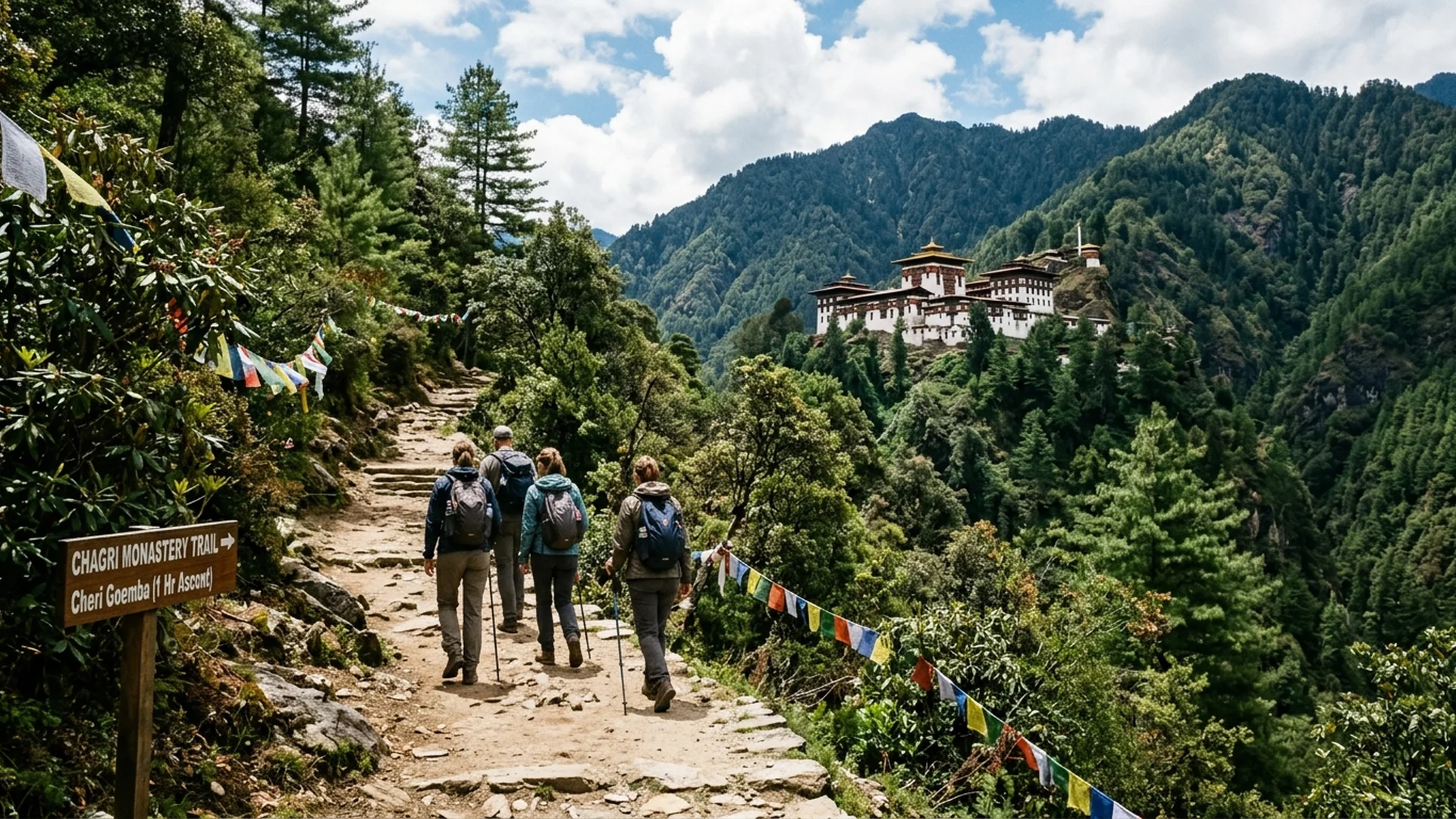
Amidst mist-veiled pine forests cradling the northern reaches of the Thimphu Valley, the crystalline chime of bronze windbells mingles with the rushing cadence of the Wang Chhu far below. This is the timeless symphony that greets travelers upon entering the realm of Chagri Cheri Monastery, revered locally simply as Chagri. More than a venerable religious sanctuary, it stands as the majestic spiritual foundation upon which the identity of the Kingdom of Bhutan was forged.
To step upon this sacred pilgrimage trail is to traverse the thresholds of time, leaving behind the transient noise of the outer world to awaken the quietude within. For the discerning traveler and seeker of profound cultural resonance, a pilgrimage to Chagri offers an extraordinary privilege: an unhurried immersion in unspoiled wilderness married to centuries of unbroken Mahayana Buddhist heritage.
The Roots of a Realm: Zhabdrung’s Imprint at Chagri
The narrative of Chagri Cheri is inextricably bound to the genesis of the Bhutanese nation. In 1620, Zhabdrung Ngawang Namgyel—the visionary statesman and spiritual leader who journeyed from Tibet—selected this secluded amphitheater of mountains to establish his first monastic seat after unifying the fractured valleys of Bhutan. This precipitous ridge thus became a pulsating epicenter of sacred energy, where the Zhabdrung spent years in strict retreat and meditation.
Clinging precariously to a sheer granite cliff, the monastery exemplifies traditional Bhutanese architecture, marrying the unyielding strength of natural stone with the delicate artistry of brightly painted woodwork infused with profound Buddhist symbolism. Year-round veils of mountain mist drift through the courtyards, rendering the sanctuary an ethereal realm suspended between earth and sky, far removed from secular concerns.
The Pilgrimage Trail: A Meditative Asccent Through Nature
The pilgrimage to Chagri begins at the valley floor, crossing a historic wooden cantilever bridge over the rushing Wang Chhu river. The ascent presents a moderate yet deeply immersive incline, winding upward along ancient soil and hand-laid stone steps. Towering old-growth pines canopy the path, releasing aromatic resins into the crisp mountain air, while native rhododendrons burst into brilliant crimson blooms during the Himalayan spring.
Every breath carries the scent of damp earth and pine needles, revitalizing the spirit. Along the trail, vibrant prayer flags flutter in the high-altitude winds, carrying blessings and ancient mantras across the sweeping valley. Walking this path transcends mere physical exercise; it becomes a moving meditation, aligning one’s breathing with the timeless rhythm of the Himalayas.
Serenity Upon the Cliff: Monastic Life and High-Altitude Practice
Upon reaching the stone-paved courtyard of the monastery, one is immediately enveloped by an absolute stillness born of supreme altitude and monastic devotion. Chagri continues to function as an advanced meditation center where monks retreat for months or years in pursuit of profound inner mastery. The atmosphere within the sacred halls is thick with the soothing scent of herbal incense and yak butter lamps offered before hallowed statues of the enlightened.
Low, resonant chants echo against ancient masonry, vibrating through the stone floors. Beyond the central temple, the surrounding slopes serve as a sanctuary for wildlife, frequently offering travelers the rare privilege of observing Himalayan gorals—agile mountain antelopes—grazing fearlessly along the vertical cliffs. This harmonious coexistence of humanity, fauna, and raw wilderness embodies the living essence of Buddhist compassion.