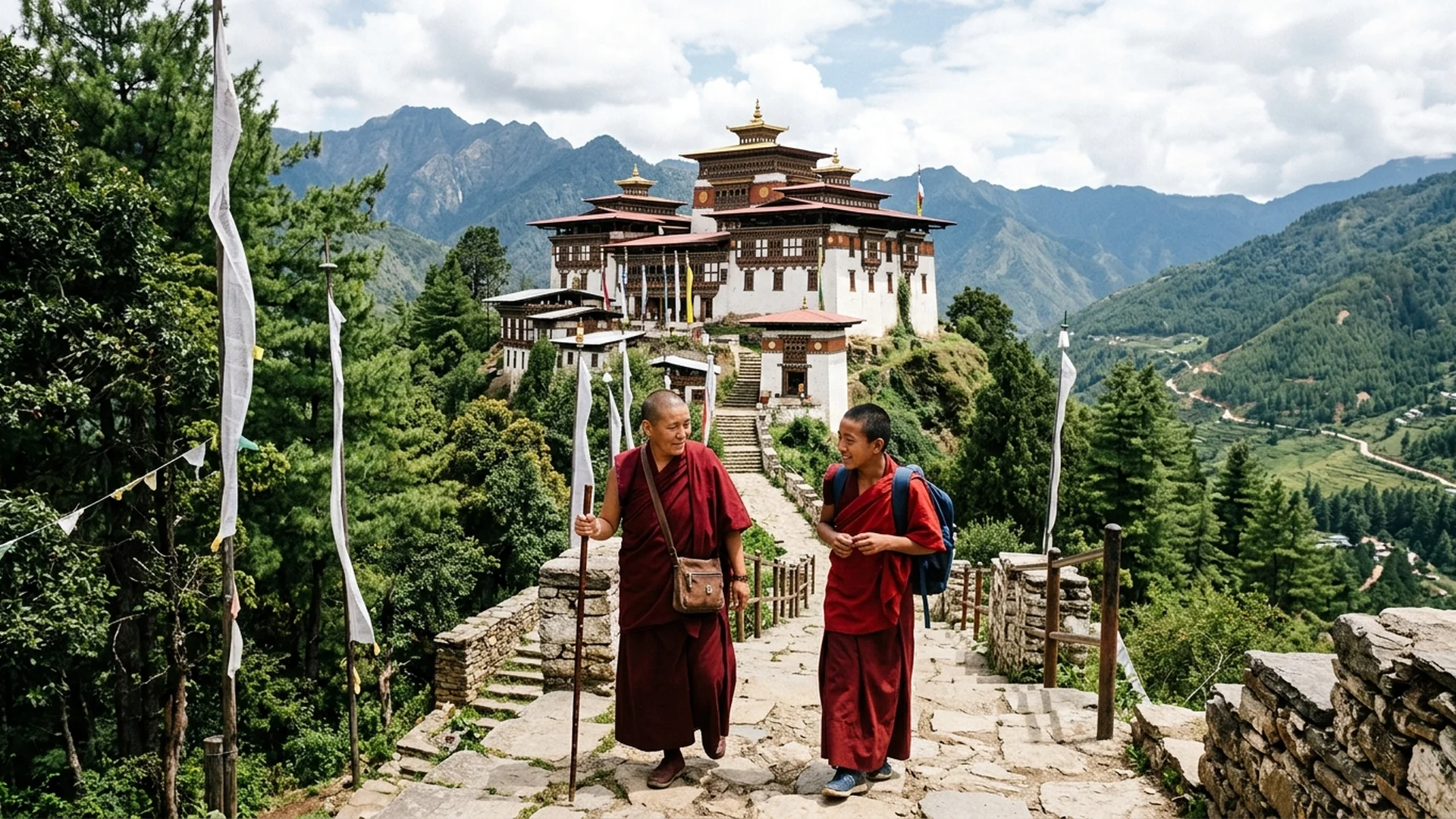
As the morning mist slowly lifts from the high ridgelines of Thimphu’s tranquil valley, the low, resonant drone of sacred chanting mingling with the wind through dense pine forests marks the pilgrim’s arrival at Tango Monastery. This is far more than a historic shrine; it is the beating heart of higher philosophical learning and advanced contemplative practice within the Land of the Thunder Dragon. Here, time seems to dilate, offering the weary traveler an invitation to commune with absolute silence.
Amidst the relentless tide of modern tourism, Bhutan has meticulously guarded its spiritual secrets behind an impenetrable curtain of jagged peaks, and Tango stands among its most profound revelations. Perched dramatically on a sheer cliffside soaring past 2,800 meters above sea level, it defies casual sightseeing. Instead, the journey serves as an inward pilgrimage—a mindful ascent along shaded mountain trails where every measured footstep cleanses the spirit before crossing the threshold of the sacred.
1. The Shedra Tradition: Where Intellectual Rigor Meets Absolute Solitude
Deep within the fragrant pine groves that envelop Tango Monastery, this venerable institution operates as a ‘Shedra’—an elite monastic college serving as the intellectual crucible for Bhutan’s young monks. Far beyond a mere venue for ritual worship, it functions as a university of consciousness, immersing scholars in advanced Vajrayana Buddhism, classical logic, and intricate metaphysics.
The profound stillness of the surrounding valley amplifies the atmosphere of scholarly inquiry and introspection. The sight of monks draped in deep crimson robes engaged in animated philosophical debate or seated quietly beside intricately carved wooden lattice windows embodies a lifestyle of supreme intellectual depth, untouched by the frantic pace of the external world.
2. The Legend of the Horse Head and the Footsteps of the Zhabdrung
The historical roots of Tango delve deep into the realm of sacred myth. The moniker ‘Tango’ originates from the distinct topography of the site; within the temple complex, a natural rock formation bears an uncanny resemblance to a horse’s head, revered as the physical manifestation of Hayagriva, the wrathful deity associated with the subjugation of obstacles and spiritual protection.
Furthermore, during the seventeenth century, this cliffside hermitage served as the primary sanctuary and meditation retreat for Zhabdrung Ngawang Namgyel, the founding statesman of Bhutan. The sacred meditation cave utilized by the Zhabdrung remains meticulously preserved to this day, imbuing every shadowed corner of Tango with an indelible, living pulse of history.
3. Dzong Architecture in Harmony with Alpine Geography
Architecturally, Tango stands as a magnificent exemplar of traditional Bhutanese design. The multi-tiered main structure features pristine whitewashed masonry contrasted against dark, intricately carved timber window frames and gold-leaf ornamentation aligned with Buddhist cosmology. The entire edifice appears less constructed than organically sprouted from the sheer rock face and surrounding forest canopy.
Inside, towering statues of enlightened beings and exquisite Thangka murals detailing the life of the Buddha and protective deities are rendered with breathtaking precision by royal master artisans. The amber glow of butter lamps and the subtle fragrance of indigenous herbal incense create an enveloping, multisensory sanctuary of profound peace.