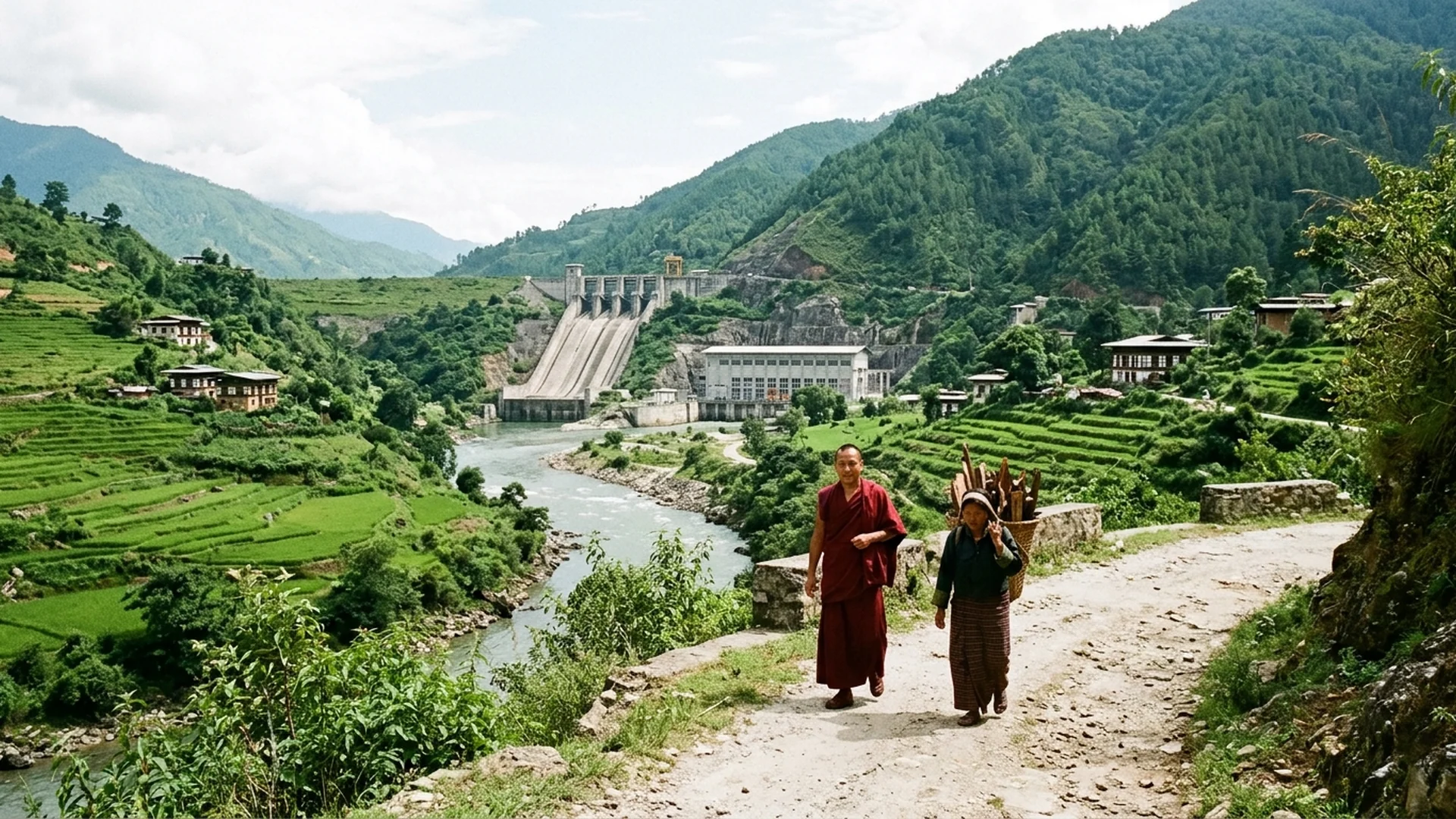
The clinging mists that cascade over towering precipices, brushing the deep, stone-carved gorges of the Wang Chhu River, form the opening act for every visitor arriving in Chhukha. Situated in the southern administrative district of the Kingdom of Bhutan, this region is frequently dismissed by travelers rushing from the border town of Phuentsholing toward the capital of Thimphu or the sacred sanctuary of Paro. Yet beneath its rich, evergreen canopies and precipitous ravines lies a vital spiritual and economic pulse that quietly sustains the entire nation.
Often designated as the ‘Powerhouse of Bhutan’ both in physical capability and symbolic resonance, Chhukha cradles the monumental engineering feats of the Chhukha and Tala Hydropower Projects. Here, the raw, rushing fury of glacial-fed rivers is alchemized into clean, renewable energy that fuels Bhutan’s quiet prosperity. Simultaneously, in the spiritual and cultural realm, this mist-shrouded valley conceals ancient monasteries clinging to sheer cliffs, where the chime of windbells mingles with the fragrant drift of crushed juniper incense.
To journey deep into Chhukha is far more than a simple geographical transition from the sultry, tropical borderlands to the crisp heights of the high Himalayas. It is an invitation to attune oneself to an unhurried rhythm where heritage architecture, eco-conscious engineering, and centuries-old devotion exist in absolute equilibrium.
The Wang Chhu and Chhukha Dzong: The Axis of Modern Power and Governance
The deep canyons carved by the rushing waters of the Wang Chhu do not merely forge a breathtaking topography; they serve as the cradle of clean energy driving the nation forward. The Chhukha and Tala Hydropower Projects stand as testament to Bhutan’s unwavering philosophy of environmental sustainability. The immense kinetic force of water plunging through subterranean granite tunnels into underground powerhouses reflects a harmonious coexistence between modern technological innovation and pristine wilderness.
Not far from these life-giving waters stands Chhukha Dzong, a contemporary fortress-monastery consecrated in 2012. Although relatively recent in its architectural lineage, the Dzong faithfully executes traditional Bhutanese design principles with astonishing precision. Its immaculate white masonry walls contrast sharply with vermilion woodwork and shimmering gilded roofs. Framed by undulating mountain ranges, this fortress acts as both the administrative anchor and the spiritual compass for the local community.
Tshamdrak Goemba: A Seventeenth-Century Sanctuary Upon the Precipice
Ascending toward Tshamdrak Goemba is tantamount to entering an ethereal realm of esoteric spirituality. Founded in the seventeenth century by Lam Ngawang Drakpa, the monastery clings precariously to a vertical granite cliff, commanding sweeping vistas of the valley far below. The name ‘Tsham-drak’ translates literally to ‘Cave of Meditation,’ honoring its legacy as a remote hermitage for Vajrayana masters.
Within the sacred halls repose national treasures, notably a collection of one hundred historic ceremonial drums utilized in esoteric rites, accompanied by oral traditions recounting the miraculous resonance of their invocations. Ancient stone tablets linked to Ap Chundu, the protective deity of the Haa Valley, further sanctify the grounds. As wisps of cloud drift lazily past the wooden verandas, the entire sanctuary appears suspended between earth and sky.
Kharbandi Goenpa: The Rinchending Ridge Jewel and Boundless Vistas
Perched upon the Rinchending ridge at approximately 400 meters above sea level, Kharbandi Goenpa—frequently referred to as Rinchending Monastery—presents an essential stop for the discerning traveler. Erected in 1967 by Her Majesty the Queen Grandmother Ashi Phuntsho Choden, the sanctuary is enveloped by tranquil tropical gardens punctuated by eight imposing chortens.
The inner sanctum shelters statues of Shakyamuni Buddha, Zhabdrung Ngawang Namgyal, and Guru Rinpoche, complemented by vibrant murals depicting pivotal moments in Buddhist history. The true architectural triumph of Kharbandi Goenpa, however, lies in its expansive viewing terrace. From this vantage point, travelers survey the bustling border town of Phuentsholing, the meandering Torsa River, and the distant Dooars plains of West Bengal, India—a stunning visual nexus where the Himalayan foothills embrace the tropical lowlands.
Journey Through the Mist: The Poetic Ascents from Phuentsholing to Thimphu
Chhukha’s defining charm rests in its remarkable ecological and topographical diversity. As vehicles wind upward from the southern borderlands, ambient temperatures and humidity gracefully yield to altitude. The serpentine highway guides travelers through lush subtropical rainforests that gradually give way to temperate woodlands draped in Himalayan pines, all under a perpetual veil of drifting mountain fog.
Along the roadside, pristine waterfalls cascade from soaring cliffs, their gentle roar harmonizing with the calls of rare avian species. Chhukha refuses to be treated merely as a transitional checkpoint; every curve of this mountain valley composes a quiet, natural verse designed to restore tranquility to the wandering soul.