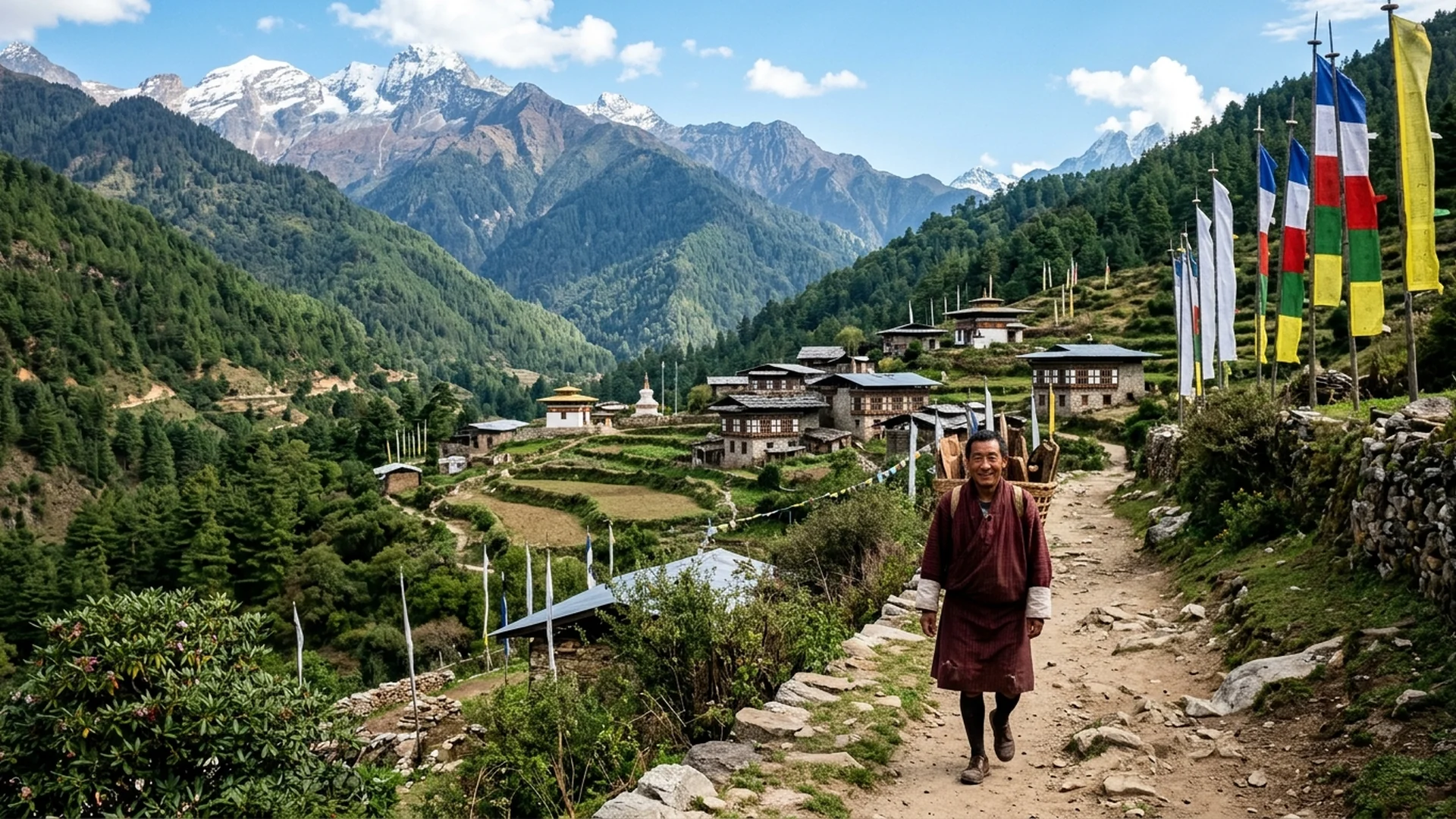
Amidst the relentless currents of modern tourism, the Kingdom of Bhutan continues to guard its most exquisite secrets within the intricate folds of its towering mountains. Crossing the threshold from the main thoroughfares into Chukha Dzongkhag (district-fortress), a grand portal to antiquity swings open: the Dungna Valley. Here, time appears to decelerate, allowing crisp alpine winds to carry the faint, rhythmic chanting of ancient monasteries, harmonized with the earthy fragrance of damp soil and towering pines.
This is not a destination for the casual sightseer, but rather a coveted haven for discerning travelers in pursuit of profound seclusion. Dungna Valley mirrors the pristine Bhutanese past—dense, undisturbed woodlands and morning mist shrouding steep ridges conceal a living tapestry largely untouched by standard travelogues. It invites the wanderer to experience an unblemished aesthetic where human rhythms beat in quiet, unbroken unison with the natural world.
1. The Jewel of Chukha: Where Wilderness and Spirit Converge
Chukha is frequently dismissed by transients as a mere transit corridor for those rushing toward the capital. Yet, nestled deep within its complex topography lies the Dungna Valley, a realm sculpted by nature with exquisite precision. Virgin conifer forests and precipitous mountain ridges cradle this valley like a warm, protective embrace. The profound silence here is never empty; rather, it is charged with a cool, meditative stillness that washes over the soul. The murmur of crystal-clear streams and the calls of rare alpine avifauna compose an acoustic masterpiece unattainable in the modern world.
Beyond its physical abundance, Dungna is a deeply potent spiritual landscape. Local villagers continue to weave their daily lives around ancient animist observances and profound Tantric Buddhism. Every corner of the valley vibrates with silent devotion, marked by fluttering prayer flags catching the mountain gales and venerable chortens (stupas) standing in quiet vigil against the passage of time.
2. Architecture and the Living Breath of Ancient Communities
To journey through the settlements of Dungna Valley is to turn the pages of a living historical manuscript. Traditional Bhutanese homesteads here are masterworks of vernacular architecture, constructed from native timber and rammed earth, adorned with intricate motifs framing traditional windows and structural pillars—a testament to generational wisdom preserved across centuries.
The local Lhakhang (temple) serves not merely as a place of worship, but as the pulsating heart and communal gathering ground of the valley. Observing daily rituals or conversing with resident monks and village elders through a translator offers rare, nuanced insight into the philosophy of Gross National Happiness—not as an abstract government policy, but as a lived, breathing reality practiced day after day.
3. Immersive Exploration: The Aesthetic of Silence and Discovery
For those captivated by exploration on foot, Dungna Valley unfolds an exquisite network of hiking trails winding through forests of wild rhododendrons, which burst into brilliant tapestries of color during the spring months. Every footstep upon the soft earth reveals rare endemic flora and panoramic vistas cascading down across the valley floor below.
Traveling to this sanctuary transcends the notion of checking off sightseeing milestones; it is an exercise in intentional slow travel. Picture yourself sipping hot herbal tea on a traditional veranda amidst curling evening mists, or gazing upward at an untainted night sky blazing with constellations completely free from urban light pollution. For high-net-worth travelers seeking renewal, this is the ultimate luxury.