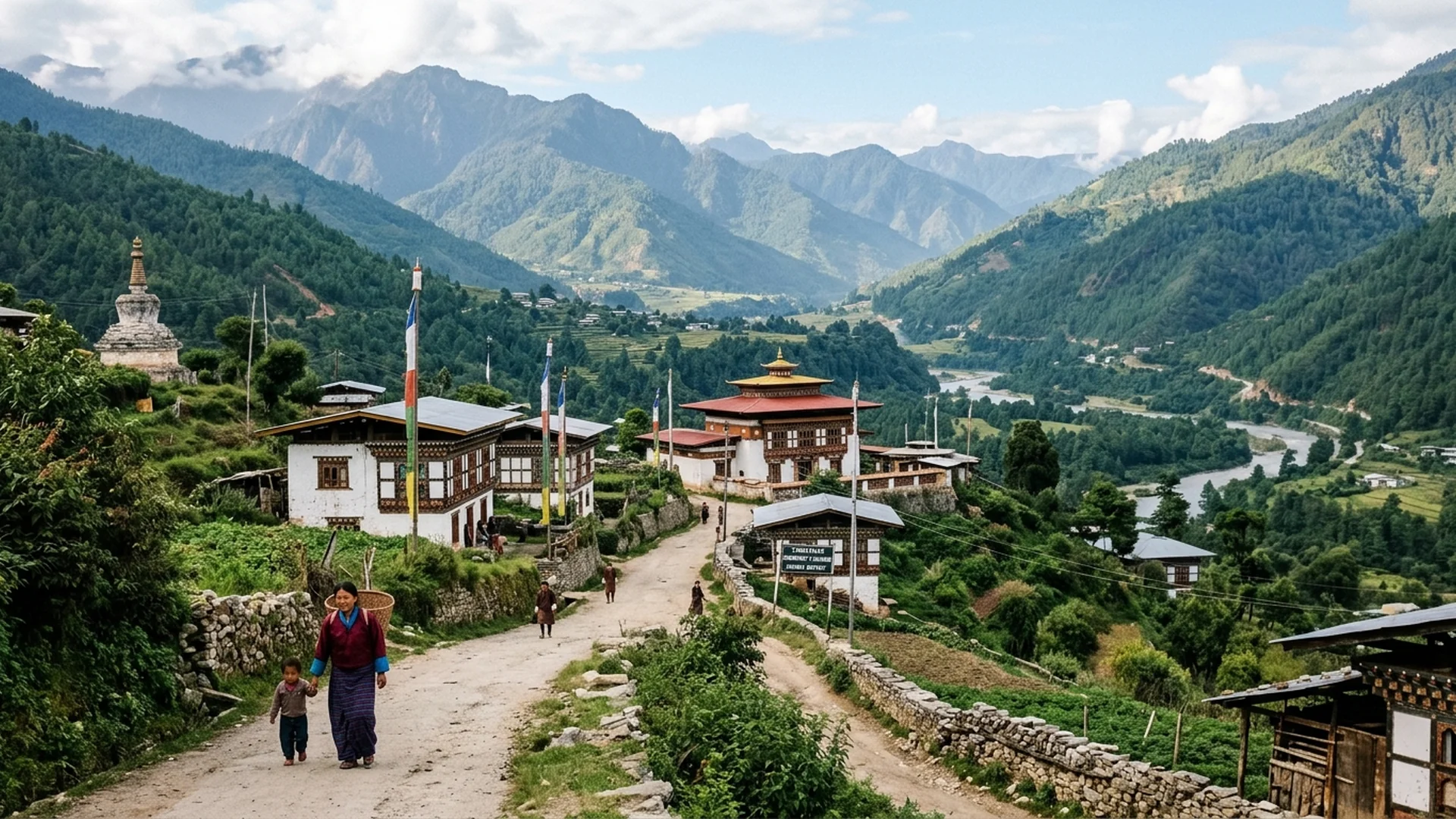
When conjuring the Kingdom of Bhutan, the mind often drifts to the majestic fortress-monasteries of Thimphu or the vertiginous, mythic heights of the Tiger’s Nest in Paro. Yet along the winding mountain arteries connecting the southern borderlands to the capital lies an understated, ethereal haven frequently bypassed by the hurried transit of modern tourism. Tsimasham, the administrative heartbeat of the Chukha district, emerges like a classical watercolor rendered in muted pine greens and drifting mountain mists.
This is not a commercialized hub designed for fleeting spectacles. Rather, it is a sanctuary of profound stillness where the pace of the Himalayas slows to a contemplative crawl. Here, travelers are invited to listen closely to the whispering mountain winds and experience the unadorned, quiet luxury of authentic Bhutanese geography.
A Secret Waypoint on the Mountain Highway: The Forgotten Heart of Chukha
Approaching Tsimasham begins with an ascent through the dramatic, verdant switchbacks of the Chukha district—one of Bhutan’s pivotal economic and ecological landscapes. As the regional administrative center, Tsimasham is distinguished by its immaculate order, pristine pathways, and traditional architecture that integrates seamlessly into the steep topography. When private vehicles pause here during the extended journey from the southern gateway of Phuentsholing northward to Thimphu, visitors are immediately met with a rare, meditative silence. The crisp air carries the subtle scent of damp earth, morning pine resin, and an expansive perspective over mist-shrouded valleys that stretch toward the horizon.
The Aesthetics of Nature Therapy: Pine Forests, Ridgelines, and Suspended Time
The true allure of Tsimasham lies in its embrace of slow living. The surrounding environment is draped in dense montane forests and twilight pine groves that shift in hue as the sunlight migrates across the peaks. In the early morning hours, delicate shafts of gold pierce through the gossamer mist drifting languidly across the valley floor. The calls of forest birds and the rustle of wind through high pine needles compose a natural restorative symphony, washing away the fatigue of long-distance transit. Free from urban clamor, Tsimasham offers open horizons that gently command the traveler to pause, breathe deeply, and reflect upon the immaculate wildness of the Bhutanese highlands.
Traditional Craft and Architecture: Unadorned Elegance
Despite its administrative significance, the local community maintains a rhythm rooted in gentle simplicity. Strolling through the quiet pathways or exchanging quiet greetings with residents clad in traditional, hand-woven ghos and kiras offers an immediate sense of sincere hospitality. The local architecture showcases exquisite indigenous craftsmanship, featuring intricate woodwork framing windows and traditional protective motifs adorning exterior walls. Untouched by garish modern developments, Tsimasham stands as a testament to the kingdom’s steadfast dedication to preserving cultural identity amidst a rapidly shifting global landscape.