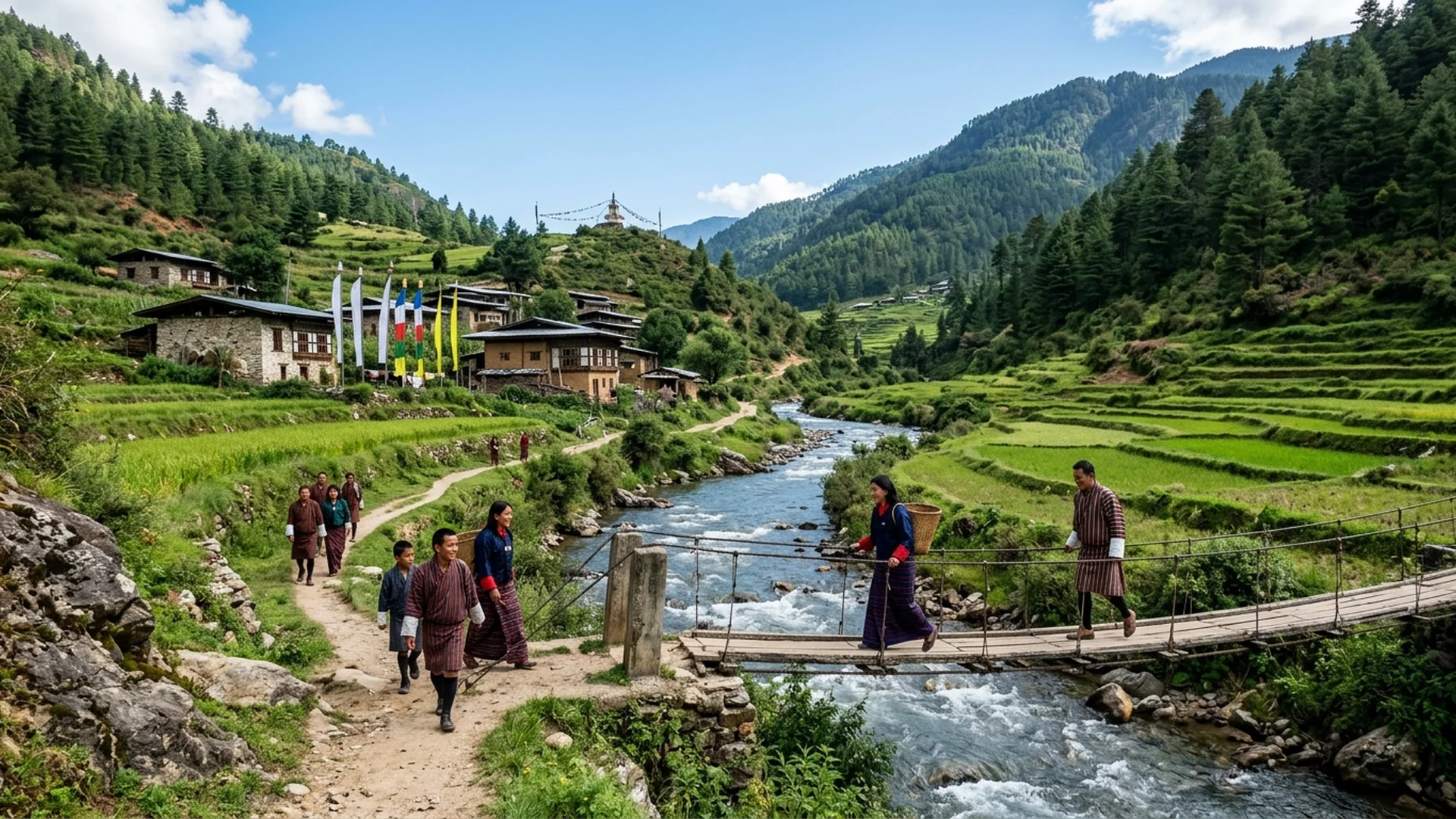
As morning mist slowly lifts from towering peaks, what emerges is a tapestry of emerald forests and the gentle, constant murmur of water carving through deep gorges. The Daga Chhu River Valley, nestled in the southern reaches of Bhutan, stands as a natural sanctuary where time has preserved pristine wilderness. This is not a destination for the hurried tourist, but rather a profound pilgrimage for those seeking the authentic spirit of the mountains and hidden cultural heritage far removed from the cadence of the modern world.
Journeying toward Dagana and the Daga Chhu basin leads travelers along meandering rural paths framed by fragrant mandarin orchards and cascading rice terraces clinging to steep slopes. Every step here is a harmonious duet between traditional agrarian existence and revered spiritual architecture, where ancient fortress-monasteries perched on high ridges serve as silent guardians of centuries-old lore.
Daga Trashiyangtse Dzong: A Fortress on the Horizon and Legacy of 1651
Perched dramatically upon a steep ridge commanding sweeping vistas of the Daga Chhu valley below, Daga Trashiyangtse Dzong stands with quiet majesty as a dual bastion of spiritual devotion and historical governance. Commissioned in 1651 by Zhabdrung Ngawang Namgyel, the visionary unifier of Bhutan, this formidable fortress holds deep historical significance. Beyond its strategic military origins, it exemplifies classic Vajrayana Buddhist architecture, featuring thick rammed-earth walls and intricately carved, vibrantly painted woodwork that echoes centuries of unyielding faith. Standing here at dawn as wisps of cloud drift beneath the ramparts evokes the sensation of stepping into an alternate dimension of time.
Dagana’s Living Landscape: Citrus Groves, Terraced Fields, and Waters of Life
The Daga Chhu basin nourishes the fertile earth of Dagana, cultivating a landscape distinct from the sheer, rocky precipices of Bhutan’s higher northern valleys. Here, sloping hillsides are sculpted into emerald terraced paddies interspersed with fragrant mandarin groves that release subtle citrus notes on seasonal breezes. Daily life for the valley’s inhabitants unfolds with gentle rhythms rooted in agriculture and an intimate, unblemished reliance on nature. Slow travel enthusiasts will encounter genuine warmth and hospitality from local agrarian communities, offering a rare glimpse into ancestral traditions preserved with unwavering dedication.
Legends of the Sacred Monoliths: Natural Heritage and Daga’s Spiritual Soul
Beyond its striking physical topography, the Daga Chhu valley resonates with ancient folklore and sacred sites interwoven with local cosmology. Most notable are the legends of the three sacred natural monoliths: Do Namkhai Kaw (the pillar supporting the sky), Do Kelpai Genethy, and Namkhai Dzong. Believed to be profound manifestations of natural and divine energies protecting the realm, these geological wonders invite mindful contemplation. They illuminate the profound, reciprocal relationship between humanity, nature, and the unseen realms that forms the beating heart of the Bhutanese ethos.