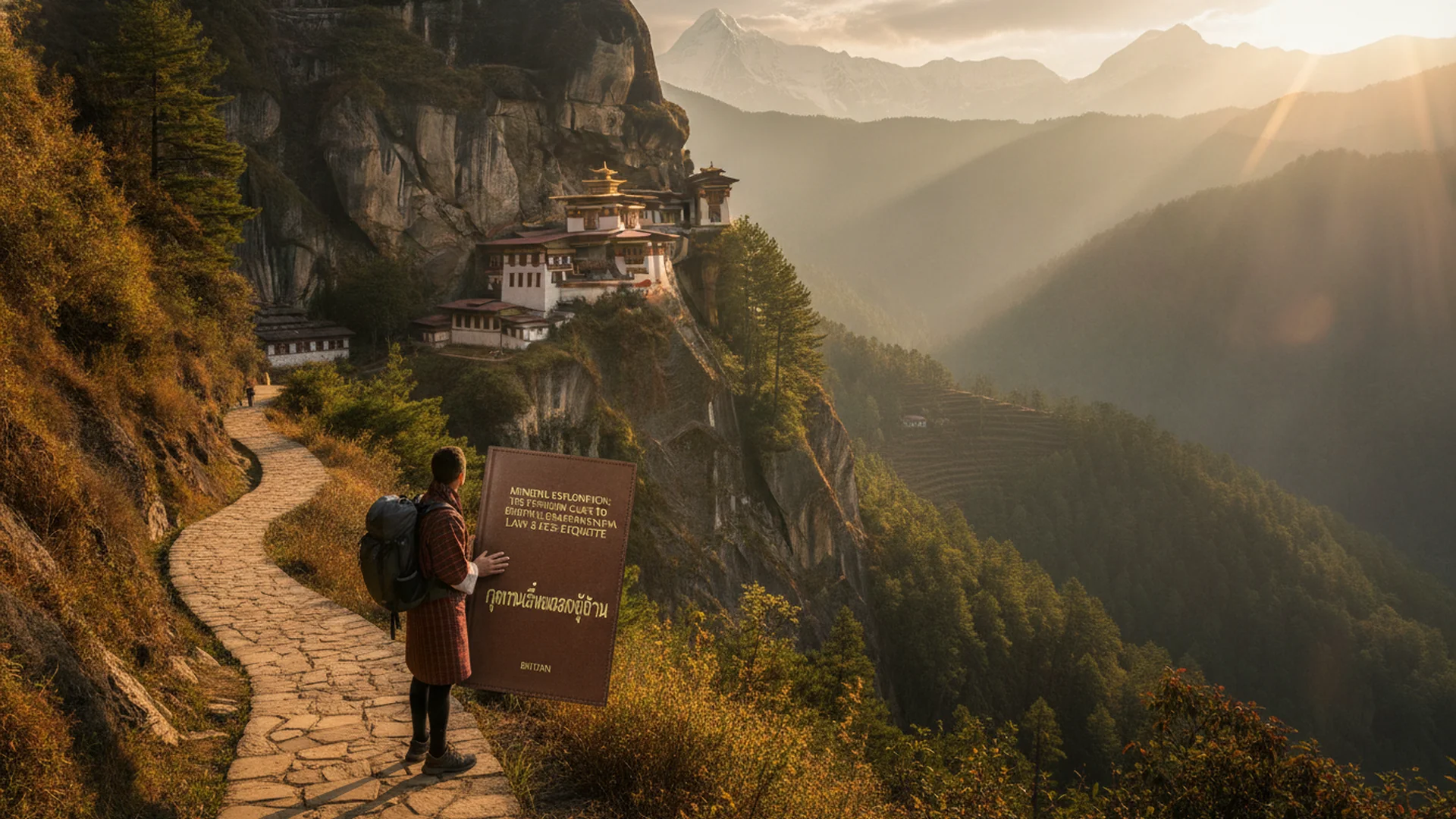
When the quiet stillness of the valley below is embraced by snow-crowned summits piercing a cerulean sky, Bhutan reveals itself not merely as a destination, but as the sacred threshold where earth meets the divine. To the uninitiated, the stringent regulations guarding this Himalayan kingdom might appear austere; yet, upon deeper immersion, Bhutan’s environmental jurisprudence emerges as a luminous, protective armor, preserving the breath of ancient forests and the pristine consciousness of its people against the restless tide of modernity.
Journeying into the Dragon Kingdom as a discerning global traveler is an invitation to master the philosophy of ecological equilibrium. Through its pioneering carbon-negative status and the Sustainable Development Fee (SDF), Bhutan orchestrates a delicate harmony among forest canopy, rushing glacial chhu (rivers), and traditional lifeways. This editorial decodes the sacred statutes safeguarding this Himalayan sanctuary, ensuring your passage across these thunderous mountains resonates with profound responsibility and transcendent grace.
The Philosophy of GNH and the Architecture of Carbon-Negative Governance
While contemporary global economies gauge prosperity through the mechanical metrics of Gross Domestic Product (GDP), Bhutan charts an enlightened course guided by Gross National Happiness (GNH). Environmental conservation serves as one of GNH’s foundational pillars. The kingdom’s constitution mandates that at least sixty percent of the national territory remain forested in perpetuity. This visionary commitment allows Bhutan to sequester significantly more carbon dioxide than it emits, establishing it as one of Asia’s most vital green lungs. To journey through this realm is to participate consciously in a meticulously tended ecosystem, where the SDF directly underwrites the preservation of wilderness for generations unborn.
Sanctuaries of the Sacred: Uncompromising Ecological Decrees
Reverence for nature in Bhutan transcends secular conservation science, drawing its deep roots from Vajrayana Buddhist cosmology. Towering Himalayan massifs are revered not merely as geological wonders, but as living sanctuaries inhabited by protective deities. Consequently, since 2003, Bhutanese law has strictly prohibited mountaineering on any peak exceeding 6,000 meters, preserving the spiritual purity of these glacial abodes. Furthermore, waste management is enforced with utmost rigor. The importation of single-use plastics is heavily restricted, and travelers are gently expected to govern their personal footprints with impeccable mindfulness, ensuring no trace mars the sanctuary of the soil.
Gentle Footfalls Across Ancient Trails: A Connoisseur’s Trekking Ethic
For the discerning adventurer, Bhutan’s pristine national parks and legendary footpaths—such as the formidable Snowman Trek—offer breathtaking vistas coupled with profound stewardship. Trekking here permits camping exclusively within designated ecological zones, strictly prohibiting any disruption to rare endemic wildlife such as the elusive snow leopard or the graceful black-necked cranes wintering in the Phobjikha Valley. Every footfall along these trails is an exercise in becoming one with the landscape, honoring the timeless ethos of ‘Leave No Trace’ so that only memories and quiet reverence remain.