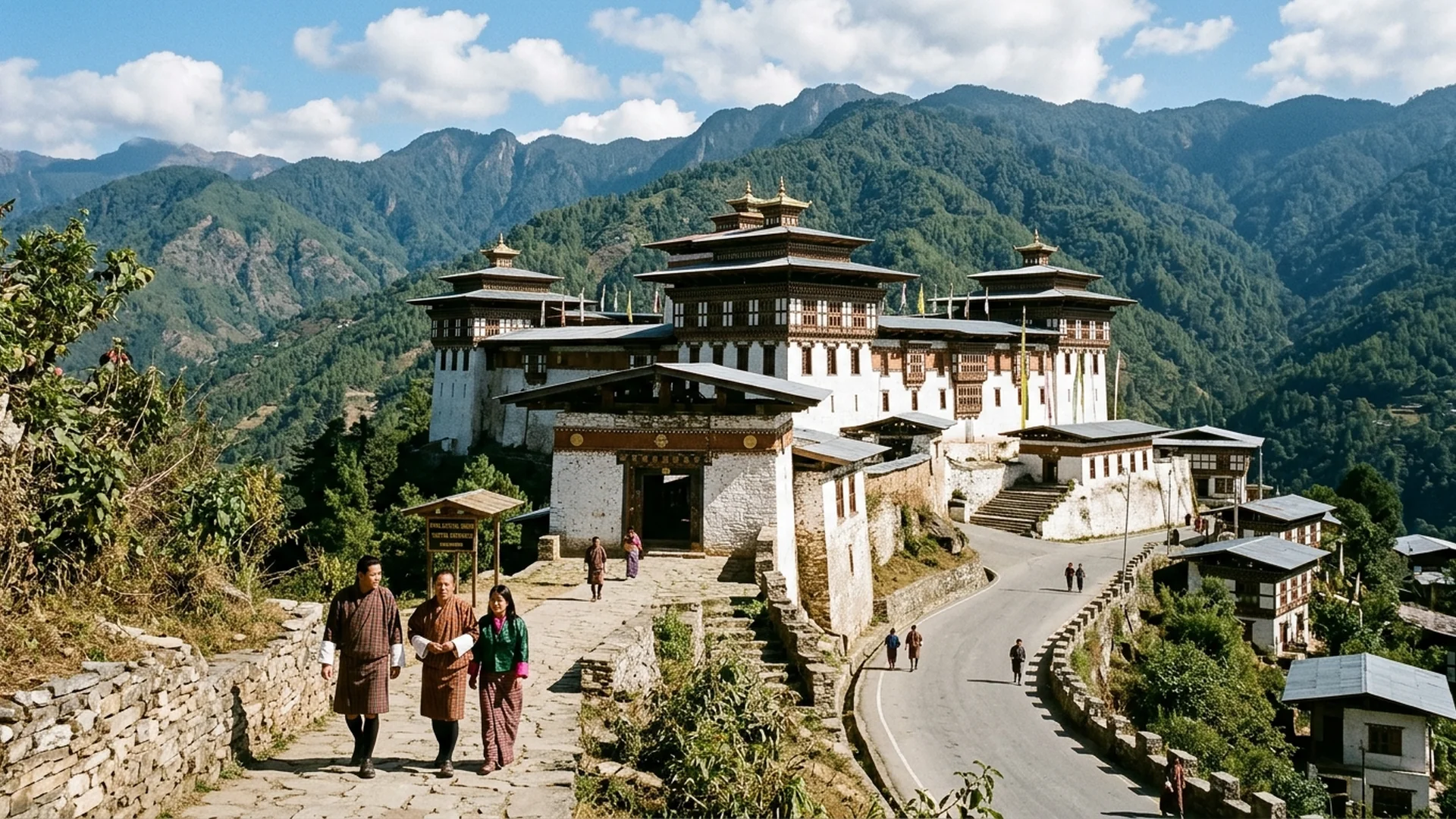
As the morning mist lifts across the undulating ridges of eastern Bhutan, Druk Migyur Dechen Dzong—known reverently as Pema Gatshel Dzong—rises like a celestial sanctuary carved into the hillside. This fortress is far from a static relic of antiquity; it stands as a living embodiment of eternal peace, recently consecrated through sacred rituals that honor the timeless lineage of Bhutanese master artisans.
Journeying to Pema Gatshel is akin to crossing a threshold into an untouched realm of the Himalayan kingdom. Far from the well-trodden paths of the western valleys, here the wind carries distant chants echoing through grand courtyards. Centuries-old wisdom is meticulously expressed in every hand-fitted timber and whitewashed stone, inviting discerning travelers to contemplate the profound intersection of sacred architecture and living faith.
Druk Migyur Dechen Dzong: A Fortress of Unwavering Peace Built Without Nails
At the core of Pema Gatshel Dzong lies an extraordinary feat of indigenous engineering refined over generations. Bearing the auspicious title Druk Migyur Dechen Dzong—the Fortress of Immovable Great Bliss—this magnificent structure honors the purest tenets of Bhutanese design. Remarkably, not a single iron nail was used in its construction. Instead, the entire timber frame relies on sophisticated interlocking joinery, calculated with absolute architectural precision to withstand seismic shifts and the theatrical weather of the high Himalayas.
Brilliant whitewashed walls contrast sharply with intricately carved window frames painted in vibrant hues derived from ancient Buddhist iconography. From massive pine pillars to elaborate roof brackets, every element reflects the unwavering devotion of local artisans who dedicated years to fashioning this contemporary monument into a pinnacle of national heritage.
Sacred Murals and Eastern Aesthetics: The Legacy of the Thirteen Arts
Crossing the threshold into the inner courtyard, the subtle scent of ceremonial incense and flickering butter lamps draws visitors into a contemplative sphere of spiritual depth. Within the central tower sanctuary (Utse), walls are adorned with Thangka-style murals depicting the ten incarnations of the Buddha and fierce guardian deities of the Vajrayana tradition. The pigments are harvested directly from local minerals and indigenous botanicals, yielding subdued yet enduringly luminous tones.
These sacred artworks transcend mere decoration; they serve as living codices that anchor the spiritual life of the community. The creation of the dzong represents a harmonious synthesis of Bhutan’s thirteen traditional arts (Zorig Chusum), uniting masonry, wood carving, fine painting, and metal casting into a unified aesthetic masterpiece.
The Breath of Pema Gatshel: Valley of the Lotus and Indigenous Melodies
Translated from Dzongkha, Pema Gatshel means ‘Lotus Garden,’ a fitting moniker for a landscape defined by serene valleys and profound natural seclusion. The communities surrounding the sanctuary possess a distinct cultural identity unique to the eastern provinces. Residents predominantly converse in Tshangla and are renowned for exceptional textile arts—particularly the complex geometry and vivid palettes of Radong woven skirts—as well as the delicate craftsmanship of traditional stringed instruments like the Dramnyen, echoing the contemplative grace and warm hospitality of this remote Himalayan enclave.