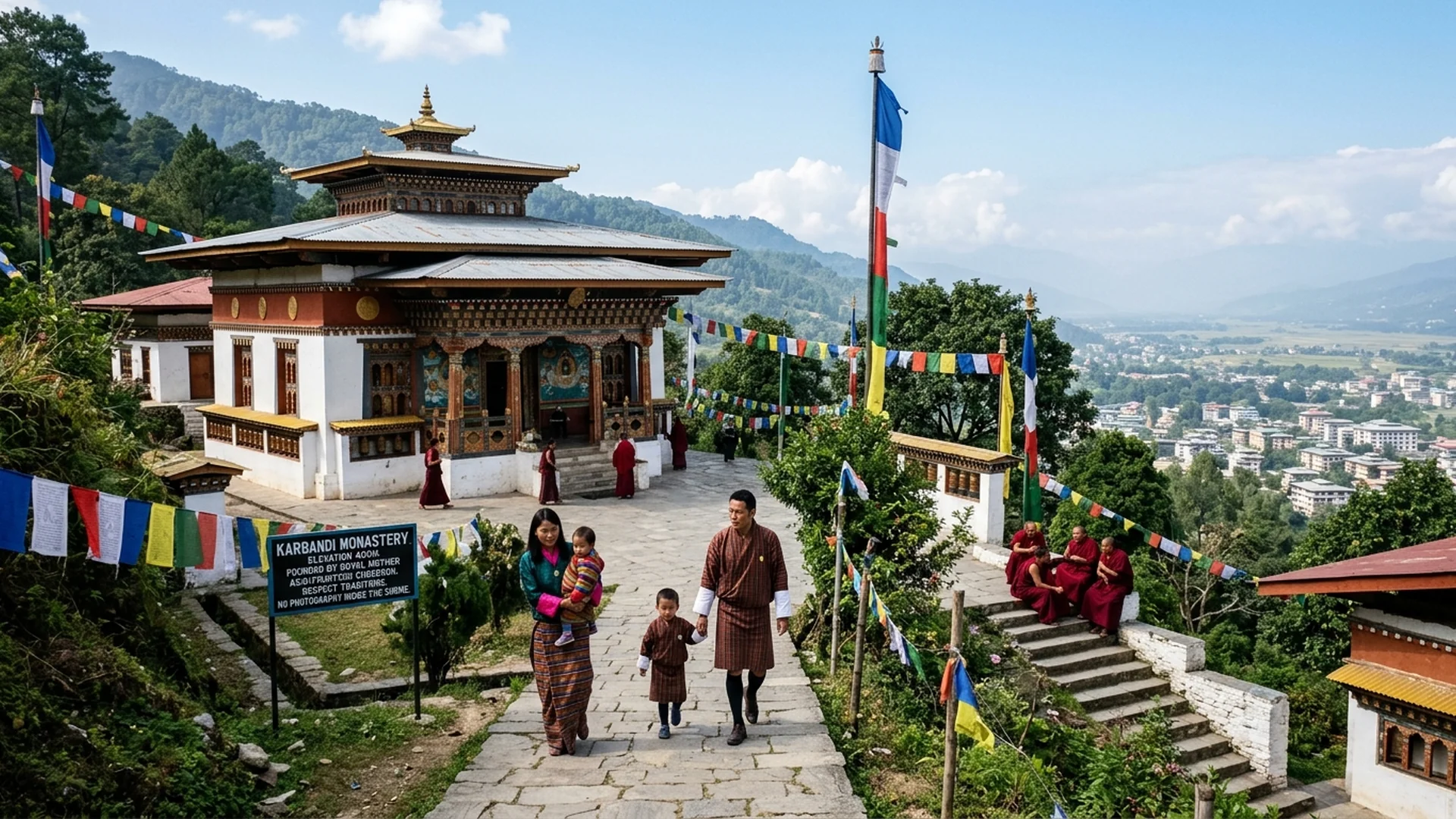
As the car gently negotiates the ascending hairpin bends away from the bustling border town of Phuentsholing, the landscape transforms into a profound, arresting silence. Karbandi Monastery—known locally as Karbandi Goemba—is frequently dismissed as a mere transit stop for travelers entering the Kingdom of Bhutan by road. Yet behind its immaculate white walls and the soft, rhythmic hum of monastic prayer lies a profound repository of royal history, meticulously cultivated tropical flora, and centuries of whispered petitions carried by mountain winds.
Crossing the threshold into this sanctuary, situated over 400 meters above the plains, feels akin to stepping across the veil into another realm. Here, Vajrayana Buddhist devotion converges seamlessly with dramatic topography. From its sweeping open balconies, where misty tendrils drift lazily over the distant plains of Bengal, Karbandi is far more than a house of worship; it is Bhutan’s poetic greeting, whispered in stillness and grace.
Roots of Devotion and Royal Legacy
Karbandi Monastery was founded in 1967 by Ashi Phuntsho Choden, the Queen Grandmother, whose visionary stewardship profoundly shaped modern Bhutanese culture and spirituality. Erected along the crucial trade and pilgrimage corridor linking Bhutan and India, the monastery was conceived as a spiritual bastion—a ‘gateway of peace’ guarding travelers entering the kingdom. Its interior architecture marries the austere discipline of Vajrayana Buddhism with exquisite contemporary master craftsmanship. Murals of astonishing detail grace the inner sanctums, depicting the life of the Buddha and esteemed lineage masters with a vibrant artistry rarely encountered in the lower valley altars.
Botanical Sanctuaries and Panoramic Terraces
What distinguishes Karbandi from other monastic seats is its enchanting immediate environment: a meticulously curated tropical botanical garden that blooms in vivid contrast to the austere alpine expanses deeper within the kingdom. Pwning pathways wind past vibrant flora that thrives year-round, flanked by eight gleaming white chortens symbolizing the auspicious symbols of Buddhism. Reaching the monastery’s outer veranda, the gaze extends past pine crowns down toward the meandering silver ribbon of the Amo Chhu river and the vast, sun-drenched plains of India. On crystal-clear mornings, this horizon line evokes an unforgettable sense of suspended time.
The Sacred Legend of Fertility Blessings
Beyond its architectural and scenic merits, Karbandi holds deep renown as a sanctuary of fertility. According to oral traditions preserved across generations, traveling couples and pilgrims from near and far journey to this tranquil promontory to offer prayers before Guru Rinpoche and the sanctum’s holy relics. The inner prayer hall carries an atmosphere thick with quiet aspiration and pure devotion—a sacred space where those yearning for new life entrust their hopes to the enduring compassion of the mountains.