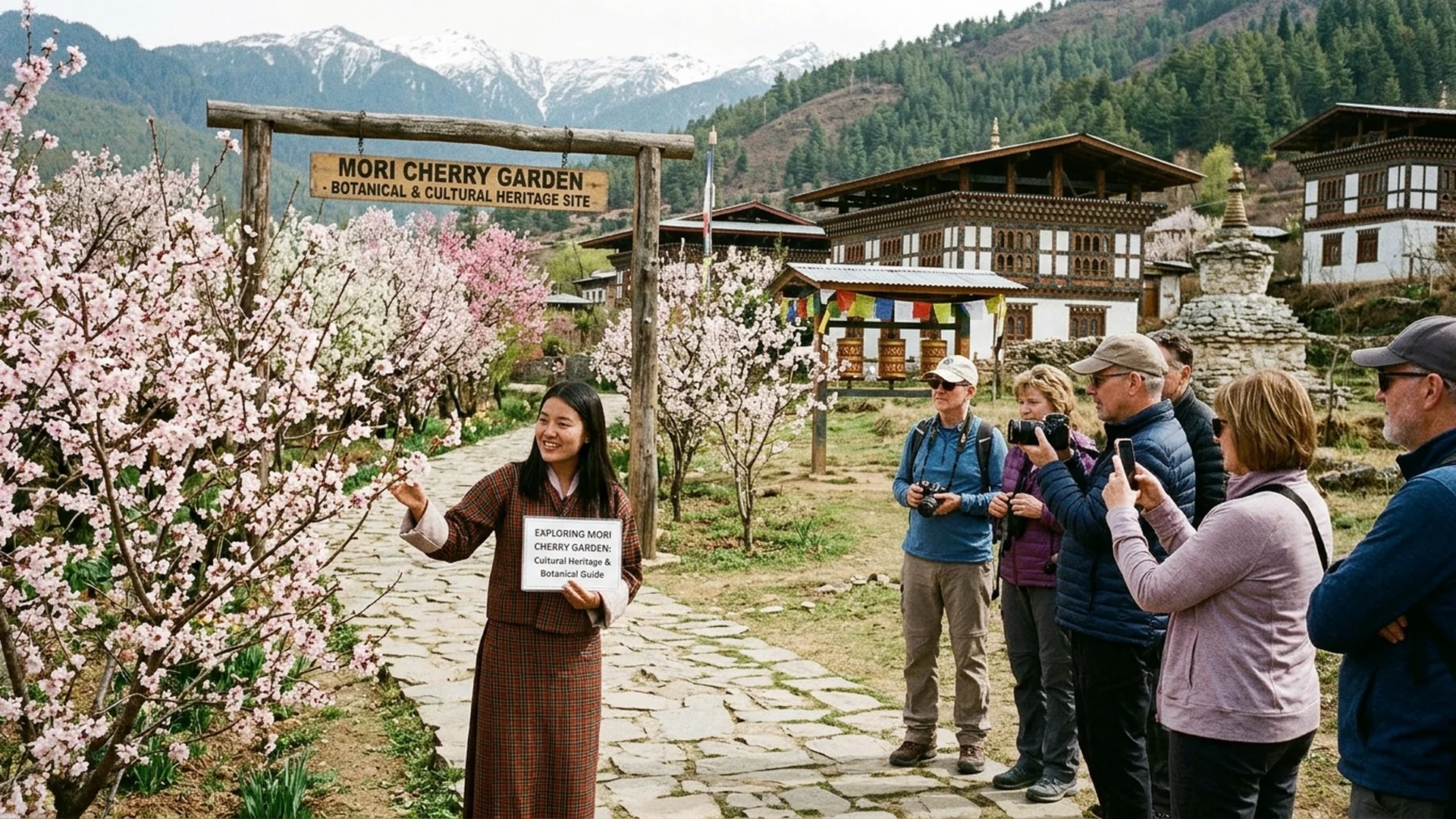
Amidst the undulating folds of the Himalayan mountains and the soft, drifting mists that shroud the Kingdom of Bhutan, lies a verdant sanctuary that transcends the definition of a traditional botanical garden. The Mori Cherry Garden stands not merely as a collection of flora, but as a living monument—a profound physical manifestation of cross-border friendship and diplomatic warmth. Born from an enduring spiritual and cultural bond, this pristine enclave weaves together meticulous landscape artistry and the untamed majesty of the high-altitude wilderness, creating an unhurried haven for discerning travelers seeking profound quietude and historical resonance.
To cross the threshold of this sanctuary is to step outside the frantic pulse of the modern world and enter a realm steeped in contemplative stillness. Every footstep along its earthen pathways reveals an exquisite attention to detail, where curated plantings harmonize effortlessly with the surrounding topography and the deep-seated reverence of the local people. Here, delicate seasonal blossoms catch the crisp mountain breeze, offering a timeless masterclass in aesthetic grace and ecological harmony.
Roots of Alliance: The Genesis of a Treasured Green Sanctuary
The narrative of the Mori Cherry Garden and its delicate arboreal inhabitants is inextricably linked to Bhutan’s enduring diplomatic relationships. The initiative took root through esteemed cultural exchanges and high-level state visits, materializing as the gifting and careful transplantation of foreign saplings onto sacred Bhutanese soil. This arboricultural endeavor was designed as a living testament to mutual respect, shared values, and enduring friendship.
The cultivation and maintenance of these delicate species require extraordinary horticultural precision. High-altitude Himalayan environments demand resilience against biting frost and intense ultraviolet radiation. Consequently, specialized botanists work in quiet synergy with local stewards to ensure these foreign saplings not only take root in foreign earth but flourish grandly, offering their soft shade to pilgrims and travelers alike year after year.
The Aesthetics of Seasonality: Nature as a Living Canvas
As the seasons turn, the landscapes of Bhutan transform into an evocative watercolor painting. When the cherry blossoms and alpine perennials awaken in unison, the surrounding panorama shifts into hues of soft rose and crystalline blue, set against the stoic, snow-dusted majesty of the Himalayan peaks. It is a visual symphony of romance and absolute tranquility.
For discerning photographers and seekers of sublime beauty, the golden hour—when early morning sunlight pierces the mist and illuminates the dew-kissed petals—offers an incomparable experience. The profound silence of the garden invites travelers to attune their senses to the subtle whispers of the wind, the call of mountain birds, and the rustle of leaves, naturally recalibrating the rhythm of one’s consciousness.
The Art of Slow Living: A Sanctuary for Wellness and Contemplation
A pilgrimage to the Mori Cherry Garden extends far beyond visual appreciation; it is an exercise in restorative wellness rooted in sustainable tourism philosophy. Devoid of hurried itineraries or tourist crowds, the atmosphere naturally fosters mindfulness and deep present-moment awareness. To sit quietly beneath the bough of a mature tree, gazing out over the sweeping expanse of the valley, is to find a complete antidote to urban fatigue.
This landscape functions as an open-air classroom for ecological humility, mirroring the Bhutanese ethos of living in balance with the natural world. Travelers are invited to spend hours meandering through the flora, journaling, or simply surrendering to the crisp, pine-scented air as it sweeps down from the high ridges.