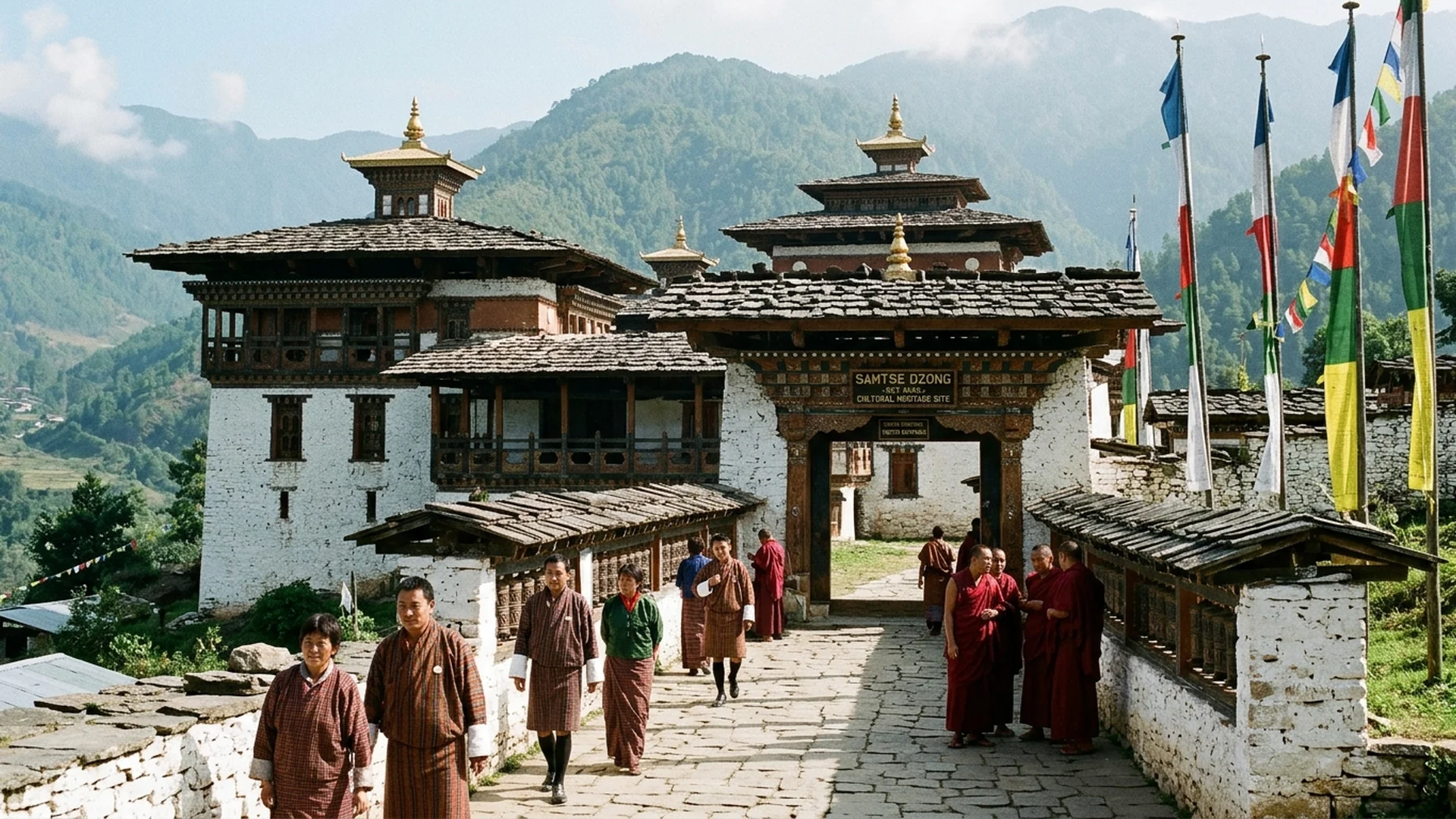
As the morning mist gradually lifts from the verdant ridgelines of southern Bhutan, the silhouette of Samtse Dzong emerges like an ancient manuscript painting preserved from the hurried gaze of conventional tourism. Venturing across these winding natural byways toward the southern frontier not only offers a graceful retreat from the well-trodden paths of the central valleys, but also opens a gateway to an entirely distinct dimension of the kingdom—one where rigorous spiritual devotion seamlessly harmonizes with lush subtropical ecosystems and unique cultural tapestries.
Samtse is frequently bypassed by travelers rushing toward the storied valleys of Punakha or Paro. Yet within this quietude lies a profoundly valued anchor of governance and spirituality. Standing as a proud testament to community resilience and unity, Samtse Dzong reflects the masterful ingenuity of traditional Bhutanese architecture set against sweeping vistas that gently merge with the Indian borderlands. The narrative woven into these ancient walls and the daily rhythms of the local populace offer an unforgettable encounter for those seeking the truest meaning of exploration.
Southern Fortress Architecture: The Union of Strength and Devotion
The structural design of Samtse Dzong exemplifies the remarkable architectural vernacular of Bhutan, functioning simultaneously as a strategic fortress and a revered monastic sanctuary. Although Samtse represents a modern administrative hub, the construction of its dzong strictly adheres to time-honored principles: dense rammed-earth walls, intricately carved timber windows adorned with sacred Buddhist motifs, and sophisticated joinery systems crafted entirely without nails. Within the monastic courtyards and prayer halls, the delicate fragrance of artisanal incense and the soft, resonant chanting of resident monks invite visitors to slow their pace and attune themselves to a deeper sense of contemplation.
Subtropical Vistas and Frontier Community Life
What distinguishes Samtse from the kingdom’s northern enclaves is its lush, subtropical geography. The surrounding mountains are cloaked in dense evergreen forests and rolling tea gardens, while vantage points from the dzong reveal landscapes sloping gracefully downward toward the plains of India. The local populace embodies a rich mosaic of ethnic heritage and harmonious coexistence, pursuing traditional agriculture and cottage crafts with genuine warmth and hospitality. For discerning travelers, this region presents an authentic, unvarnished window into the daily societal tapestry of contemporary Bhutan.
The Samtse Tshechu and Living Cultural Heritage
When the annual Samtse Tshechu arrives, the courtyards of the dzong transform into a vibrant canvas of color, sound, and sacred devotion. Established to honor Guru Rinpoche, this jubilant gathering features sacred masked dances (Cham) and folk melodies passed down across generations. Villagers dressed in exquisite national attire congregate within the fortress grounds to partake in sacred rituals and celebrate communal bonds. Experiencing this festival against the backdrop of Samtse Dzong provides a profound spiritual connection rarely found in larger urban destinations.