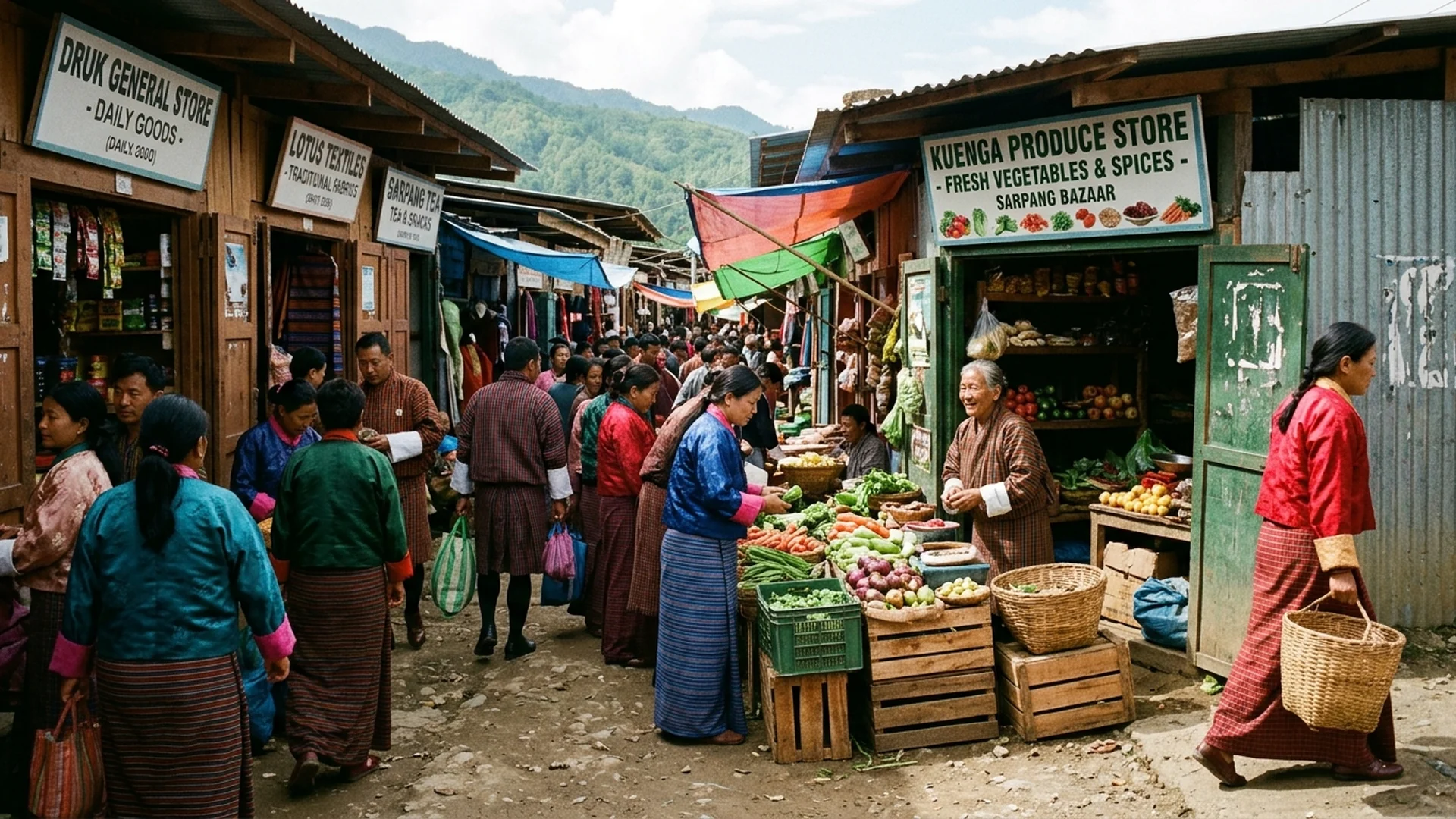
When conjuring the Kingdom of Bhutan, the mind instinctively drifts toward snow-dusted Himalayan peaks, precipitous cliffside monasteries wreathed in mist, and serene northern valleys. Yet, journeying southward into the subtropical canopy reveals an entirely different cadence to this Himalayan sanctuary. Here, gentle breezes rolling up from the Assam plains carry an ambient warmth, setting the stage for a vivid tapestry of daily life anchored by the bustling rhythm of Sarpang Bazaar.
More than a mere agricultural exchange, this vibrant marketplace serves as a seamless bridge weaving together border cultures and communal traditions. The rich aroma of indigenous spices, the cheerful chatter punctuating genuine smiles, and stalls brimming with seasonal harvest unveil a profound, multifaceted social fabric that discerning travelers seeking immersive cultural depth will find utterly captivating.
1. Lower Bhutan: Where Subtropical Canopy Meets Mountain Mist
While cultural capitals like Thimphu and Paro resonate with traditional architectural grandeur at elevations exceeding two thousand meters, the southern district of Sarpang welcomes wanderers with dense, verdant forests and a warm, inviting climate year-round. Closely tethered to lowland ecosystems and national wildlife sanctuaries, this territory boasts a biodiversity and sensory atmosphere unlike anywhere else in the kingdom. Sarpang Bazaar was born directly from this distinct geography, functioning as a spiritual and commercial heartland that honors the profound fertility of Bhutan’s southern lowlands.
2. The Palette of Commerce and Earthly Harvests
Stepping onto the flagstones of Sarpang Bazaar immediately envelops the traveler in an energetic pulse of daily commerce. Stalls overflow with freshly harvested produce gathered from nearby smallholdings—vibrant tropical citrus, indigenous herbs, varied cultivars of chili, and aromatic spices unique to this watershed. Visitors will also encounter homemade preserves crafted by women’s cooperatives, including fermented bamboo shoots, wild forest honey, and sun-dried agrarian goods that showcase sustainable self-reliance and age-old culinary preservation techniques.
3. Borderland Harmony and Unfrived Hospitality
The true allure of this market lies in its quiet convergence of diverse ethnic communities living in peaceful symbiosis. Casual negotiations and friendly banter between local growers and transient traders create an atmosphere of profound warmth and inclusivity. The ready smiles and genuine hospitality characteristic of southern Bhutanese society ensure visitors feel less like passive observers and more like welcomed guests entering a close friend’s home.