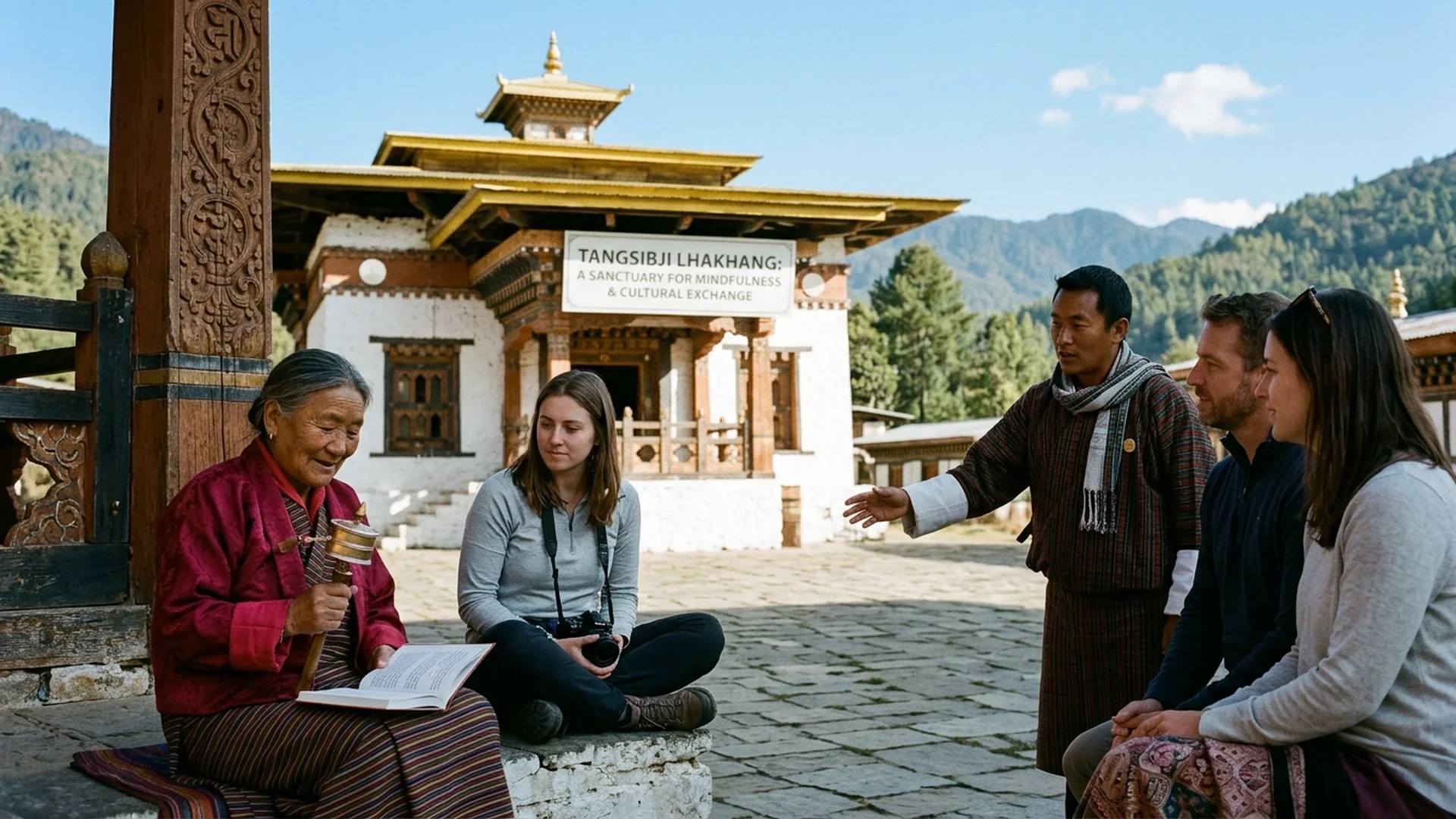
As the morning mist gradually lifts from the towering crests of the Black Mountains, the soft chime of windbells hanging from ancient rammed-earth eaves begins to resonate across the valley of Tangsibji. Here, time appears to pause, leaving behind the frantic pace of the modern world. More than just a scenic pause along the winding highway between Punakha and Trongsa, Tangsibji is a quiet heartbeat of the kingdom, rich in architectural heritage and pristine spiritual traditions.
Encircled by rugged peaks and dense temperate forests, this hidden enclave invites discerning global travelers to slow down, breathe deeply, and absorb the grounding energy of an unspoiled landscape. In an era defined by constant motion, Tangsibji stands as a testament to the enduring grace of mindful living, offering an immersive journey into the very soul of the Central Himalayas.
The Heart of Trongsa: Journeying Through a Valley Outside of Time
Traversing the primary highway linking Punakha to the heartland of Trongsa inevitably leads travelers to pause within the tranquil embrace of Tangsibji. Sheltered by undulating ridges and lush forestry, this historic settlement has largely been insulated from the rapid transformations of the outside world. Traditional homesteads—constructed from compacted earth and seasoned pine according to ancient Bhutanese architectural canons—cascade gently down the hillsides, blending seamlessly with terraced fields that turn emerald in summer and golden during the autumn harvest.
Visiting Tangsibji is not merely about checking off a sightseeing itinerary; it is stepping across the threshold of a living museum. Here, villagers maintain a deliberate, simple rhythm of life, harmonized with natural seasonal cycles and foundational Buddhist principles. Every stone wall, prayer wheel, and furrowed field tells a story of quiet resilience and spiritual devotion.
The Mystique of Chendebji Chorten: Trans-Himalayan Architecture on the Silk Route
The most arresting architectural landmark in the valley is the Chendebji Chorten, an invaluable sanctuary erected in the 18th century by Lama Shida to subdue malevolent spirits believed to inhabit the gorge. Distinctive in its design, the chorten departs from the traditional Bhutanese square mandala style, instead emulating the famous Swayambhunath Stupa of Kathmandu, Nepal.
The whitewashed dome is crowned with striking, all-seeing eyes of the Buddha painted on all four cardinal directions, radiating perpetual compassion across the landscape. Set against a backdrop of sweeping alpine meadows and a crystal-clear mountain stream rushing through the valley floor, the chorten offers an atmosphere of profound stillness, making it an extraordinary sanctuary for quiet contemplation and meditation.
Elevated Slow Travel: Heritage Farmstays and Organic Terroir
The most enriching dimension of a stay in Tangsibji is the opportunity to reside within a traditional heritage farmstay—century-old timber dwellings carefully preserved to maintain their authentic character while offering refined rustic comfort. Sharing space with a local Bhutanese family grants intimate insight into self-sufficient mountain life, evenings spent gathering around traditional hearths, and the sharing of folklore passed down through generations.
The culinary experience is equally grounded in the local terroir. Meals are prepared using organic ingredients foraged fresh from backyard gardens and nearby terraces, featuring seasonal mountain vegetables, sacred red rice, and warming portions of Ema Datshi, all accompanied by steaming cups of salted butter tea that chase away the crisp high-altitude chill. It is a masterclass in understated luxury, entirely divorced from the artificial artifice of commercial resorts.