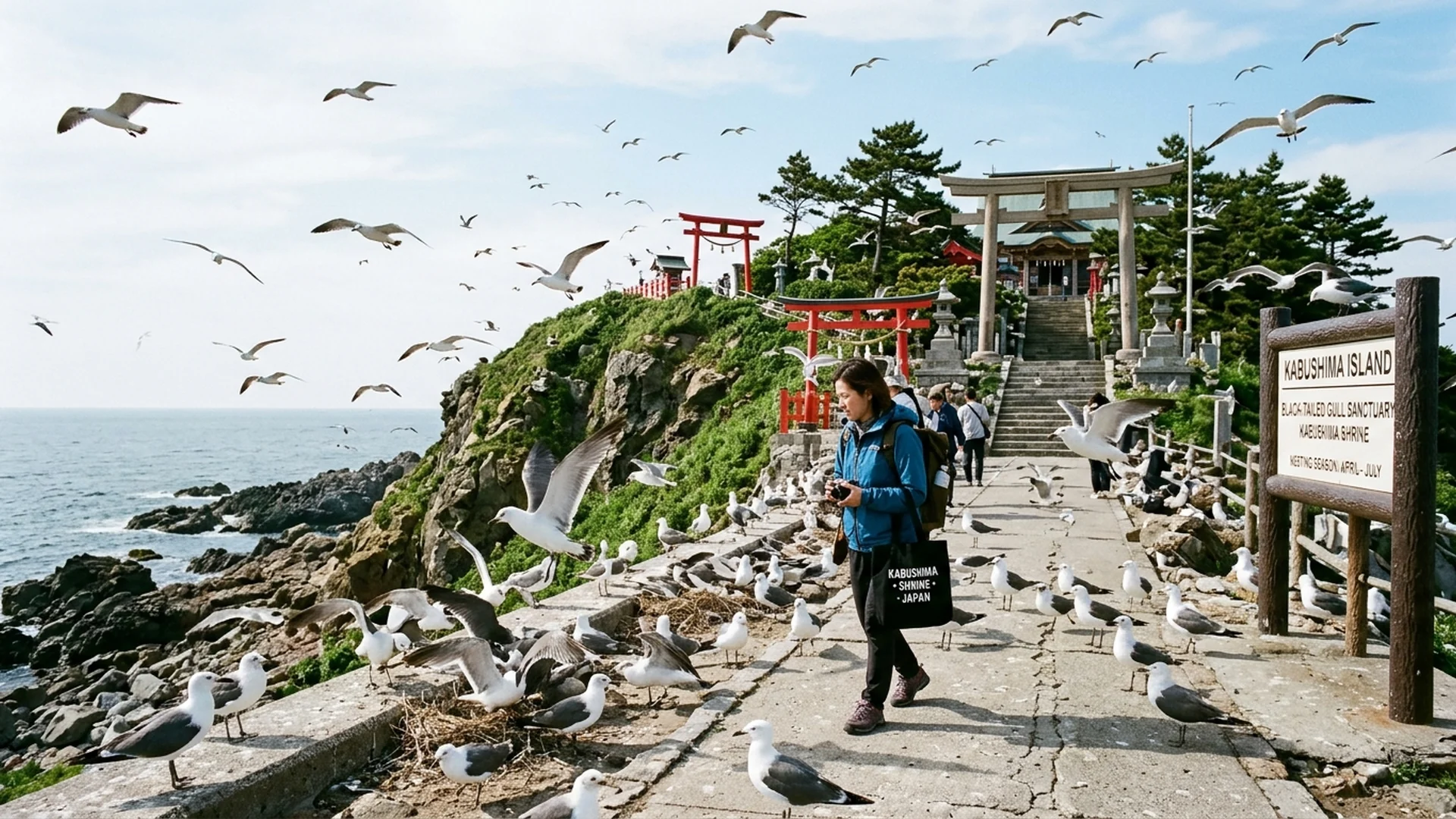
When the relentless Pacific currents wash against the rugged shores of Hachinohe in Aomori Prefecture, a small, remarkable promontory rises from the tide. Kabushima Island serves as both an expansive natural sanctuary for tens of thousands of black-tailed gulls and the revered home of an ancient Shinto shrine. Designated as a National Natural Monument, this magical intersection of raw coastline and sacred devotion offers a rare, immersive window into a world where wildlife, local spirituality, and human reverence exist in delicate, enduring harmony.
Yet the allure of Kabushima extends far beyond its remarkable ornithological ecosystem; it is deeply interwoven with a playful linguistic pun that draws discerning travelers and seekers of fortune from across Japan. The word ‘Kabu’ in Japanese refers not only to root vegetables such as turnips but is identical to the financial term for shares or stock market equity. Consequently, Kabushima Shrine has evolved into a celebrated talisman for wealth generation, astute financial investments, and professional prosperity. Framed against deep azure seas and brilliant yellow fields of rapeseed blossoms that contrast vividly with vermilion torii gates, this journey invites you to experience the soulful essence of the Tohoku region in its most evocative and unhurried dimension.
An Empire of Life: When Gulls and Sanctuary Become One
Originally an isolated island rising directly from the sea, Kabushima was physically connected to the mainland during World War II when military land reclamation projects bridged the gap. Today, a brief pedestrian walkway allows effortless access, yet what truly animates the island is its status as one of Japan’s most vital breeding grounds for black-tailed gulls. Beginning every March, tens of thousands of these majestic birds return to Kabushima to court, construct nests, lay eggs, and nurture their chicks across every available patch of ground right up to the thresholds of the shrine. Most remarkably, the gulls have grown entirely accustomed to human presence, remaining remarkably undisturbed as visitors walk quietly among them. The chorus of thousands of calls reverberating against the rugged cliffs speaks profoundly to the thriving vitality of the Sanriku coastal ecosystem.
Decoding the Lore: Kabushima Shrine and the Legend of ‘Lucky Droppings’
Perched at the highest elevation of the promontory stands Kabushima Shrine, consecrated to Munatsuchi-no-Mikoto, the revered deity safeguarding fisheries and maritime navigation. Beyond its foundational spiritual heritage, the shrine has achieved modern renown as a pilgrimage site for those seeking financial fortune. Because ‘Kabu’ shares its pronunciation with the Japanese word for stock shares, offering prayers here is metaphorically likened to making a secure investment destined for exponential growth.
Adding a touch of lighthearted charm to the pilgrimage, travelers eagerly await a particular rite of passage: the belief that being struck by gull droppings signifies an impending windfall of good fortune. While the shrine thoughtfully provides umbrellas for those wishing to avoid an abrupt showering of luck, devoted cultural travelers embrace the moment as the absolute highlight of their visit. Upon returning to the shrine office to report the encounter, recipients are awarded an official ‘Luck Certificate’—a delightful memento confirming that they have been personally chosen by the guardian birds of Kabushima.
Seasonal Palettes: From Golden Floral Tapestries to Azure Tides
While Kabushima brims with vitality throughout the primary nesting season from March through August, its aesthetic peak unfolds in May. During this month, fields of vibrant rapeseed blossoms burst into full bloom across the lower slopes and staircases leading to the shrine. The luminous golden carpet against the striking vermilion of the torii gates and the deep indigo of the Pacific creates a breathtaking tableau reminiscent of an Impressionist masterpiece. It is an unmissable canvas for photographers and connoisseurs of unspoiled natural beauty in northeastern Japan.