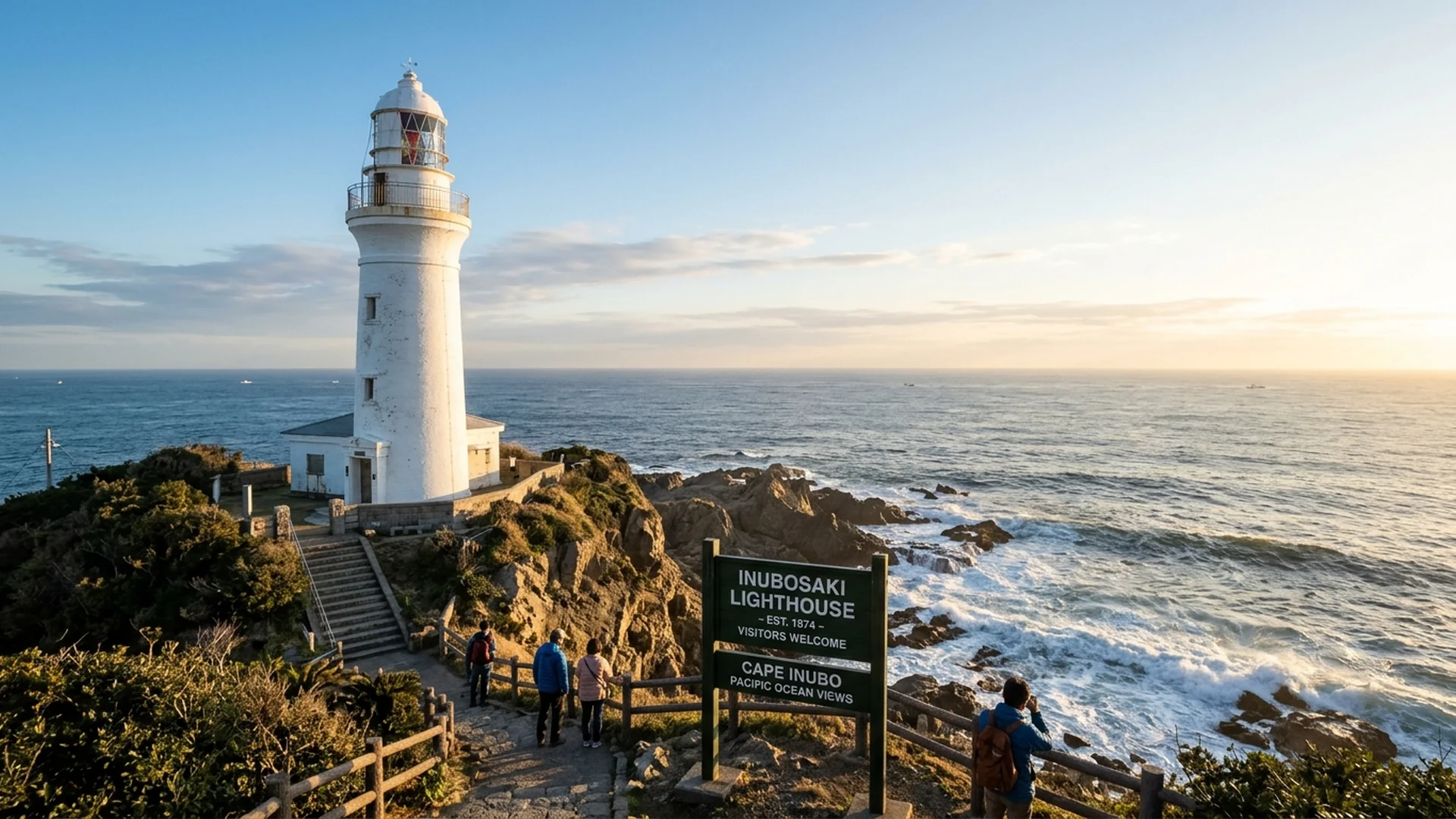
When the horizon merges with the vast expanse of the Pacific Ocean at the windswept cape of Chiba Prefecture, the roaring crash of waves against rugged rock formations sounds like an ancient poetic refrain. This is the Inubosaki Lighthouse, a monumental landmark standing defiantly against sea gales since the Meiji era, serving as a brilliant symbol of maritime navigation and enduring hope.
For the discerning traveler seeking depth far beyond superficial sightseeing, stepping onto Cape Inubo is akin to traveling back to the historic days when Japan first opened its doors to Western civilization, blending it seamlessly with raw, untamed natural beauty. Here, the first light of dawn on Honshu Island arrives earliest, bathing the pristine white brick walls in a radiance akin to precious jewels amidst deep indigo waves.
Meiji-Era Brick Architecture and Maritime Heritage
Beneath the immaculate white exterior of the Inubosaki Lighthouse lies a marvel of Meiji-period architectural engineering. The structure was built using more than 193,000 high-quality fired red bricks, meticulously designed and supervised by Richard Henry Brunton, the esteemed British engineer widely celebrated as the ‘Father of Japanese Lighthouses.’ The overarching vision at the time was to construct a beacon resilient enough to withstand violent storms and seismic tremors. Each brick was intricately laid and bound together, reflecting the meticulous attention to detail characteristic of transitional Japanese craftsmanship. Today, it stands as one of the nation’s few historically significant lighthouses designated as an invaluable cultural asset.
Conquering the 99 Spiral Steps to Pacific Panoramas
Ascending to the summit of the lighthouse via its 99 spiral steps feels akin to a meditative ritual, inviting visitors to cultivate inner stillness. Upon emerging through the doorway onto the apex observation gallery, a crisp, pure ocean breeze from the Pacific greets you, unveiling a boundless 360-degree perspective. Far below, jagged, uniquely weathered rock formations—sculpted by wind and tide over millions of years—line the shore. Glancing down toward the forecourt, visitors are greeted by the striking white postbox, a beloved photographic focal point and a poetic symbol for dispatching heartfelt wishes and prayers across time.
Slow-Travel Pleasures and the Culinary Soul of Choshi
No expedition to Cape Inubo is truly complete without experiencing the nostalgic charm of the local Choshi Electric Railway. This compact, vintage train winds its way past emerald paddies and tranquil rural homesteads, evoking the dreamy ambiance of a classic Japanese cinematic masterpiece. Upon reaching the coastal city of Choshi, travelers are treated to the peerless freshness of seafood sourced from one of the country’s premier fishing ports, featuring melt-in-your-mouth Kinmedai (splendid alfonsino) and seasonal delicacies. Conclude the day by soaking in natural mineral hot springs at a coastal ryokan or resort, where the eyes can linger over sparkling waters beneath the amber glow of twilight.