When conjuring visions of a swift departure from the electric pulse of Tokyo, the mind instinctively gravitates toward velocity and bright lights. Yet, casting one’s compass southward toward the Boso Peninsula in Chiba prefecture reveals an entirely different realm—one hushed, contemplative, and anchored deeply in the quiet gravity of time. Mount Nokogiri, christened the ‘Sawtooth Mountain’ for its jagged, serrated ridges, is far more than a geological curiosity born of ancient granite excavation; it is a sanctified landscape cradled by over a millennium of Buddhist devotion.
Stepping onto these mist-shrouded slopes feels less like a conventional excursion and more like passing through a translucent veil, leaving behind the relentless rush of modernity to enter an unbroken sanctuary of living stone and deep forest solitude. Carried on the chilled ocean breezes sweeping up from Tokyo Bay, the scent of cedar and aged earth mingles with echoes of the Edo period—a timeless poetry co-authored by nature’s patient hand and the enduring chisel of human reverence.
From Ancient Quarries to Sacred Sanctuaries: Decoding the Legend of Sawtooth Mountain
The moniker ‘Nokogiriyama’—Sawtooth Mountain—is no mere poetic exaggeration. Viewed from the shimmering expanse of the sea or from the high vantage of an approaching vessel, the ridgeline cuts an aggressive, jagged silhouette against the wide horizon, resembling the teeth of a giant blade turned upward toward the heavens. This striking topography is not entirely the sculptor of tectonic forces alone; it is equally the testament of human labor during the Edo and Meiji eras, when artisans harvested premium Boshu stone to build the foundational infrastructure of developing Tokyo. The precise, geometric block-cuts left etched into towering rock walls now stand as breathtaking examples of industrial archaeology, organically reclaimed and softened by moss and time.
Simultaneously, the spiritual lineage of this ground traces back to the year 725 AD, when the revered monk Gyoki Bodhisattva established Nihonji Temple across the rugged contours of the peak. The temple grounds sprawl across the entire mountain, folding discreetly into natural stone fissures and shaded ravines. To wander these ancient, moss-draped stone steps is to partake in a meditative pilgrimage. Every footfall carries the traveler past quiet canopies and shadowed grottoes, revealing centuries of accumulated devotion materialized as thousands of sacred figures carved directly into the bedrock.
Four Marvels of the Summit: The Abyss, The Great Buddha, and Eternal Faith
An exploration of Mount Nokogiri unfolds through a constellation of breathtaking landmarks, beginning at Jigoku Nozoki, or ‘Hell’s View.’ Here, a cantilevered viewing platform juts out precariously into empty air, suspended directly over a sheer one-hundred-meter precipice. From this dramatic vantage, the gaze sweeps unhindered across Tokyo Bay; on exceptionally clear days, the distant, snow-crowned silhouette of Mount Fuji floats ethereally on the western horizon, evoking a profound sense of scale and sublime insignificance.
Descend deeper into the winding stone ravines, and one encounters the majestic Nihonji Daibutsu. Towering at an impressive 31.05 meters, this magnificent seated Buddha was masterfully chiseled directly out of the mountain’s natural western wall. The serene, compassionate gaze cast across the silent valleys imparts an instant, restorative stillness to the soul. Nearby stands the Hyaku-Shaku Kannon, a soaring hundred-foot cliff carving dedicated to the souls lost in historical quarry accidents, while the surrounding amphitheater cradles more than 1,500 stone Arhats (Rakan), each possessing uniquely individualized expressions capturing distinct states of spiritual liberation.
The Refined Day Trip: Discovering Quiet Elegance Just Beyond the Capital
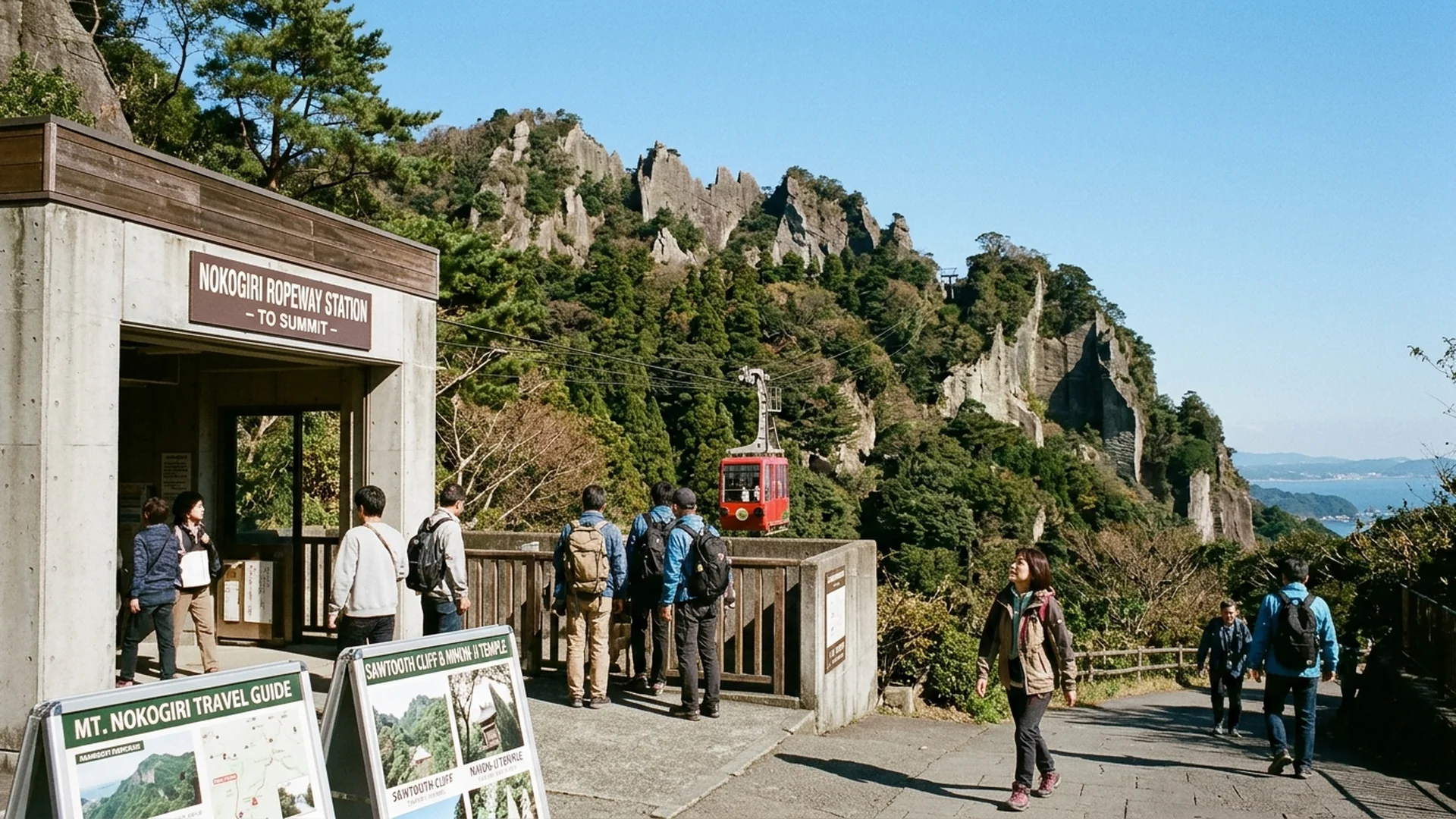
A pilgrimage to Mount Nokogiri forms the quintessential refined day retreat for discerning travelers seeking refuge from the urban density of the capital. The journey itself is an exercise in unhurried leisure; travelers may board the comfortable JR Sazanami express from Tokyo to Hamakanaya Station, or embrace a nautical approach aboard the Tokyo-Wan Ferry. Crossing the tranquil bay from Kurihama in Kanagawa to Kanaya Port takes a mere forty minutes, accompanied by wheeling gulls and the gentle slap of salt water against the hull. || Upon reaching the foot of the mountain, guests may ascend via the Nokogiriyama Ropeway—a four-minute aerial glide offering sweeping cinematic vistas of emerald forests and sapphire waters below. For those drawn to mindful immersion in nature, the historic forested footpaths leading from the base directly into the sacred precincts of Nihonji offer a grounding, tactile engagement with the ancient terrain.