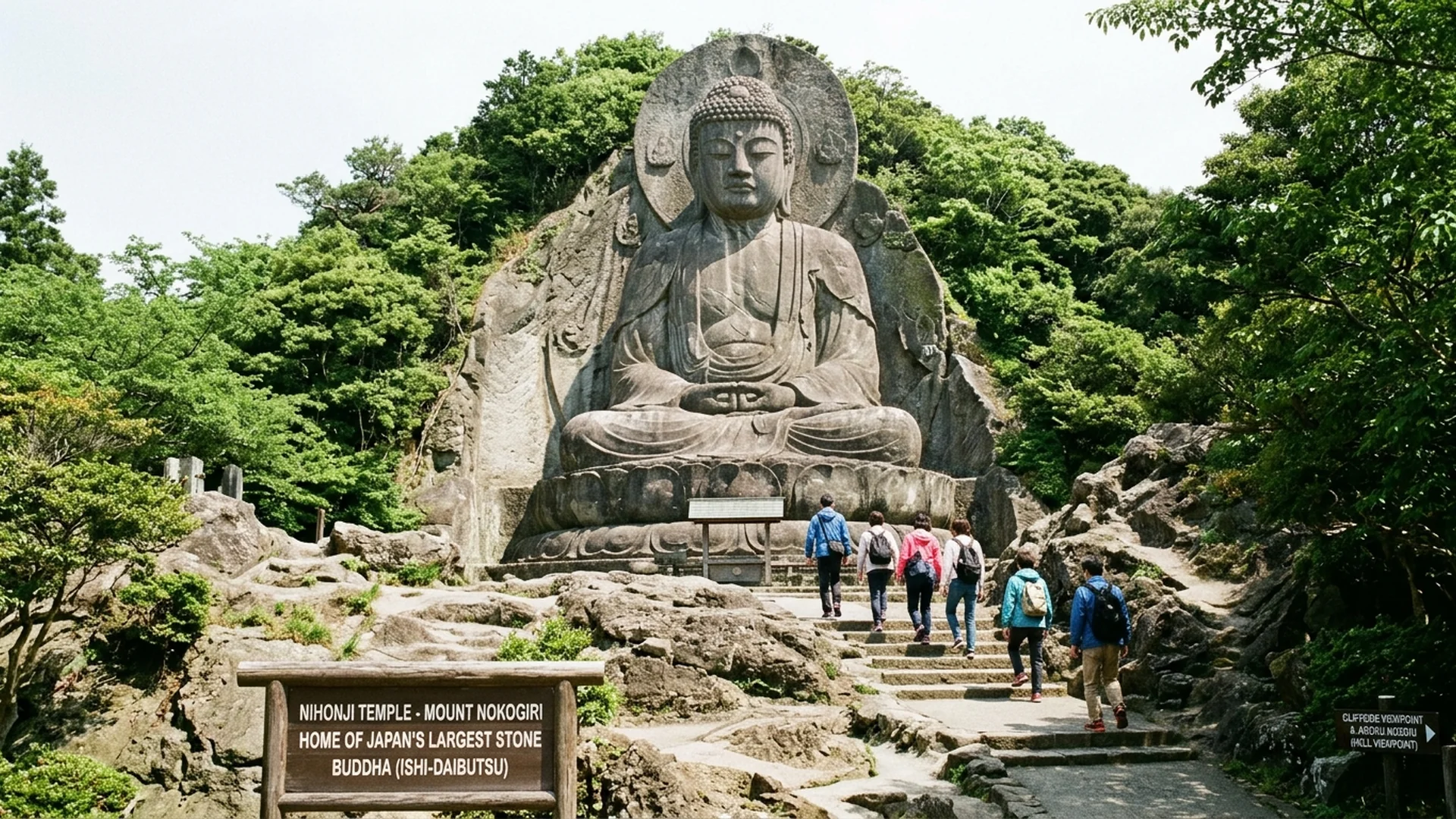
Just across the glittering expanse of Tokyo Bay, far removed from the relentless cadence of the metropolis, lies an ancient realm of profound stillness and devotion. Carved into the jagged, tooth-like ridges of Mount Nokogiri in Chiba Prefecture, Nihonji Temple unfolds as a sanctuary rooted in history for over thirteen centuries, established during the Nara period under the imperial edict of Emperor Shomu. To cross the threshold into this precipitous sanctuary is to step through a temporal veil, where the whisper of mountain winds carries the echoes of antiquity and monumental rock-hewn masterpieces await the contemplative traveler.
The extraordinary resonance of Nihonji extends far beyond its venerable age, revealing itself in the meticulous details of volcanic rock chiseled with astonishing grace. From the magnificent Nihonji Daibutsu—a colossal seated Buddha hewn directly from the living cliff face, towering above all counterparts in the nation—to the heart-stopping grandeur of Jigoku Nozoki, the ‘Hell Peek’ viewpoint projecting into open air with sweeping 360-degree panoramas of Tokyo Bay and the Boso Peninsula, this destination marries untamed nature, spiritual devotion, and artistic mastery in an unforgettable coastal sanctuary.
A Millennial Heritage Etched into Chiba’s Sawtooth Ridges
Mount Nokogiri—literally translating to ‘Sawtooth Mountain’—earned its evocative moniker from the rugged, serrated topography formed centuries ago through the quarrying of coveted Boshu stone for architectural use. Yet beneath the shadow of these quarried precipices, Nihonji Temple was formally established in 725 AD by the venerable monk Roben at the behest of Emperor Shomu, serving as a primary regional outpost for the Hossou sect of Todai-ji. In eras past, the temple flourished as an expansive center of ascetic practice spanning the entirety of the mountain. Though time and historical fires claimed certain wooden structures, the enduring testaments carved directly into the stone cliffs remain remarkably intact, bearing silent witness to the profound devotion of ancient stonemasons who consecrated the mountain itself.
Monumental Cliffside Artistry: The Daibutsu and the Hyakushaku Kannon
The beating heart for discerning travelers seeking profound aesthetic depth is the Nihonji Daibutsu, an imposing effigy of Yakushi Nyorai (the Medicine Buddha) sculpted directly into the southern rock face. Rising to an astonishing 31 meters, initial construction began in 1783 before undergoing comprehensive restoration in the 20th century. The deity sits in serene repose amidst verdant foliage and soaring precipices, evoking an atmosphere of simultaneous majesty and tranquility. Not far away stands the Hyakushaku Kannon, a thousand-hand Guanyin carved into a 30-meter vertical wall, originally dedicated to memorializing those lost in regional mining accidents. The dark slate-grey stone, etched with delicate precision, forms a powerful open-air monument that leaves a lasting emotional resonance upon all who gaze upon it.
An Ascetic Path Through Fifteen Hundred Arhats to the Edge of the Abyss
Navigating the grounds of Nihonji feels akin to embarking on a miniature pilgrimage. Along the ascending forest trails winding through rocky ravines, travelers encounter an astonishing array of over 1,500 stone Rakan statues. Each arhat possesses a uniquely individualized visage and posture—some caught in gentle contemplation, others smiling, sorrowful, or deeply meditative. Scattered among mossy boulders and ferns, these guardians accompany the seeker upward until the path culminates at Jigoku Nozoki, the legendary ‘Hell Peek.’ Standing upon this precipitous outcrop suspended over a hundred-meter abyss, the winds off Tokyo Bay sweep upward, offering a breathtaking expanse where, under favorable atmospheric conditions, the majestic silhouette of Mount Fuji lingers on the horizon.