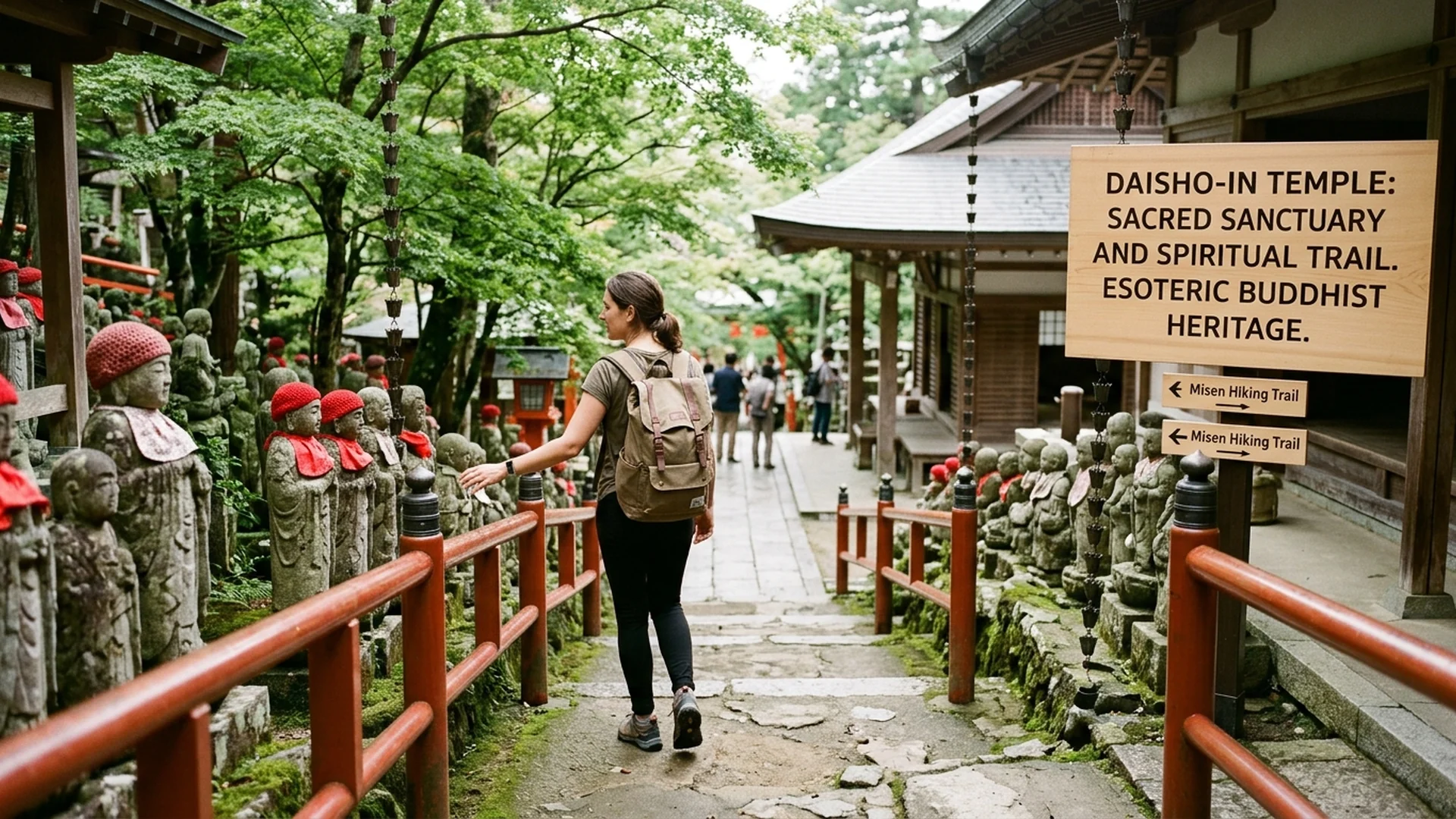
When travelers speak of Miyajima, the crimson torii gate floating effortlessly upon the tidal waters of Itsukushima Shrine is often the singular image that comes to mind. Yet, leaving behind the lively bustle of the coastal approaches and winding upward along the forested slopes of Mount Misen reveals an entirely different dimension of silence and spiritual gravity. This is Daisho-in Temple, the most venerable Shingon Buddhist monastery on the island, where time unfurls at a deliberate, unhurried pace to honor over twelve centuries of unbroken devotion.
Approaching Daisho-in feels akin to crossing a threshold between the mundane world and a sanctuary apart. The journey is accompanied by the sigh of mountain winds through ancient evergreens and the crisp murmur of a crystalline stream. The air carries a subtle fragrance of smoldering incense and drifting woodsmoke, blending seamlessly with centuries-old timber architecture. This is far more than a mere religious site; it is a living archive of sacred memory, exquisite artistry, and esoteric mysticism nestled within the Japanese archipelago.
Roots of Faith: Twelve Centuries of Shingon Esotericism on a Sacred Mountain
The history of Daisho-in is inextricably woven into the spiritual tapestry of Japan. Its origins trace back to 806 AD, when Kobo Daishi—one of the most influential figures in Japanese religious history—ascended Mount Misen to engage in profound ascetic practice and consecrate the mountain. From that era onward, Daisho-in flourished as a vital center for the study and practice of Shingon Buddhism, an esoteric tradition centered on deep meditation, sacred mantras, and profound metaphysical insight.
Throughout successive eras, the temple enjoyed the patronage of imperial courts and feudal lords alike. This enduring legacy is palpable in the meticulous craftsmanship of its structures, from the grand ceremonial halls to the ancient bell towers and intricate woodwork that merge harmoniously with the surrounding topography. To walk along the historic wooden corridors, which respond with a gentle, resonant creak underfoot, is to step backward into a luminous era of Japanese devotion.
Poetry in Detail: Jizo Statues in Knitted Caps and Golden Prayer Wheels
Among the most enduring sights upon entering the temple precincts are the neat ranks of stone Jizo Bodhisattva statues lining the stone staircases. Countless figures wear brightly colored knitted caps and delicate bibs—tender tokens of remembrance, compassion, and grief left by parents and pilgrims praying for the protection of children and departed souls. This poignant display of human tenderness forms a striking contrast against the austere, evergreen majesty of the mountain.
Nearby, the stone balustrades are inset with a continuous series of golden prayer wheels (Mani-guruma). According to centuries-old tradition, spinning each wheel with a focused mind while ascending the stone steps bestows merit equivalent to reading the entire Buddhist canon. The gentle, metallic whir of the brass wheels turning in unison provides a meditative rhythm that stills the wandering mind.
Subterranean Sanctuaries: The Henjokutsu Cave and the Kaidan Meguri Tunnel
For spiritual travelers, the emotional apex of a visit to Daisho-in is often the Henjokutsu Cave. This consecrated grotto enshrines the principal Buddhist deities of the famed Shikoku eighty-eight temple pilgrimage. What makes this sanctuary extraordinary is that beneath each stone deity rests a vessel containing sacred soil brought directly from the corresponding temple on Shikoku Island. Consequently, paying homage within this single cave grants the spiritual rewards of completing the entire grueling island pilgrimage.
Further within the temple complex lies the Kaidan Meguri, a subterranean corridor plunged into absolute darkness. Visitors must navigate the enclosed path by trailing a hand along the wall, searching blindly for the legendary ‘key of liberation’ hidden near the end of the passage. This temporary suspension of sight serves as an exquisite pedagogical tool of the dharma, compelling the mind to turn inward, cast aside external distractions, and encounter a luminous clarity of awareness.