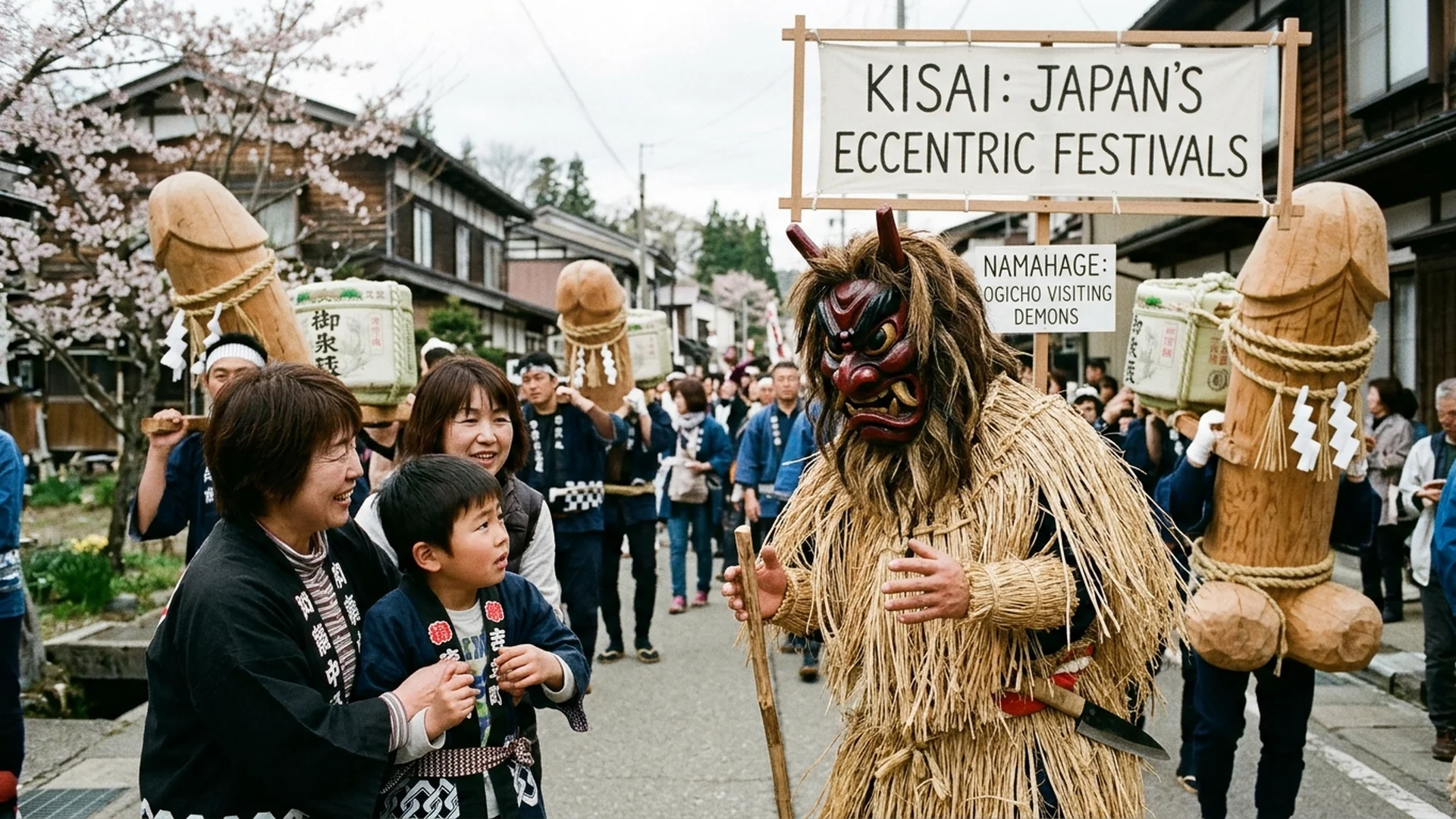
Beneath the surface of Japan’s contemporary urban polish and societal order lies an untamed landscape of misty valleys and ancient hamlets where time stands still. Here, the ‘Kisai’—esoteric, arcane festivals resting far beyond mainstream tourism—preserve the raw, primeval pulse of ancient belief. These gatherings are far from mere spectacles; they are sacred thresholds where humanity, Shinto deities, and mountain spirits commune through awe, reverence, and blazing fire.
Journeying into the world of Japan’s esoteric festivals opens a portal to another dimension. It is a realm where Shinto animism and archaic Buddhist traditions converge into an invaluable cultural legacy, waiting to be witnessed by discerning anthropological travelers and seekers of profound cultural depth. Amidst the thunderous resonance of taiko drums and the biting chill of a high-country night, the soul of ancient samurai lands reveals its truest, most mystical face.
The Meaning of Kisai: When the Esoteric Becomes Anchor
While conventional matsuri typically celebrate agricultural fertility or seasonal harvests, ‘Kisai’ festivals plunge deep into the ancestral roots of awe and dread before the natural world. The term denotes rituals that step far outside ordinary boundaries—sanctuaries where conventional social rules are temporarily suspended to allow ancestral spirits, woodland deities, and mountain phantoms to communicate directly with humankind through fierce masked visages, thunderous roars, and fires that devour the surrounding darkness.
Akita’s Namahage: Ogres of Awakening Spirits
Amidst the heavy, driving snows of the Oga Peninsula in Akita, the resounding roars of the ‘Namahage’—burly villagers cloaked in fierce demon masks and rustic straw capes—echo through the freezing air to cast out impurities and exhort community members toward diligence and moral fortitude. Held within the sacred precincts of a mountain shrine, the Namahage Seddo Matsuri stands as a powerful reflection of an ancient worldview: that these fearsome figures are not agents of pure evil, but rather divine moral inspectors sent by the wilderness to test the human heart.
Kurama Fire Festival: Kyoto’s Ancient Blaze Across Time
In the historic mountain village of Kurama, north of Kyoto, the narrow stone pathways winding toward Yuki Shrine transform every October 22nd into a breathtaking ocean of fire during the Kurama Fire Festival (Kurama no Hi-matsuri). Clad in traditional ceremonial garments, local villagers hoist colossal pine torches weighing upwards of a hundred kilograms, chanting ‘Sairei, Sairei’ as their voices reverberate across the forested valley. This monumental gathering commemorates the historic year 940, when protective deities were escorted into the village amid impenetrable darkness. The rhythmic cadence of wooden sandals and the cascade of fiery embers bouncing off antique wooden facades weave an atmosphere of transcendent, spine-tingling majesty.