Standing before the sublime expanse of Mt. Fuji or the jagged ridgelines of the Japan Alps, one is easily captivated by the sweeping panoramas below, often forgetting that the air above thins with every deliberate footstep. As barometric pressure and oxygen density recede with elevation, seasoned mountaineers and first-time aspirants alike are subjected to the very same physiological tests drawn by nature.
Acute Mountain Sickness (AMS) is not an indictment of physical weakness, but rather an innate biological response when the human body is compelled to navigate an environment starved of oxygen with little warning. Approaching these lofty elevations with scientific precision and quiet mindfulness is the ultimate key to transforming a journey toward the roof of Japan into a safe, deeply rewarding endeavor.
Decoding AMS: Navigating the Thinning Air at 3,776 Meters
Upon ascending to the 2,400-meter mark at the 5th station of Mt. Fuji—whether via the Yoshida or Fujinomiya trails—the atmospheric oxygen concentration drops to approximately 75%, eventually plunging to a stark 60 to 65% upon reaching the 3,776-meter summit. This environmental shift occurs far too rapidly for an unconditioned human body to seamlessly assimilate.
Acute Mountain Sickness typically announces itself through subtle neurological and gastrointestinal cues: a dull throbbing at the temples or behind the eyes, lightheadedness, a delicate wave of nausea, and breathlessness upon minimal exertion. Crucially, these symptoms do not discriminate based on athletic prowess. Even meticulously trained athletes can succumb to this condition if their bodies are denied the necessary time to synthesize additional red blood cells and calibrate respiratory rhythms to match the shifting barometric pressure.
The Golden Rules of Acclimatization and Intentional Pacing
The cornerstone of preventing AMS lies in refusing to rush the elevation. Upon arrival at the 5th station, experienced mountaineers strictly adhere to a regimen of resting and gentle movement for a minimum of one to two hours. This vital window allows the physiology to acquaint itself with the lighter air, sip warm infusions, partake in light nourishment, and gently coax the circulatory system into balance.
When the ascent commences, footwork must harmonize flawlessly with respiratory cadence. Maintain a steady, unhurried pace, avoiding rapid strides that cause the heart to race. Every single step should be accompanied by deep, measured inhalations and prolonged exhalations, purging stagnant air from the lungs while welcoming maximum oxygen into the bloodstream. Brief, deliberate pauses every thirty to forty minutes preserve bodily equilibrium, preventing undue accumulation of fatigue.
Portable Oxygen Canisters and High-Altitude Emergency Protocol
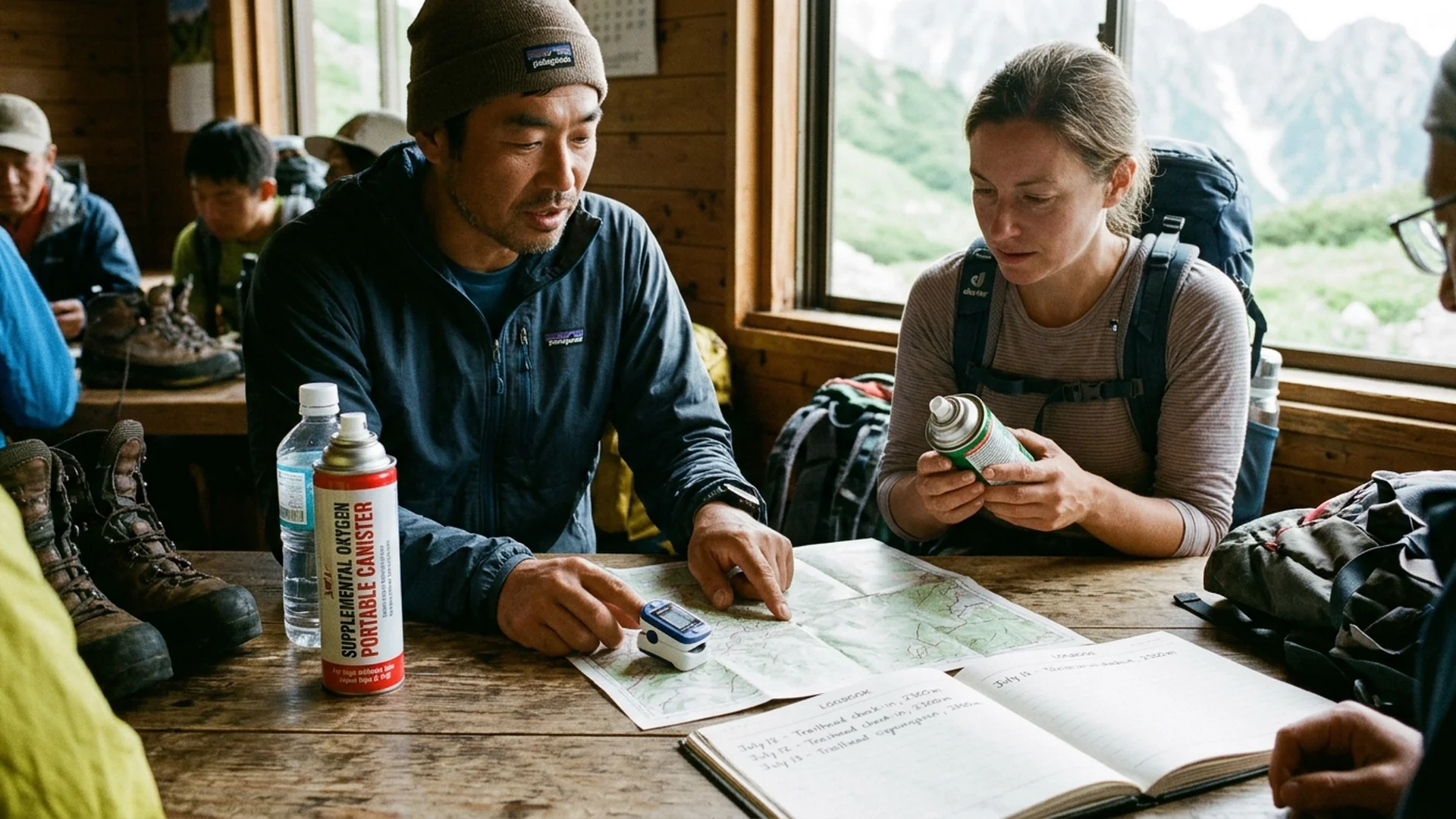
Portable oxygen canisters, readily available in convenience stores and trailside outposts along Mt. Fuji, serve as invaluable auxiliary tools when the body begins signaling distress. While artificial oxygen cannot entirely replace the natural physiological acclimatization process, it offers genuine relief from dizziness and restores vitality during demanding pushes toward higher camps such as the 7th or 8th stations.
Nevertheless, should a traveler experience severe, unyielding headaches, persistent vomiting, loss of balance, or mental confusion, these transcend ordinary fatigue and signal dangerous complications. The most uncompromising safety protocol is to immediately halt the ascent and initiate a prompt descent to lower altitudes without exception. Amid unpredictable mountain weather, human preservation supersedes every other summit ambition.