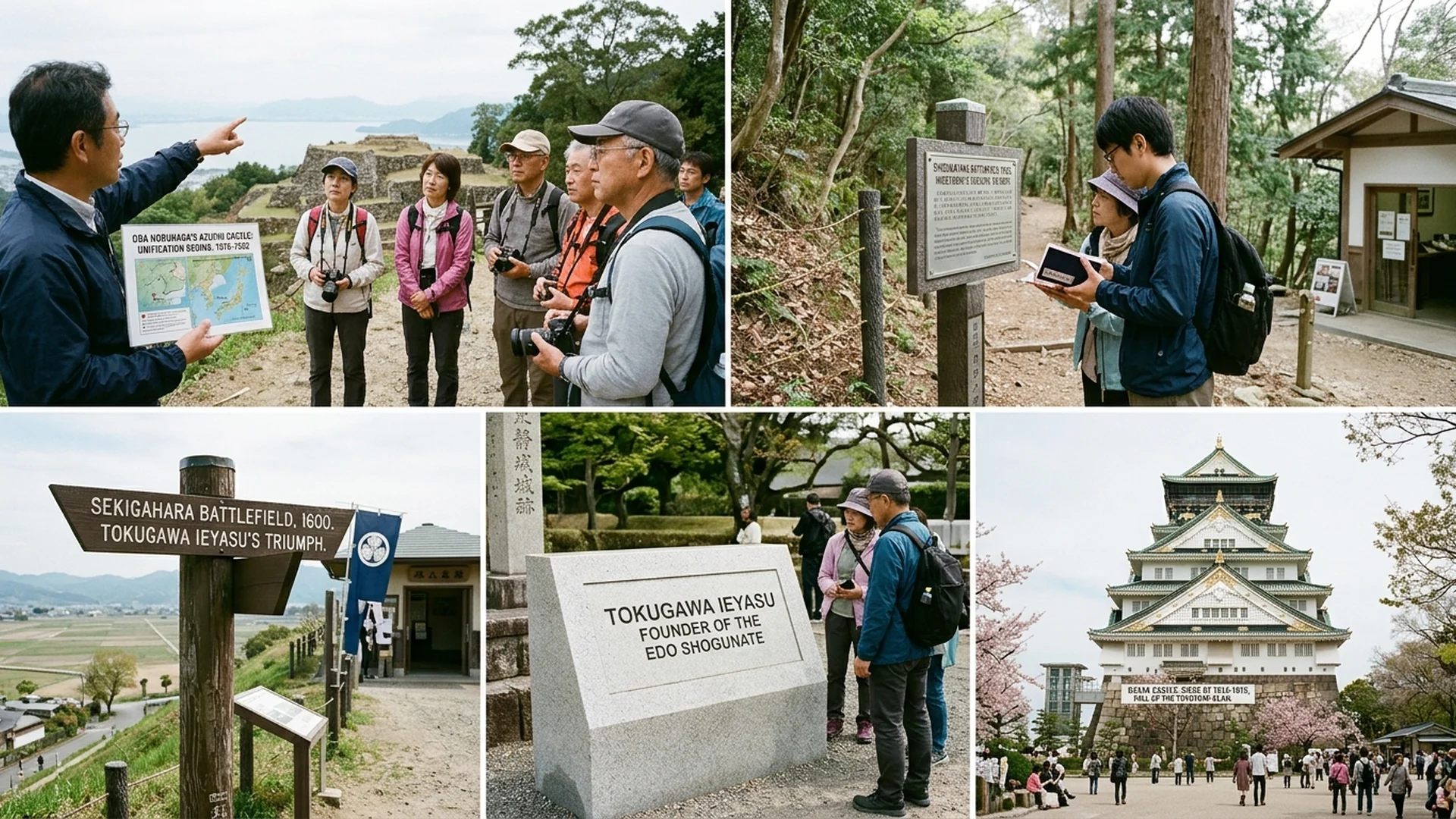
In traditional Japanese folklore, the contrasting personalities of the three great unifiers of the turbulent Sengoku period are famously captured through the metaphor of the hototogisu, or lesser cuckoo bird. If the bird refuses to sing, Oda Nobunaga famously declared, ‘Kill it until it sings,’ reflecting his ruthless resolve, fierce radicalism, and willingness to shatter old institutions. Toyotomi Hideyoshi, the ambitious tactician, countered with, ‘If it does not sing, coax it to sing,’ showcasing his mastery of diplomacy, psychological leverage, and brilliant military cunning. Finally, Tokugawa Ieyasu, the master strategist who ultimately claimed undisputed rule, whispered quietly, ‘If it does not sing, wait until it sings,’ embodying enduring patience, supreme resilience, and the art of timing.
Embarking on a historical pilgrimage to retrace the unification of Japan is far more than a conventional tour of ancient wooden keeps and stone ramparts. It is an unhurried immersion into the blood-soaked terrain of sixteenth-century Honshu—a realm where vision, ambition, and split-second decisions etched an indelible blueprint onto the national psyche. From legendary ambush sites shrouded in mountain mist to soaring architectural masterpieces that continue to defy the passage of time, each monument tells a profound story of ambition and destiny.
This editorial journey traverses the cultural geography of Japan, pinning down pivotal coordinates across Honshu to witness the triumphs, betrayals, and enduring heritage left behind by these legendary warlords.
Oda Nobunaga: The Revolutionary Storm of Destruction and Renewal
The epic trajectory of the Sengoku period commenced in earnest at the Battle of Okehazama in 1560 within Aichi Prefecture. While much of the original terrain is now preserved as the tranquil Okehazama Kosenjo Park, it was here that a young Oda Nobunaga led a daring strike force of barely two to three thousand samurai through torrential rains to ambush Imagawa Yoshimoto’s massive army of twenty-five thousand, forever altering the course of Japanese warfare.
Upon seizing Inabayama Castle, Nobunaga rechristened the hilltop fortress as Gifu Castle atop Mount Kinka, adopting the commanding motto ‘Tenka Fubu’—meaning to subjugate the realm under military governance. He was among the first warlords to systematically deploy matchlock arquebuses during the Battle of Nagashino in 1575 and subsequently raised the architectural marvel known as Azuchi Castle, a soaring seven-story stone citadel on the shores of Lake Biwa designed to project absolute supremacy. Tragically, this monument was consumed by fire following the Honno-ji Incident in 1582 in Kyoto, where his trusted general Akechi Mitsuhide launched a sudden rebellion, forcing Nobunaga to perform seppuku amid the spreading flames.
Toyotomi Hideyoshi: Boundless Ambition and the Architecture of Power
Rising from the humble origins of a sandal-bearer with no ancestral clan name, Kinoshita Tokichiro climbed through sheer intellect and audacity to become Toyotomi Hideyoshi. Having avenged his former master at the Battle of Yamazaki, he assumed the mantle of unification. The ultimate symbol of his supreme authority was Osaka Castle, grandly erected in 1583 upon the former site of Ishiyama Hongan-ji. The castle gleamed with gold leaf and imposing black tiles, signaling a display of wealth and hegemony previously unseen among rival daimyo.
Strategically, Hideyoshi brought a definitive close to decades of civil strife through the Siege of Odawara in 1590, targeting the formidable Hojo clan. This campaign demonstrated a mastery of economic containment and psychological pressure over sheer bloodshed, famously highlighted by the construction of Ichiya Castle—the ‘One-Night Castle’—built swiftly on a neighboring ridge to demoralize the defenders. With the realm finally pacified, Hideyoshi instituted sweeping land surveys, confiscated peasant weaponry through the sword hunts, and cultivated an opulent culture centered around the tea ceremony and magnificent palatial architecture.
Tokugawa Ieyasu: The Dragon’s Patience, Sekigahara, and the Edo Dawn
Among the three great unifiers, Tokugawa Ieyasu endured the longest trials of resilience and hardship. Having spent his youth as a hostage, suffered bitter military defeats, and bowed in fealty to both Nobunaga and Hideyoshi, he bided his time to accumulate strength and wait for the opportune moment. That definitive moment arrived on October 21, 1600, upon the frost-touched plains of the Sekigahara Battlefield in Gifu Prefecture.
The monumental clash of Sekigahara remains the largest samurai battle in history, drawing over 160,000 combatants divided between Ieyasu’s Eastern Army and Ishida Mitsunari’s Western Army. A pivotal defection by Kobayakawa Hideaki upon the slopes of Mount Matsuo shifted the tide, granting the Eastern forces total victory. Ieyasu subsequently established the Tokugawa shogunate in Edo—modern-day Tokyo—ushering in an unprecedented era of peace that endured for over two centuries.
Ieyasu’s ultimate legacy is immortalized at Sunpu Castle in Shizuoka, his peaceful retirement residence, and the breathtaking Nikko Toshogu Shrine, a UNESCO World Heritage marvel constructed to envereate his spirit as Tosho Daigongen, the divine deity who bestowed enduring peace upon Japan.