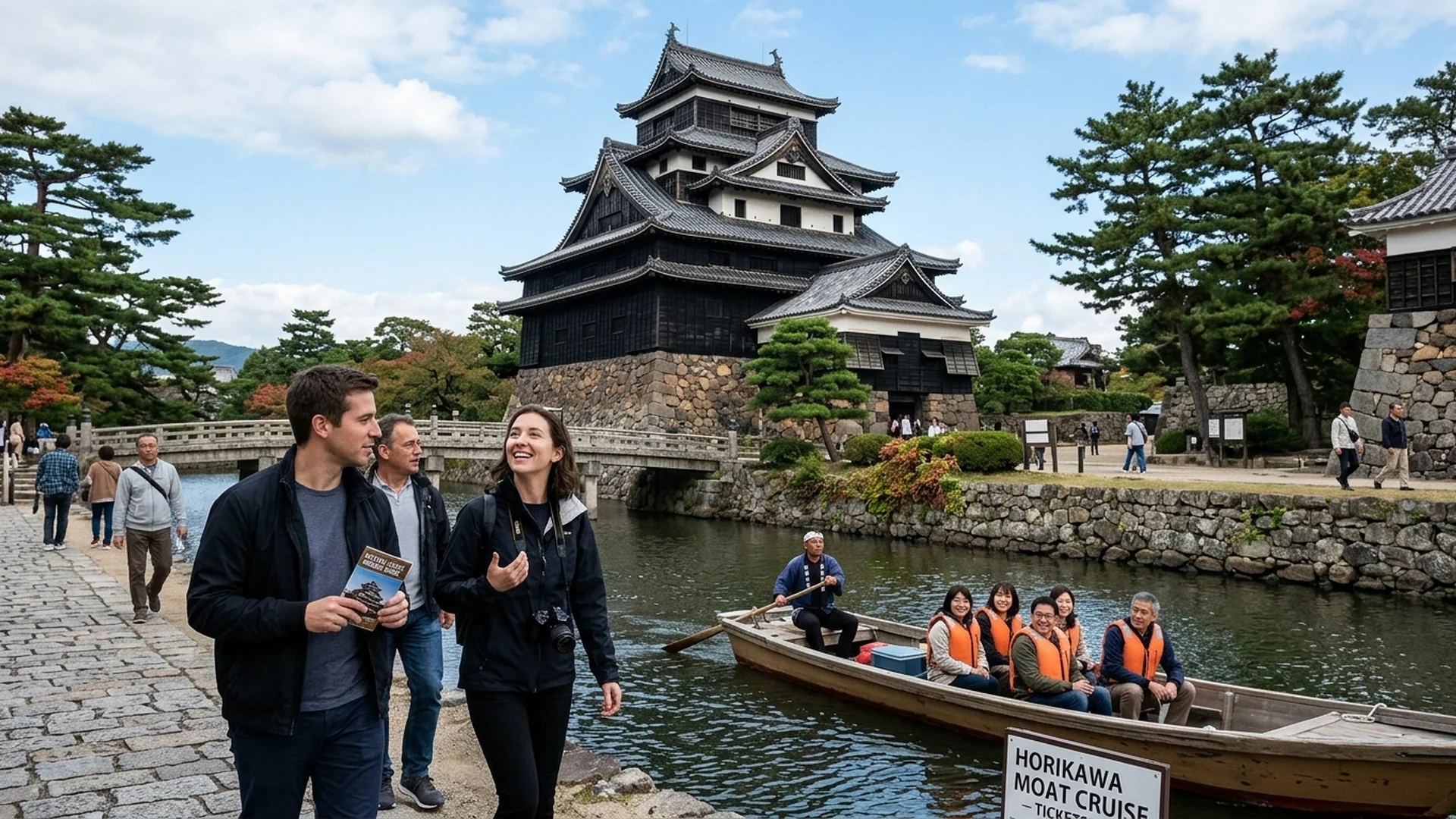
Amidst the delicate mists trailing across the vast expanse of Lake Shinji, the gentle dip of wooden oars breaks the stillness, accentuating the timeless ambiance of Matsue. Here, within Japan’s Sanin region, time appears to linger, preserving the indelible footprints of bygone eras with astonishing reverence. Rising above the leafy canopy of Kuroda Park, the formidable jet-black silhouette of the keep watches over the rooftops below like a majestic falcon poised for flight.
Matsue Castle, affectionately known as Chidori-jo or the Plover Castle, is far more than a mere historical relic; it stands as one of only twelve surviving original wooden keeps in all of Japan, proudly designated as a National Treasure. Its enduring significance extends well beyond its rare fortune in escaping the fires of war and modernization since the dawn of the Edo period. Rather, it encapsulates the living soul of the samurai, ingenious defensive architecture, and a profound tea culture that continues to permeate every corner of this historic water city.
The Jet-Black Keep of Chidori-jo and the Secrets Within its Timber
Upon stepping past the weathered stone ramparts of Matsue Castle, one is immediately struck by the somber elegance of the blackened wooden boards enveloping the five-story, six-structure keep. This profound obsidian hue is not merely decorative; it is the result of a traditional treatment combining pine oil and resin designed to withstand the harsh humidity and coastal gales of the Sea of Japan. Viewed from a distance, the overlapping layers of heavy roofs curve gracefully outward, evoking the wings of a plover in flight and giving rise to the poetic moniker Chidori-jo.
The interior resonates with the quiet dignity of aged pine. Massive primary pillars hewn from camellia and cedar wood have faithfully shouldered the fortress’s weight for over four centuries. Among its most ingenious engineering feats are removable wooden staircases, designed to be quickly dismantled during a siege to halt advancing adversaries. Most astonishingly, a subterranean well sits concealed within the lowest level of the keep, ensuring a secure, continuous supply of fresh water during prolonged sieges—a defensive masterstroke unmatched by any other extant castle in Japan. Ascending to the uppermost observation deck, visitors are rewarded with sweeping 360-degree panoramas of Matsue, Lake Shinji, and rolling distant ridges, offering a vantage point once vital for monitoring approaching threats.
Navigating the Edo Era: The Horikawa Boat Cruise
A comprehensive journey through Matsue remains incomplete without experiencing the Horikawa Sightseeing Boat. The winding moats encircling the fortress were never intended purely for aesthetic pleasure; they formed an intricate military defense network and waterborne transit system that seamlessly integrated the ancient castle town.
Compact wooden boats, steered by seasoned boatmen wielding traditional poles, glide quietly along the historic waterways. The route passes beneath more than a dozen low-slung bridges, requiring passengers to briefly bow their heads as the vessel’s canopy automatically lowers via hydraulic mechanisms or the boatman’s practiced pull. The scenery shifts effortlessly from moss-laden stone walls and weeping willows to preserved samurai residences retaining their classic architectural dignity. During the winter months, the boats are outfitted with kotatsu—warm charcoal-heated tables tucked beneath heavy quilts—allowing guests to sip steaming green tea while drifting past snow-dappled waters in absolute tranquility.
The Aesthetics of Matsue: A Capital of Tea and Wagashi
The cultural heartbeat of Matsue extends far beyond the castle battlements, flowing naturally into everyday life through a profound dedication to the Way of Tea. Nurtured generations ago by influential patrons such as Lord Matsudaira Fumai, a legendary figure in tea arts, Matsue stands proudly alongside Kyoto and Kanazawa as one of Japan’s three most historically significant tea capitals.
The historic districts surrounding the fortress abound with venerable wagashi confectioneries that have handed down delicate recipes across centuries. These confections are meticulously sculpted into miniature works of art, capturing the subtle nuances of each changing season. To sit quietly in a traditional teahouse, savoring a bowl of deeply umami-rich matcha paired with a melt-in-the-mouth confection while gazing out over an immaculate Zen garden, offers a restorative contemplative experience that anchors the traveler deeply in Japanese heritage.