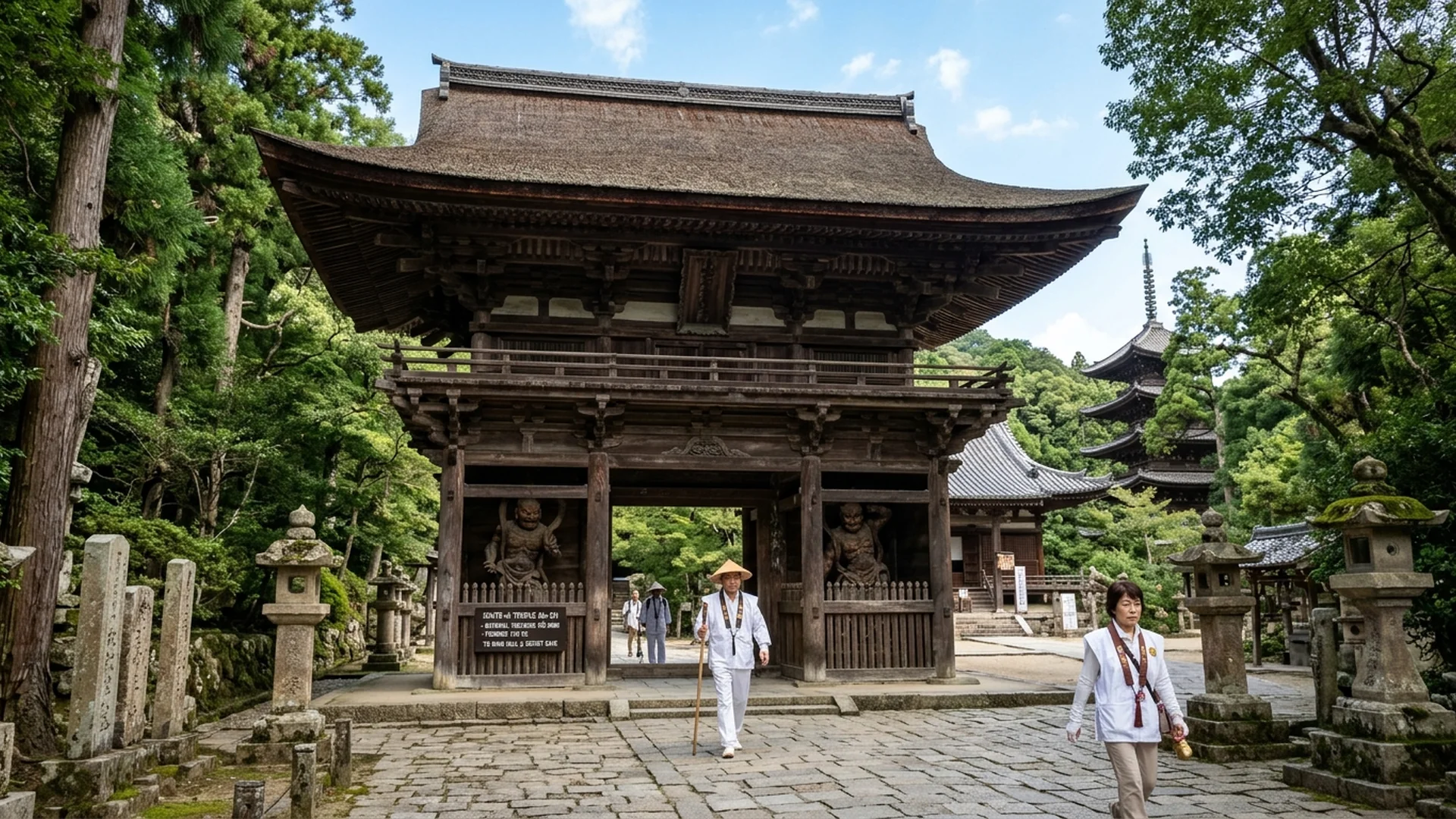
Amidst the quiet serenity of Matsuyama in Ehime Prefecture, a spiritual landmark conceals centuries of wondrous lore and architectural heritage behind the misty veil of time. Ishite-ji Temple, revered by discerning seekers as the 51st sanctuary along the sacred Shikoku Pilgrimage, is far more than a conventional religious site. It is a living museum that harmonizes artistic mastery, tales of reincarnation, and an evocative atmosphere found nowhere else on earth.
Crossing the sacred threshold, the clamor of the modern world instantly dissolves, replaced by the lingering scent of incense, the faint murmur of sutras, and the shadowed grace of ancient wooden structures weathered by centuries of wind and rain. Ishite-ji invites the traveler to slow their pace, savor the profound silence, and open their senses to the enduring narratives carved into every timber and stone.
Tracing the Legend of the Stone in Hand and the Shikoku Pilgrimage
The etymology of Ishite-ji, meaning ‘Temple of the Stone in Hand,’ traces back to a celebrated ancient folklore. Legend tells of Emon Saburo, a notoriously miserous wealthy landowner who once drove away the revered ascetic Kobo Daishi, precipitating the tragic loss of his own children. Overwhelmed by remorse, Saburo undertook a grueling counter-clockwise pilgrimage across Shikoku to seek forgiveness. Before passing away in the master’s arms, Kobo Daishi prayed for his fortunate rebirth into a noble family. The infant born thereafter kept his tiny fist tightly clenched until a high priest performed a sacred prayer, causing the baby to open his hand and reveal a stone inscribed with the words ‘Emon Saburo is reborn.’ Preserved within this very sanctuary, the miraculous stone established Ishite-ji as a profoundly sacred destination for pilgrims from across the realm.
Architectural Masterpieces: The National Treasure Gate and Kamakura Legacy
The architectural distinction of Ishite-ji lies in the immaculate preservation of its Kamakura-period compound. The primary focal point is the majestic Niomon Gate, erected in 1318. This massive timber structure balances delicate intricacy with profound structural fortitude, earning its status as a Japanese National Treasure. Exquisite wood carvings, graceful roof contours, and columns aged to a deep, resonant umber reflect the meticulous craftsmanship of ancient master builders. Beyond the gate, the temple precinct encompasses a stately three-story pagoda, an antique bell tower, and the principal Hondo hall housing revered Buddhist deities, all retaining an uncompromised aura of sacred antiquity.
Subterranean Mysteries: Journeying Through the Mantra Cave to the Golden Hall
An essential experiential highlight of Ishite-ji is the passage through the Mantra Cave, a dimly lit subterranean tunnel extending approximately 200 meters beneath the mountain slopes behind the temple. Inside, the winding corridor is flanked by hundreds of stone statues of Buddhas, bodhisattvas, and guardian deities. Amidst the soft amber glow and the echoing drip of subterranean water, navigating this cavern serves as a physical metaphor for transcending earthly delusions and spiritual blindness toward the light of wisdom. The tunnel’s terminus emerges onto a secluded hillside precinct crowned by a striking golden dome and monumental statuary, offering an arresting architectural contrast against the untamed natural surroundings.