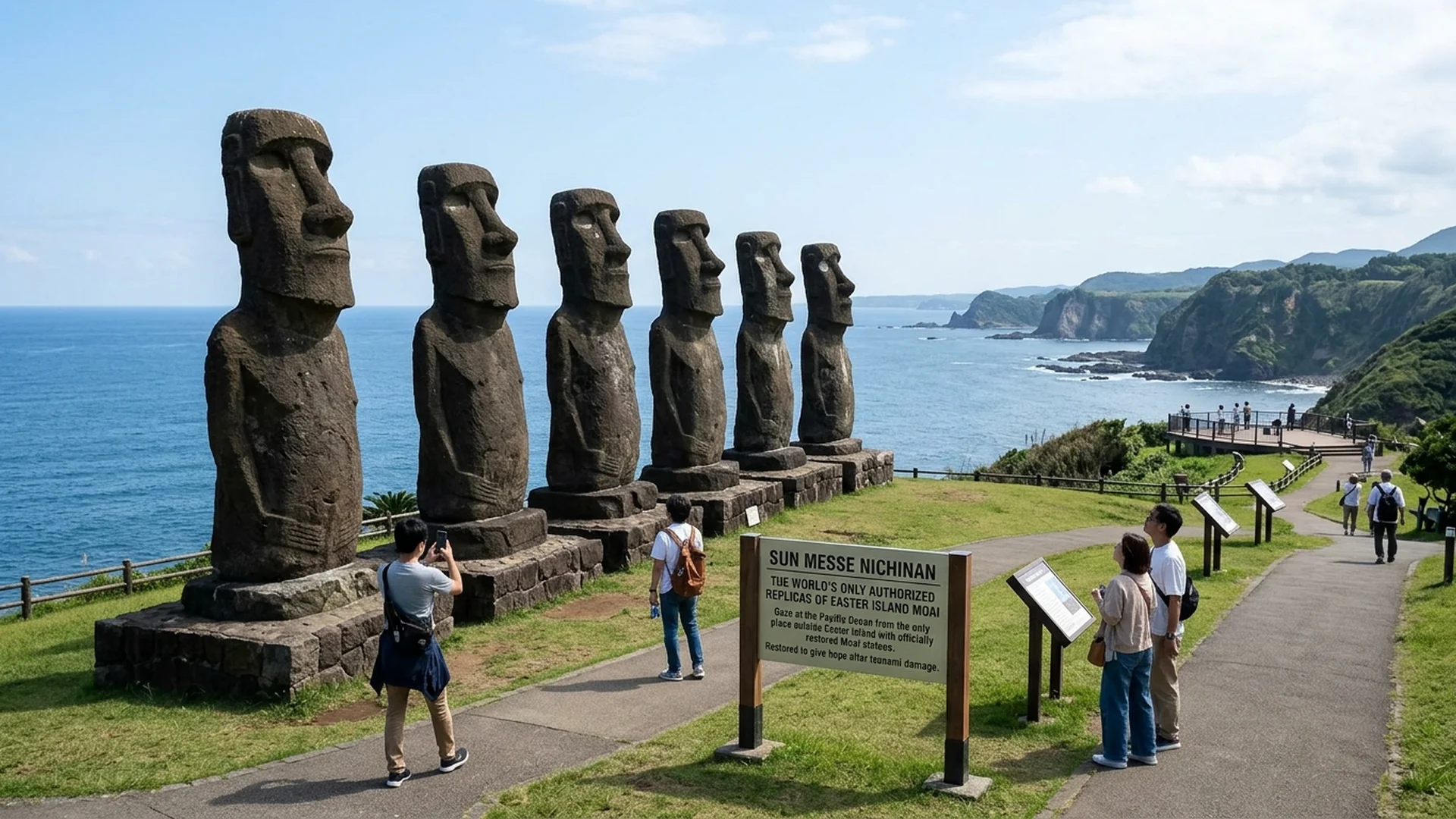
As the azure waves of the Pacific Ocean crash against the rugged volcanic cliffs of the Nichinan Coast in Miyazaki Prefecture, the vista unfolding before you transcends the typical expanse of southern Kyushu’s seascape. Seven monumental stone silhouettes stand sentinel against the vast horizon, evoking the remote, mystical shores of Easter Island. This phenomenon is no mere architectural whim; it is the tangible manifestation of a profound trans-oceanic bond and friendship between Japanese engineers who helped salvage a damaged World Heritage site and the Rapa Nui tribal council, who granted Sun Messe Nichinan the exclusive, rightful privilege to construct and enshrine authentic, full-scale Moai statues outside of Polynesia.
Visiting this sanctuary elevates travel far beyond superficial sightseeing. Every measured step along the lush green hillside sloping gently toward the vast expanse of water is an encounter with enduring reverence, cultural heritage, and open-air architecture in harmonious dialogue with nature. Here, the southern winds seem to carry ancient oral histories, inviting the discerning traveler from afar to pause, reflect, and perceive the beauty of the world through a deeply contemplative lens.
Trans-Oceanic Friendship: The Roots of the World’s Only Authorized Moai
The narrative of Sun Messe Nichinan begins with the dedication of Japanese specialists who played a pivotal role in restoring and rehabilitating the Ahu Tongariki Moai statues on Easter Island, which had suffered catastrophic devastation from tsunamis and the ravages of time. Driven by unwavering respect for indigenous heritage and archaeological precision, the Rapa Nui tribal council voted unanimously to grant exclusive copyright and permission for full-scale replicas to be erected here—marking the sole location outside Easter Island bestowed with this honor. Carved from volcanic rock using traditional craftsmanship by Rapa Nui artisans before being consecrated along the Miyazaki coastline, these seven figures seamlessly bridge ancient Oceanic spirituality with the shores of East Asia.
Decoding Sacred Faith: Blessings from the Seven Cliffside Guardians
A leisurely ascent up the verdant slopes of Sun Messe Nichinan offers far more than sweeping maritime vistas; it unfolds as a ceremonial journey through seven distinct blessings venerated by the Rapa Nui people. Each Moai within this revered formation holds a specific auspicious significance, ranging from career triumph and financial fortune to robust physical health, safe travels, enduring love, and academic flourishing. Standing before these stoic sentinels amidst the maritime breeze instills a profound sense of serenity and quiet resolve, as though ancient energies from the Southern Hemisphere are communicating through eyes devoid of pupils yet rich with intent.
Art, Nature, and the Aesthetics of Perspective
Beyond its celebrated statues, the sprawling grounds of Sun Messe Nichinan are meticulously curated as an open-air art park where imagination meets raw topography. Striking primary-colored metal sculptures, such as the ‘The Sun is Calling’ installation and silhouetted human forms catching the shifting daylight, infuse the emerald landscape with vibrant visual poetry. For photography connoisseurs and romantic seekers alike, the sky-high swing perched at the highest elevation of the hillside offers an exhilarating momentary suspension between sea and sky, creating the sensation of floating freely above the Pacific. An on-site museum showcasing global butterflies and an exhibition chronicling Easter Island history invite deeper intellectual exploration.