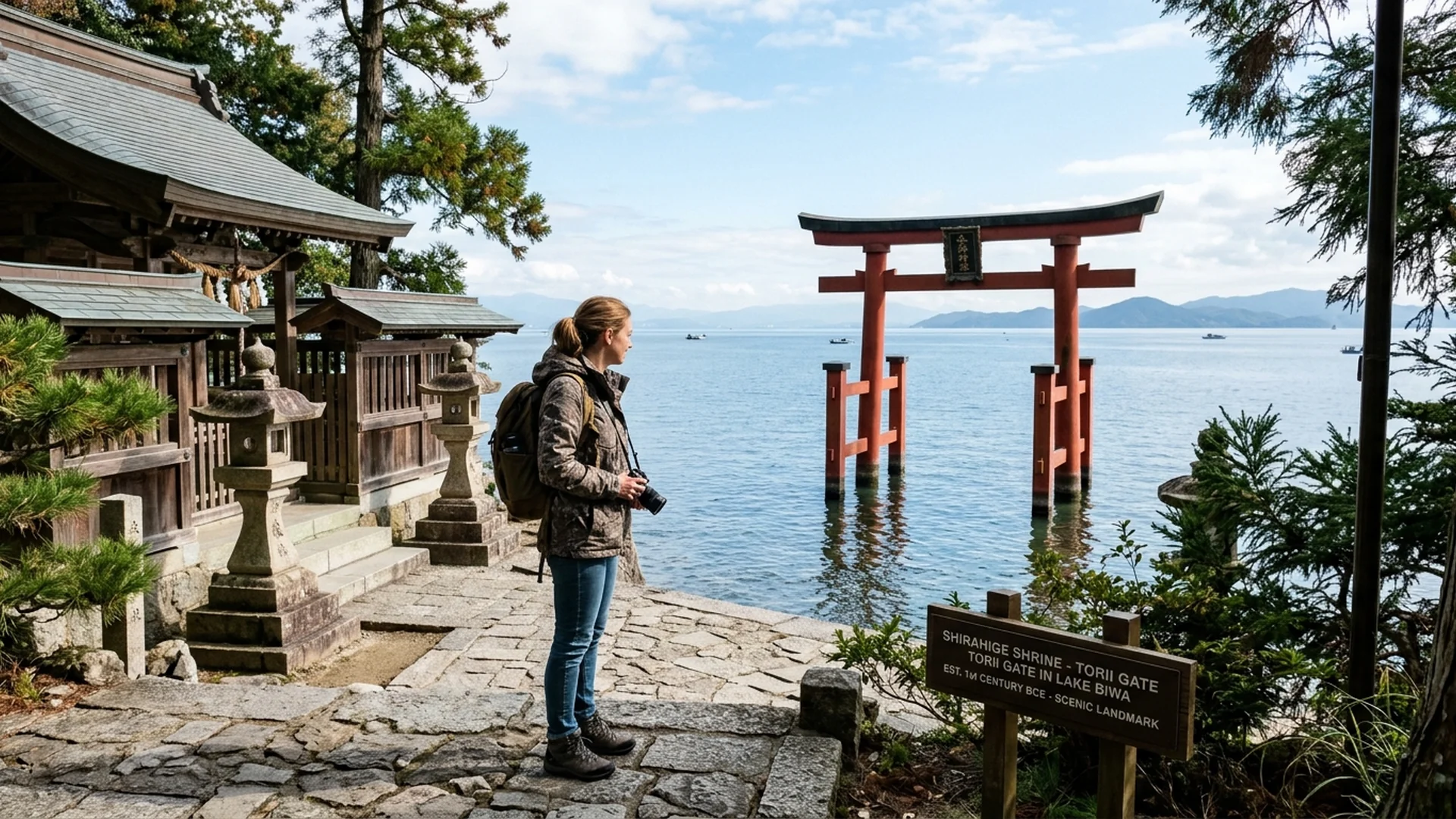
When the relentless murmur of footsteps and crowded tour groups begin to veil the quiet brilliance once held by Kyoto’s ancient alleys, an exquisite, concealed haven waits just beyond the eastern mountain ridge. Only a brief ten-minute train ride through the tunnel from Kyoto Station, the entire world shifts its tonal palette into the sacred stillness surrounding the vast waters of Lake Biwa, an ancient body of water serving as a mirror to a millennium of Japanese history.
Otsu, a historic former capital and the administrative heart of Shiga Prefecture, functions as an exclusive lakeside sanctuary for discerning travelers yearning for genuine delight. Here, the panoramic vistas stretching across the water to the horizon are complemented by a profound cultural treasury bridging Tendai Buddhist spirituality, world-renowned literature, and culinary masterpieces passed down through generations. It is an immaculate alternative to overtourism, inviting a journey that moves at a slower, more deliberate, and infinitely deeper pace.
Mount Hiei and Enryaku-ji: Spiritual Shadows Above the Biwa Waters
Towering majestically between Kyoto and Otsu, Mount Hiei holds Enryaku-ji, the highly influential head monastery of the Tendai Buddhist sect founded in the Heian period by the revered monk Saicho. Ascending to this elevated realm feels like a total detachment from the frantic mundane world. Ancient cedar trees cast deep shadows across the grounds, temple bells resonate through gentle mists, and the eternal flame of the Fumetsu no Hodo has burned continuously for some twelve hundred years, evoking profound stillness within every visitor. Beyond its historical weight and UNESCO designation, the mountain viewpoints reveal breathtaking, shimmering expanses of Lake Biwa stretching far below.
Ishiyamadera and Ukimido: Odes to Water and Nara Architecture
A journey through Otsu plunges travelers deep into tangible arts and culture at Ishiyamadera, an ancient temple resting upon dark stone hillsides along the Seta River. Long associated with classical Japanese literature, this is where Murasaki Shikibu famously retreated to begin penning The Tale of Genji a millennium ago. The temple’s ancient pavilions and stone gardens preserve an unhurried, classical aesthetic.
Not far away on the lakeshore rests Ukimido, the floating hall of Kaisho-ji Temple. This delicate wooden architecture extends gracefully out over Lake Biwa as if drifting upon the liquid surface. The sight of the petite pavilion framed by waterbirds and amber twilight is celebrated as one of the Eight Views of Omi, widely regarded as among the most dreamlike and breathtaking vistas in Japan.
Culinary Elegance: Savoring Omi Beef and Lakeside Gastronomy
The pinnacle of a refined journey to Otsu is realized through its culinary dimensions, anchored by Omi beef, the undisputed monarch of the dining table. As Japan’s most venerable wagyu lineage with a history exceeding four hundred years, it is distinguished by delicate, silk-like marbling that melts effortlessly upon the tongue, accompanied by a rich and distinctive aroma. Whether served as delicate sukiyaki, shabu-shabu, or exquisite grilled steak, every presentation reflects meticulous curation of pristine ingredients harvested around Lake Biwa. Local epicurean traditions also highlight sweetfish from the lake and artisanal soybean creations crafted for the most discerning palates.