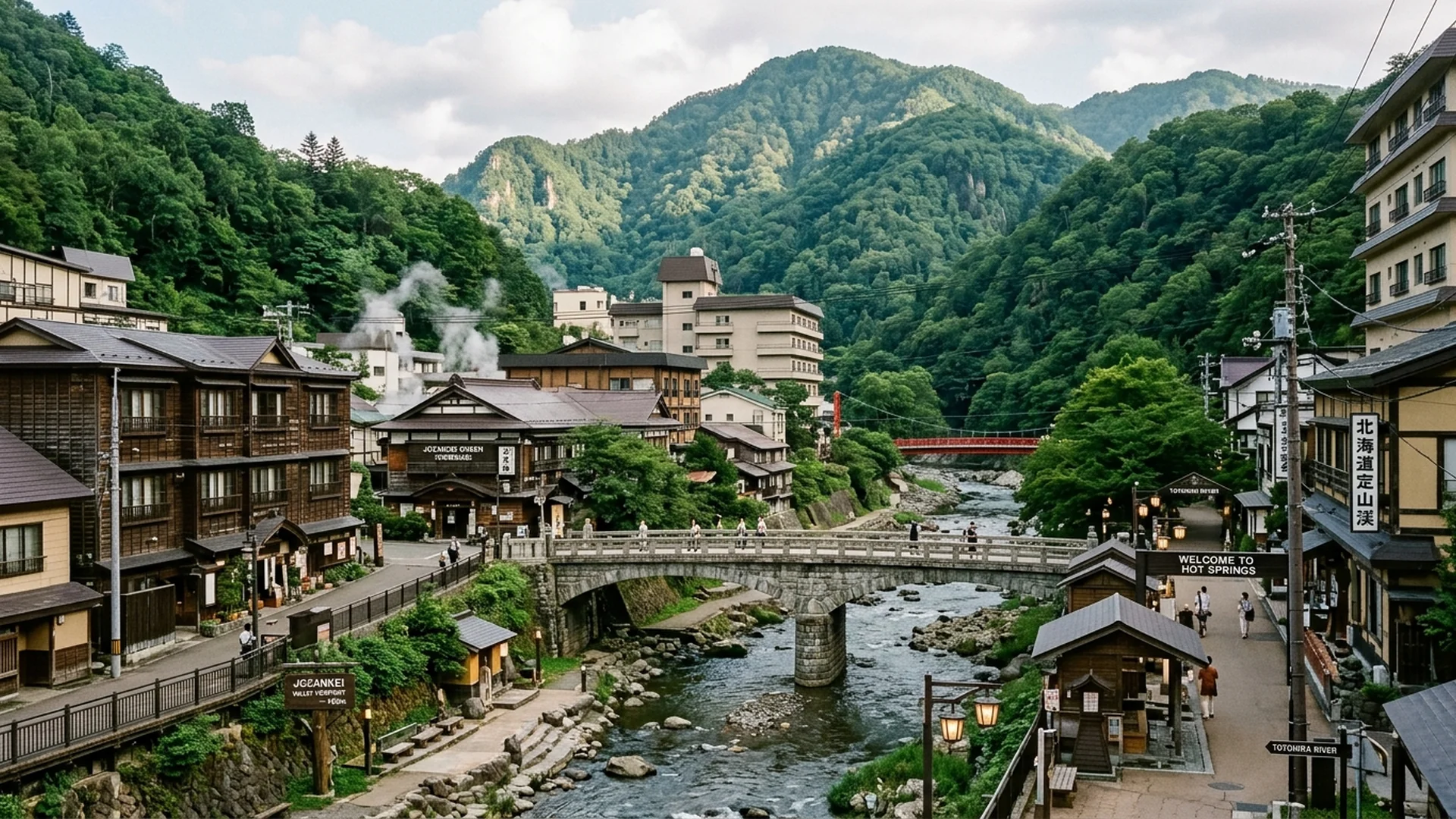
Barely an hour’s drive from the bustling pulse of Sapporo, the landscape softens into a tranquil sanctuary cradled by emerald-green peaks and the crystalline currents of the Toyohira River. This is Jozankei Onsen, Hokkaido’s premier hot spring retreat, where slender tendrils of steam rise from mineral-rich thermal waters, harmonizing with the gentle susurration of ancient forests and shifting seasonal hues.
The chronicle of Jozankei traces back to 1866, when an ascetic monk named Miizumi Jozan ventured deep into the untamed wilderness and discovered these restorative thermal springs. The primordial spirit of healing and serenity imbued into this valley has endured, evolving into an exquisite destination for discerning travelers seeking profound rejuvenation amidst understated luxury and untamed natural beauty.
The Allure of Mineral Waters and Architectural Sanctuary
The defining characteristic of the thermal waters in Jozankei Onsen is their high concentration of sodium chloride. This exceptional mineral composition leaves a gentle saline veil on the skin, sealing in warmth long after stepping out of the bath. Clear and faintly saline, these waters act as a restorative elixir that effortlessly melts away the fatigue of travel. Submerging oneself in an open-air rotenburo while crisp mountain breezes brush against the skin and dramatic valley vistas unfold is the ultimate sensory indulgence.
Architecturally, Jozankei is home to an array of premier ryokans and resorts designed with profound reverence for their surrounding environment. Seamlessly blending contemporary sophistication with traditional Sukiya-style aesthetics, these properties feature expansive glass windows framing forest canvases, tranquil rock gardens, and meticulous woodwork. This creates an atmosphere of profound wabi-sabi stillness that completely isolates guests from the turbulence of the modern world.
Natural Landmarks and Landscapes at Every Turn
Beyond the restorative embrace of the onsen, Jozankei invites exploration through a collection of picturesque natural trails. The journey often begins at the Futami Tsuribashi suspension bridge, a vivid red span arching gracefully over the Toyohira River. It serves as the gateway to Futami Tsubaki, a dramatic rock formation sculpted by centuries of river currents, and connects to tranquil forested riverside walking paths.
Another unmissable waypoint is the Hoheikyo Dam, an extraordinary feat of engineering that coexists harmoniously with the wilderness. During autumn, the surrounding precipices are painted in fiery shades of amber, crimson, and gold, reflecting brilliantly against the emerald reservoir below, earning it renown as one of Hokkaido’s premier autumn foliage sanctuaries. Access to the dam is preserved via eco-friendly hybrid buses to protect the pristine integrity of the surrounding ecosystem.
Culinary Poetry: The Art of Hokkaido Kaiseki
A sojourn in a luxury Jozankei ryokan remains incomplete without partaking in its culinary artistry. Evening kaiseki dining here is a sensory journey reflecting the abundant harvests of Hokkaido. Master chefs curate seasonal delicacies with exquisite precision, from sweet, succulent king crab and pristine cold-water fish to forest-forged mushrooms and premium Kuroge Wagyu beef.
Every dish is presented with artistic reverence, where flavors, textures, and bespoke ceramics narrate the distinct character of the season. Savoring these masterful creations alongside locally brewed artisanal sake within the quiet seclusion of a traditional dining pavilion is an experience that engages every facet of the soul.