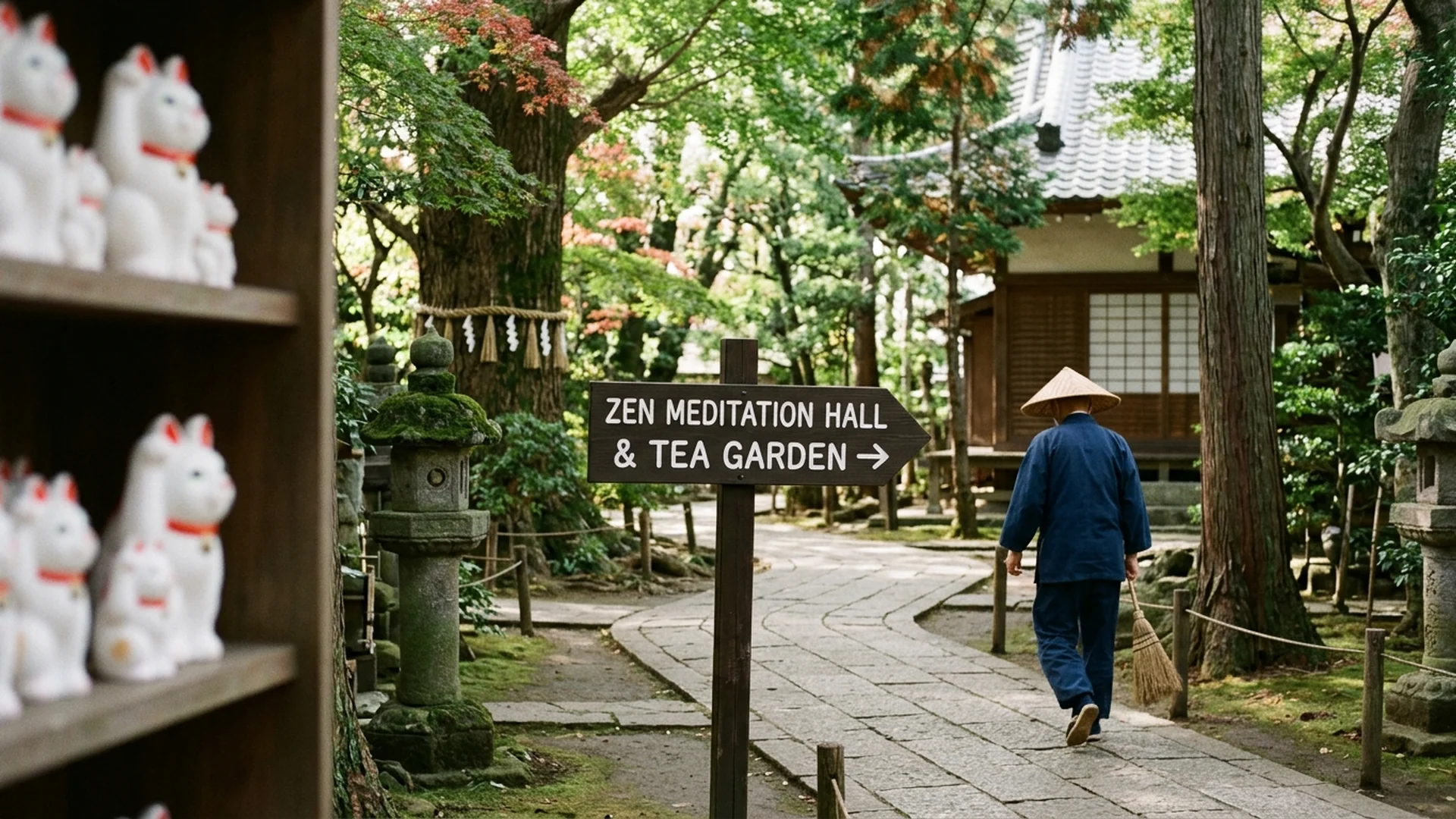
When conjuring the image of Tokyo, the mind often wanders to the electric pulse of neon-drenched commercial avenues and the ceaseless tide of urban crowds. Yet, just beyond this exhilarating rush lies a secluded sanctuary where time assumes an unhurried, meditative grace. Tucked away within the affluent, leafy enclave of Setagaya, Gotokuji Temple rests quietly amidst ancient pines. While the digital realm knows this destination primarily through viral imagery of thousands of immaculate white beckoning cats aligned in silent rows, a mindful pilgrimage reveals a far deeper narrative. This is not merely a photogenic waypoint, but a profound Soto Zen monastic complex, the ancestral burial ground of a powerful feudal dynasty, and an exquisite canvas preserving the quiet spirit of the Edo period.
Roots of Zen and the Feline Savior of a Feudal Clan
Affiliated with the Soto Zen sect, Gotokuji was originally founded in 1480 before undergoing a comprehensive restoration that established it as the family temple of the Ii Clan, influential daimyō who ruled the Hikone Domain during the Edo era. The legendary chapter begins when Ii Naotaka, lord of the domain, passed by the modest temple grounds and noticed a white cat gesturing for him to step inside out of the impending storm. Seconds later, a violent flash of lightning struck the exact spot where he had been standing, sparing his life in an astonishing twist of fate. In profound gratitude, the feline savior inspired the creation of ‘Shofukuneko’—lucky cats distinct from others because their right paws are raised to beckon auspicious opportunities rather than clutching a gold coin. Zen philosophy holds that true wealth lies not in material currency, but in the unobstructed path to cultivate virtue.
Architecture and the Aesthetics of Zen Simplicity
Passing beneath the unassuming temple gate, visitors are immediately enveloped by the towering presence of ancient cedar trees and the austere dignity of timber construction. The main hall exemplifies late Edo period architecture, prioritizing elegant restraint over ostentatious display. A defining architectural masterpiece is the three-story wooden pagoda, which stands with sublime proportion. At its base, subtle wood carvings depict the twelve animals of the Eastern zodiac, while minor feline figures playfully hide among the intricate eaves—a touch of levity within a sacred domain. Nearby, a secondary hall serves as the domain of thousands of porcelain cat figurines dedicated by devotees in gratitude for answered prayers. Together, they form a pristine mosaic of white ceramic contrasting against the verdant canopy of the surrounding temple forest.
The Slow Travel Rhythm of Setagaya and Traversing Eras
To truly absorb the essence of Gotokuji, one must surrender to the rhythm of slow travel. Setagaya remains an elite residential district that fiercely protects its distinct community spirit. Traveling here via the vintage Tokyu Setagaya Line—one of only two surviving tram lines in Tokyo—lends the journey a gentle, nostalgic romance. Gotokuji Station rests a pleasant ten- to fifteen-minute stroll from the temple gates, flanked by independent bookshops, antique dealers, and artisanal coffee roasters who curate every single cup with meticulous care. It is a spatial sanctuary designed specifically for contemplation, inviting travelers to anchor themselves deeply in the present moment.